
Deepfake threats exploiting the trust inside corporate systems
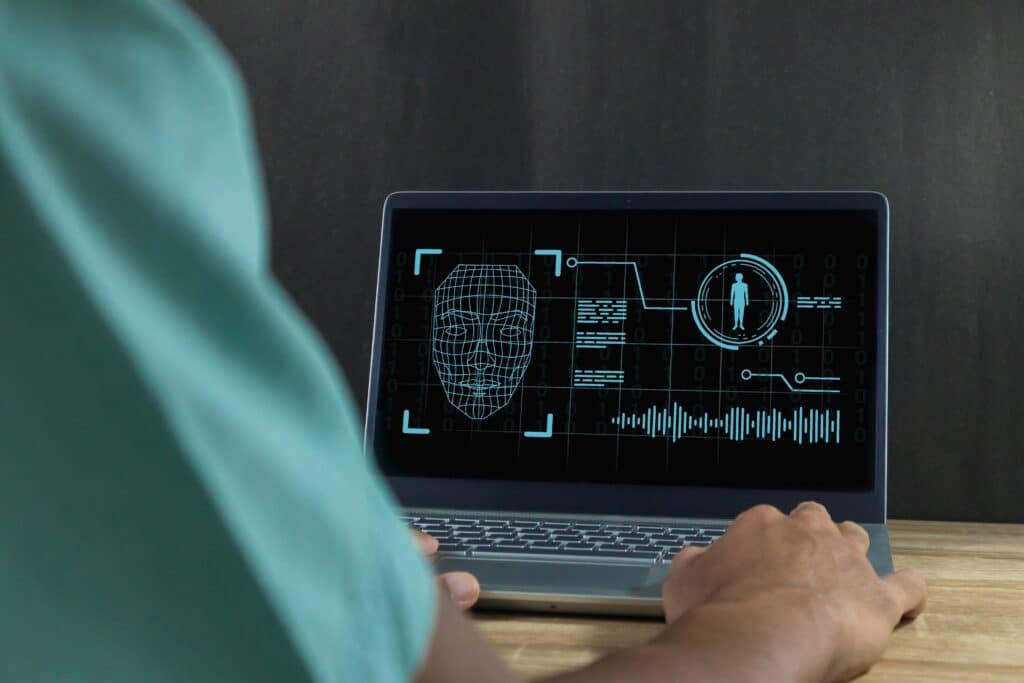
New York-based AI security company Reality Defender is warning businesses that deepfake threats have moved beyond isolated fraud schemes and into the trusted internal workflows that companies use to verify identity, restore access, approve transactions, and communicate with senior leadership.
In its Deepfake Response Playbook: An Executive Guide to Detection, Escalation & Containment, Reality Defender’s broader message is that deepfake risk is now part of core security planning. Organizations must protect not only systems and data, but also the digital communication channels where business decisions are made.
That means training staff to understand that voice and video are no longer reliable identity controls, integrating detection into existing security infrastructure, and building response playbooks before a synthetic media incident force one into existence.
Biometric Update reported last week that new account fraud has surged, fueled in part by AI,
“Security teams are encountering AI-generated or manipulated audio and video during password resets, access recovery, internal meetings, and executive communications,” the playbook says. “These incidents exploit trust-based processes and security exceptions that sit outside traditional technical controls.”
“This shift,” Reality Defender emphasizes, “exposes a gap in many security programs. Systems still assume that seeing or hearing someone provides assurance. Deepfakes break that assumption.”
The company said its “playbook outlines how deepfake threats have evolved, why traditional trust models fail, and how organizations can move from ad hoc reaction to structured detection, response, and containment across internal environments.”
Reality Defender argues that the central security problem is no longer simply whether a fake video or cloned voice can fool an individual viewer. The larger risk is that synthetic media can now enter routine business processes before traditional security systems recognize that anything has gone wrong.
And once a manipulated voice or video is accepted inside an access recovery process, executive call, customer service interaction, or internal approval chain, the report says the damage may already be underway.
The report frames deepfakes as a growing form of trust boundary exploitation.
Earlier attacks often centered on direct financial fraud, including impersonation of a chief executive or chief financial officer to authorize a payment or disclose sensitive information.
Reality Defender says that model has expanded into a broader cybersecurity threat that can be used for account escalation, authentication bypass, reconnaissance, lateral movement through systems, and manipulation of identity checks.
This shift matters because many organizations still rely on visual or audio confirmation as a fallback when automated controls fail. A common example is a failed password reset or biometric check that is escalated to a manager over video.
The manager may be asked to confirm whether the person on the call is the employee who works for them.
For years, that kind of process was treated as a reasonable safeguard. Reality Defender warns that the same process can now become an entry point if the person on the screen is an AI generated impersonation.
The report says the old assumption that seeing and hearing a person is enough to establish identity no longer holds. Visual confirmation can be synthetic.
A manager’s approval can be manipulated if the manager is impersonated. Voice patterns can be cloned in real time. In that environment, the report says, the weakness is not only technical.
It is procedural, because many of the most sensitive decisions inside organizations still depend on human judgment in moments of exception handling.
Reality Defender points to internal infrastructure as a particularly exposed environment. Customer-fronting production systems are often more mature from a security perspective because they are tightly controlled, monitored and tested. Internal systems are different.
Employee laptops, mobile devices, collaboration tools, meeting platforms, and internal messaging channels form a wide and uneven attack surface. These tools sit outside the core production stack, but they often provide the path into it.
The playbook also identifies contact centers and service operations as a growing area of concern. These environments combine real time communication, identity verification, and the authority to make account or financial decisions.
Agents are often required to act quickly and may rely on voice or visual cues to determine whether a caller or customer is legitimate.
Reality Defender says that as agentic AI and deepfake enabled impersonation grow more capable, contact centers should no longer be treated only as fraud environments. They now sit at the intersection of fraud, identity and cybersecurity risk.
The report recommends that organizations focus monitoring on high impact scenarios rather than trying to treat every interaction the same way.
Executive communications, financial authorization workflows, credential discussions, configuration changes, and access related conversations all carry greater downstream consequences.
The report notes that high frequency events are not always the most dangerous. Hiring impersonation may be more common, but access escalation or executive impersonation can be far more damaging when successful.
Reality Defender argues that deepfakes risk does not end when a live call ends. Manipulated media can move through email attachments, shared files, recorded meetings, collaboration platforms, and internal drives. Images, audio, and video that employees consume or act on can each become a trust boundary.
The report says organizations should be able to detect synthetic or manipulated media across these channels and should provide clear visibility when content appears to be AI generated, even if the immediate intent is not malicious.
The playbook’s core recommendation is that detection alone is not enough. Organizations need defined response procedures that tell employees, security teams, and incident responders what happens after a suspicious audio or video signal appears.
Reality Defender says the goal should be operational control. Teams should be able to slow down decisions, preserve evidence, add verification steps, and contain exposure without improvising during a live incident.
The report calls for real time detection to be integrated into existing security systems rather than handled as a separate process. Detection signals should feed into centralized monitoring platforms, including security information, and event management systems, and then flow to security operations centers for analyst review.
The report emphasizes that early visibility is often more important than perfect certainty. A timely warning can allow an organization to pause a sensitive action before a manipulated interaction leads to access, payment, or disclosure.
For live incidents, the playbook recommends that organizations preserve evidence. A suspicious meeting or call should be recorded so investigators have material to review.
The report notes that deepfake incidents can disappear once an interaction ends, making preservation especially important. The next step is notification. Participants and incident response teams should be alerted that a potentially manipulated interaction has been identified.
The report warns against relying only on a meeting host to act, since that role could also be compromised.w
The playbook then recommends authentication challenges that match the sensitivity of the situation. In lower risk cases, a team might call a participant back on a verified number. In higher risk cases, additional credentials or secondary approvals may be required.
The report says these procedures should be defined in advance and tied to the organization’s risk tolerance.
Reality Defender proposes a tiered response model. Low confidence signals may only require logging and monitoring.
Related Posts
-
 December 4, 2025
 -
March 19, 2026
-
 April 3, 2026
 -
 February 5, 2026
 -
 January 12, 2026
 -
November 14, 2025
Article Topics
AI fraud | deepfake detection | deepfakes | enterprise | Reality Defender | synthetic data

Comments