
Smart glasses and the new DHS surveillance budget

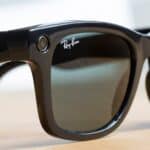
The Department of Homeland Security’s (DHS) Fiscal Year (FY) 2027 budget justification lays out an expansive biometric and identity tech agenda that stretches from airport checkpoints to ports of entry to immigration enforcement operations, with one of the most striking items buried in the Science and Technology Directorate’s (S&T) research portfolio: a plan to develop operational prototypes of smart glasses for immigration enforcement agents.
In the S&T budget, the smart-glasses work appears under the Border Security and Immigration Mission Center’s Detention and Removal Operations program, which is funded at $7.5 million for FY 2027.
The justification document says the effort will support new data analytics methods and automated systems for immigration enforcement and “deliver innovative hardware” that includes smart-glasses prototypes that would give agents real-time access to information and biometric identification capabilities in the field.
The project schedule states that in FY 2027 S&T plans to “develop an operational prototype of smart glasses that enables biometric identification of illegal aliens.”
That language matters because it places biometric smart glasses not in a speculative concept paper or outside reporting, but in an official DHS budget justification.
It also shows that the department is framing the technology not as a standalone gadget, but as one part of a broader push to tighten coordination between Customs and Border Protection (CBP) and Immigration and Customs Enforcement (ICE), automate data collection and validation, and improve the handling of custody transfers and removals.
In other words, the glasses are being developed as a mobile biometric interface for frontline immigration enforcement.
The smart-glasses project sits inside a much larger S&T biometric portfolio. In the Border Security and Immigration section of the S&T budget, DHS requests $16 million for Biometrics and Identity Management, $6 million for Biometric Emerging Concepts, and $10 million for Biometrics and Identity Screening.
Alongside those line items, the budget reflects a reorganization of biometric work around identity confirmation, border screening, and support for operational components.
The $10 million Biometrics and Identity Screening project is aimed at helping CBP identify, evaluate, and implement advanced biometric solutions to strengthen traveler vetting, improve security, and streamline travel.
S&T says the project will deliver software and hardware that allow rapid identification and verification of people entering, exiting, and traveling within the United States, reduce the risk of fraudulent identities, and even help confirm familial relationships to combat the trafficking of minors.
Its FY 2027 milestone is to deliver those software and hardware solutions for rapid identification and verification at ports of entry.
S&T’s biometrics roadmap also reaches deeper into the department’s core identity systems. In the Biometric Emerging Concepts schedule, the directorate says it tested integrated multimodal biometric collection systems, including fly-away kits designed to interoperate with DHS enterprise systems such as the Automated Biometric Identification System and Homeland Advanced Recognition Technology (HART) program.
“Fly-away kits” are best understood as portable, deployable biometric collection systems that can be taken into the field and connected back to DHS identity databases. In practice, that means a fly-away kit would likely include equipment for capturing biometrics in remote or operational settings and transmitting or syncing them with IDENT or HART for identity verification and matching.
The S&T budget request also describes work on face-template re-enrollment and a longitudinal biometric dataset intended to establish age boundaries for face-matching algorithms, an indication that DHS is trying to improve facial recognition performance over time and across changing appearances.
The S&T directorate reinforces that emphasis elsewhere by establishing a Biometrics Hub under its Innovative Research and Foundational Tools portfolio. According to the budget, this hub is intended to provide innovation, standardization, and integration of biometric and identity technologies across DHS while reducing costs and helping component acquisitions by evaluating solutions before they are operationally deployed.
The Transportation Security Administration (TSA) submitted a budget that is just shy of $41 million in FY 2027 for Credential Authentication Technology (CAT-2), and another $20 million for e-Gates.
The CAT-2 systems are used at checkpoint entrances to verify the authenticity of IDs, determine whether they are REAL ID compliant, confirm reservations, obtain Secure Flight results, and perform automated one-to-one facial biometric comparison between the traveler and the ID photo.
TSA notes that participation in the biometric comparison is voluntary and that passengers can opt out and request a standard ID check.
The FY 2027 request would procure and deploy 700 additional CAT-2 systems, bringing the cumulative total to 2,929 and pushing full operational capability forward to FY 2029.
The new e-Gates push goes further. TSA describes them as automated touchless gates that compare a traveler’s biometrics with an identity document and boarding pass and eventually allow the person to proceed without presenting an ID at all.
The budget request says TSA intends to build backend matching capabilities that can take a live photo at the checkpoint and compare it against a gallery of passengers traveling through a given airport that day, making the identity-verification process seamless and, in TSA’s telling, faster, more secure, and more operationally efficient.
FY 2027 key milestones include integration with third-party wallets and digital IDs and deployment to Class I airports. A Class I airport is one that serves all types of scheduled operations of air carrier aircraft designed for at least 31 passenger seats.
TSA’s broader vetting account shows how central identity screening has become to the agency’s budget structure.
The FY 2027 request includes $692.7 million for Vetting Fee Programs overall, including $72.7 million for the biometric Transportation Worker Identification Credential program and $154.8 million for TSA ConfirmID, the new identity-verification program for travelers who arrive at checkpoints without acceptable ID that was implemented in FY 2026 and is designed to increase REAL ID compliance while giving noncompliant passengers an alternative pathway through added verification and security processes.
At CBP, the biometric agenda is framed less as experimentation and more as scaled operational infrastructure. The agency’s separate 9/11 Response and Biometric Exit Account is funded at $14.36 million in FY 2027, up from $12.76 million in FY 2026.
CBP says the program supports air entry and exit processing and eventually sea and land processing as well, and it envisions a “Biometric Pathway Backbone” that can support private sector investment in equipment such as facial recognition self-boarding gates and self-service bag-drop kiosks.
But CBP’s budget also makes clear that the biometric-exit effort is financially strained. The justification says the fee collections supporting the program have consistently declined, falling from $35.9 million in FY 2020 to $12.8 million in FY 2025, and warns that the current trend will not fully fund biometric-exit capabilities.
The listed consequences include an inability to fix software defects, implement security updates, sustain specialized hardware, and maintain the IT infrastructure underpinning the program.
CBP says that if collections remain weak, it may have to revert to manual officer-based identity verification, which would increase processing times at air, land, and sea ports.
Even so, CBP is still pushing forward. The budget includes a performance measure for the percentage of departing air travelers who are biometrically confirmed. The target rises to 60 percent in FY 2027, up from 55 percent in FY 2026.
CBP said that through FY 2025 it had completed 73.7 million biometric confirmations for 142.4 million departing air travelers, or 51.75 percent.
The system behind that process is the Traveler Verification Service, which uses facial comparison technology at the gate and returns either a match or a prompt for alternative manual verification.
CBP’s biometrics footprint extends beyond traveler processing. In its operations budget, the agency says base funding will continue to support the Biometric Identification Transnational Migration Alert Program and the Biometric Data Sharing Partnership Program through the Foreign Operations Desk and related international coordination work.
Those programs show that biometrics remains tied not only to entry-exit processing but also to cross-border intelligence sharing and migration enforcement.
ICE, by contrast, does not foreground new biometric systems in the same way in its own component budget justification. The operational budget is more revealing for what it does not say, which is there is no large, stand-alone biometrics modernization line similar to TSA’s checkpoint programs or CBP’s biometric-exit account.
Instead, ICE’s budget shows biometric capability embedded in enforcement equipment and in S&T-funded R&D intended to support ICE missions.
For example, the Fugitive Operations budget lists biometric readers among the equipment needed for law enforcement operations, suggesting that ICE is primarily the user of tools being developed and procured elsewhere in the department rather than the main research sponsor itself.
What emerges from the FY 2027 DHS budget is not a series of isolated pilot programs, but a department-wide effort to make biometric identification more mobile, more routine, and more deeply embedded in the everyday mechanics of security screening, border management, and immigration enforcement.
Related Posts
-
 March 16, 2026
 -
 June 23, 2025
 -
 March 2, 2026
 -
 February 13, 2026
 -
 April 14, 2026
 -
 November 13, 2025
Article Topics
biometric identification | biometrics | CBP | DHS | DHS S&T | facial recognition | ICE - U.S. Immigration and Customs Enforcement | smart glasses | U.S. Government

Comments