
Digi Yatra passes 100M journeys as IATA trial validates global interoperability
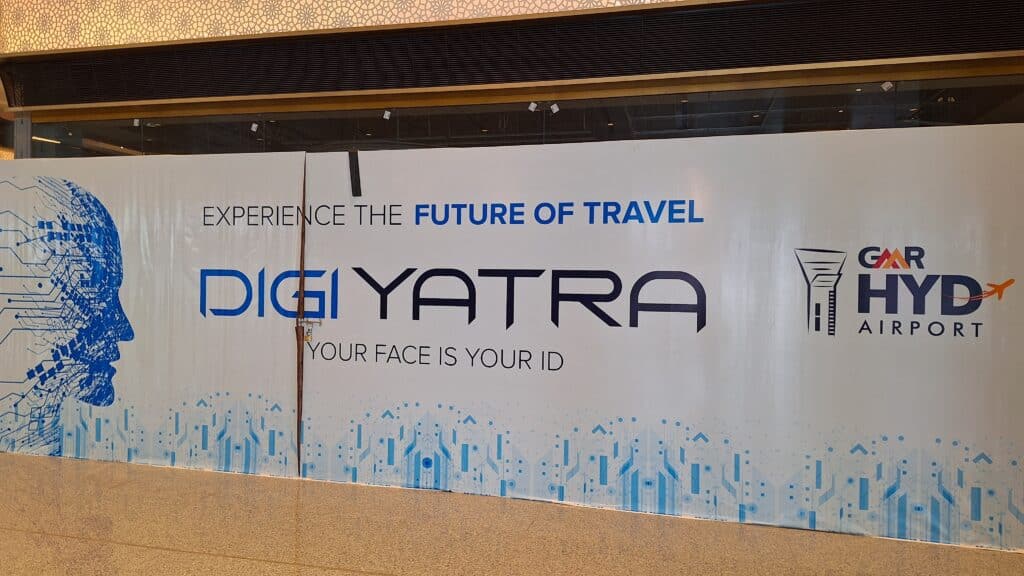
India’s Digi Yatra platform is making moves toward international deployment after an IATA-led trial showed it can interoperate with global aviation systems and digital wallets.
The proof‑of‑concept carried out with IndiGo, Bengaluru’s Kempegowda International Airport and SITA tested whether a standards‑based digital identity model could support seamless travel across borders. The trial used a simulated IndiGo journey from Bengaluru to Doha.
It validated remote biometric enrolment, airport entry, security checks and boarding. Passenger identity was derived from an e‑passport and issued as a verifiable credential stored on the traveller’s device. Data was only shared with consent and for the duration needed. No centralized storage was used.
The PoC also showed that credentials issued in one system could be used by another. SITA wallet credentials were successfully verified within the Digi Yatra ecosystem. The trial confirmed compatibility with Apple Wallet and Google Wallet, suggesting that passengers may eventually store travel credentials in widely used digital wallets.
The results align with IATA’s One ID vision for interoperable digital identity. The model uses face biometrics as the primary verification method, reducing repeated document checks while maintaining assurance. Data exchange was kept minimal and purpose‑bound, with built‑in consent and revocation controls.
The findings were presented at the IATA World Data Symposium in Singapore. Digi Yatra CIIO Siddharth Sharma outlined how identity verification could move upstream to pre‑travel, allowing credentials to be exchanged securely across systems in real time.
The Digi Yatra trial forms part of a broader industry effort to test interoperable digital identity for travel. Similar proofs of concept have been conducted across Europe and Asia‑Pacific with airlines, airports and technology providers evaluating how digital credentials stored in mobile wallets can support seamless passenger journeys. Technology providers involved in IATA-led initiatives include Amadeus, Branchspace, Hopae, NEC, SICPA and SITA, supported by the IATA Contactless Travel Directory. IATA is also working on a digital identity pilot with Trip.com Group.
Rapid adoption strengthens case for global deployment
The trial builds on Digi Yatra’s rapid domestic growth. The platform has supported more than 100 million journeys and has over 24 million app downloads across Android and iOS. Average airport entry processing times have fallen from 15 seconds to about 5 seconds per passenger. The system has also reduced paper use by removing the need for physical boarding passes.
Civil Aviation Minister Shri Ram Mohan Naidu said the milestone reflects rising adoption of contactless travel. Domestic passenger numbers have increased sharply in recent years, and annual traffic is projected to reach 500 million by 2030 and nearly one billion by 2040. The government is expanding digital systems to manage this growth, including self‑baggage drop, upgraded ATC automation and AI‑based airport tools.
Digi Yatra is active at 38 airports. Another 27 airports will be added next year. New airports at Navi Mumbai, Jewar and Bhogapuram will be Digi Yatra‑enabled from launch. The platform will also expand language support from 11 to 22 languages by the end of the year.
Digi Yatra’s architecture uses a privacy‑by‑design model. Passenger data stays encrypted on the user’s device and is shared only with the origin airport for immediate verification. The Ministry of Civil Aviation says the system is part of a broader effort to make air travel more efficient and accessible as passenger volumes continue to rise.
Related Posts
-
 June 30, 2025
 -
 October 20, 2025
 -
 May 14, 2026
 -
 November 21, 2025
 -
 February 16, 2026
 -
 April 24, 2026
Article Topics
airport biometrics | biometrics | Digi Yatra | digital travel | digital wallets | India | International Air Transport Association | One ID | passenger processing | SITA

Comments