
EES records 66M border crossings in first six months despite rollout friction
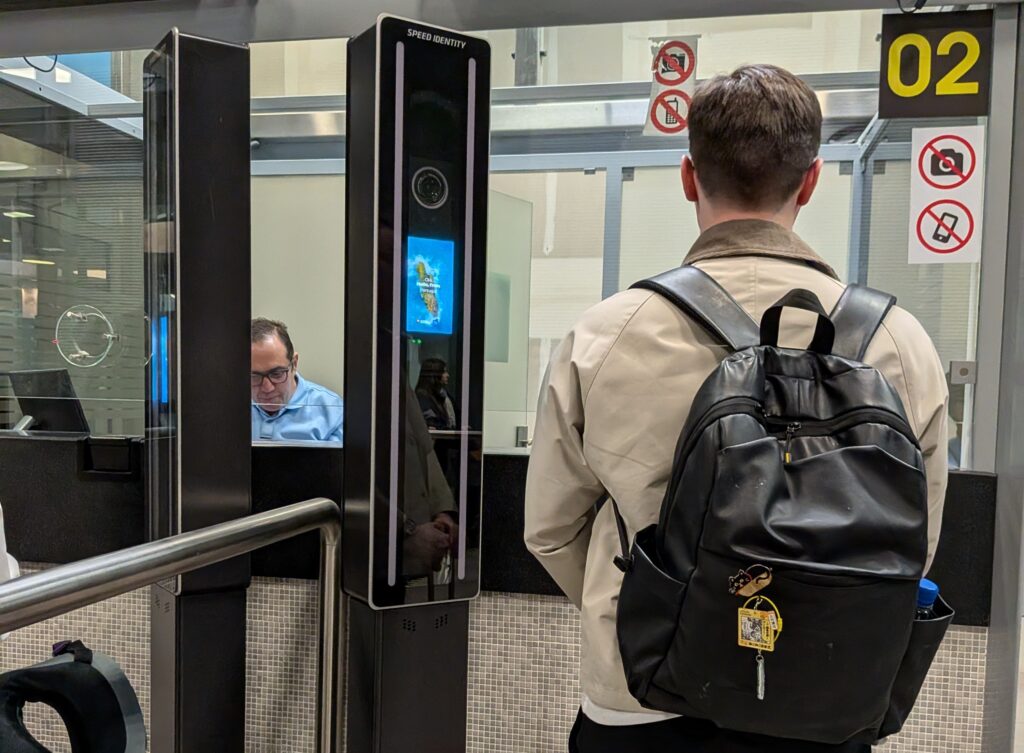
During its first six months of operation of Europe’s biometric-based Entry-Exit System (EES), daily fingerprint checks against EU databases rose from approximately 17,000 to around 87,000, according to new figures published by the European Commission.
The figures mark the first large-scale operational test of Europe’s biometric border infrastructure, which combines facial recognition and fingerprint verification to track non-EU travelers entering and exiting the Schengen zone.
Overall, 66 million entries were recorded by the biometric border scheme since the rollout began in October 2025, the newest State of Schengen report revealed on Monday. The system records third-party nationals by registering their facial and fingerprint data.
The system refused entry to 32,000 people into the Schengen zone. Among them, nearly 800 individuals were considered threats to internal security, while almost 7,000 travelers were denied entry for overstaying their Schengen visas.
“During the six-month progressive start, the system has shown clear benefits for the security of EU citizens by stopping criminals, impostors, and document fraudsters from crossing borders under false identities or with fake documents,” says the report.
Despite reports of hours-long queues and technical issues at border checkpoints, the Commission says the “vast majority” of Schengen states have implemented the EES effectively.
“Overall, the EES has been operating efficiently, bringing visible benefits to EU security,” the document says.
During the next year, Schengen countries will need to reduce processing times for EES, add more automated border control solutions and improve the registration and the quality of biometrics, the report concludes. The continent will also need to prepare for the introduction of ETIAS (European Travel Information and Authorization System).
EU is disconnected from the reality of EES: report
Not everyone agrees with the EU’s assessment of the EES deployment. The Commission’s portrayal of the rollouts shows a disconnect with reality on the ground, Davide Colombi, a researcher at the Centre for European Policy Studies, told The Times.
The EES was first envisioned in 2008: It took 17 years and five delays to turn it into reality.
“The EC is portraying the implementation of the rollout as a successful one. But it’s been postponed for many years, so clearly something was not working,” says Colombi.
Many of the issues with EES, including missed flights and boarding delays, were already predicted in 2013 in a report published by the European Parliament, which studied how the U.S. introduced its own border systems.
These problems became apparent when the system was put into full force during Easter holidays, with wait times at airports extending between two and three hours. One flight from Milan to Manchester only boarded 34 of 156 passengers, as the majority could not reach the plane on time.
Some experts are blaming delays on individual countries: Local border forces have not provided enough staff to guide people through the new system, according to the CEO of travel agency consortium Advantage Travel Partnership, Julia Lo Bue-Said.
The EU’s response to these complaints has been to allow countries to partially suspend EES operations where necessary for an additional 90-day period after launch, with a possible 60-day extension to cover the summer peak.
Airlines, including Ryanair, as well as major airport organizations such as Airlines for Europe (A4E) and Airports Council International (ACI) Europe, say this is not enough. With the summer travel season approaching and British tourists reconsidering vacation plans, UK-based organizations are calling for more exemptions.
The European Commission should drop the requirement for fingerprinting and exempt British passport-holders, as they generally do not represent a “high-risk,” says Tony Smith, chairman of the London-based International Border Management and Technologies Association (IBMATA) and former director general of UK Border Control.
Greece unilaterally announced in April that it would suspend EES checks for British tourists due to long queues, with rumors swirling that Portugal and Italy could follow suit.
British travelers to France taking the Channel routes are still mostly exempt from biometric border checks. The rollout of the EES at the Port of Dover and Eurotunnel was pushed back after French authorities reported technical setbacks
As EES expands toward full operational scale and prepares for integration with ETIAS, Europe’s biometric border infrastructure is increasingly becoming both a security project and a stress test for cross-border travel logistics.
Related Posts
-
 March 30, 2026
 -
 June 9, 2025
 -
July 7, 2025
-
 December 19, 2025
 -
 June 25, 2025
 -
 October 1, 2025
Article Topics
airport biometrics | biometrics | border security | Entry/Exit System (EES) | Europe | identity verification

Comments