
EES troubles ignite speculation of further suspensions
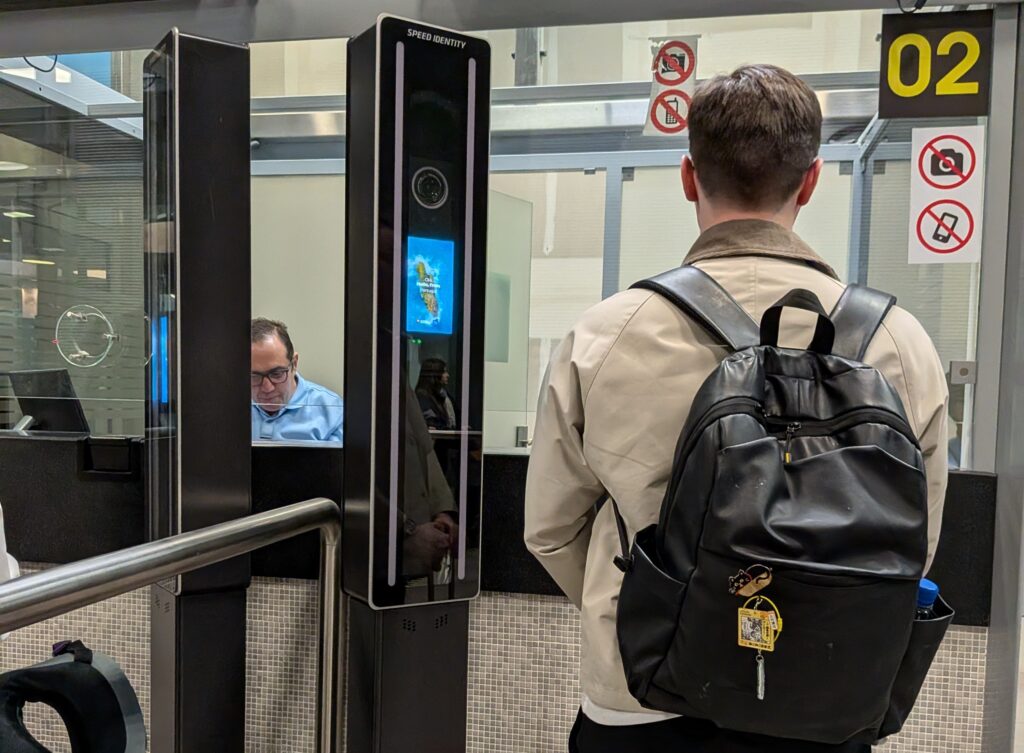
Crowds, chaos and cranky travelers: The EU’s biometric border management scheme, the Entry-Exit System (EES), continues to fill headlines as the peak summer travel season approaches.
After Greece announced in April that it would suspend EES checks for British tourists due to long queues, UK news outlets have been reporting that Portugal and Italy could follow suit. The news, however, remains without official confirmation.
Croatia, which was another popular destination rumored to be ending EES checks for Brits, confirmed this week that the system will remain in place throughout the tourist season.
The European Commission has reminded that the EES has “built-in flexibility,” which allows authorities to pause biometric registration during peak periods. The option was introduced in February and allows temporary suspensions of the system for 90 days from its launch on April 10th, with another possible 60-day extension to cover the end of the summer season in September.
Some countries seem to be using the option: According to The Times, Portuguese border authorities are “informally” relaxing EES checks at airports when queues become excessive.
Meanwhile, criticism continues among air companies and travel agencies over chaos at airports.
Ryanair: EES is ‘half-baked’
Last Thursday, Europe’s biggest budget airline, Ryanair, wrote to 29 countries participating in the EES to suspend the system until September in order to prevent hours-long queues and disruptions for passengers.
“Governments across Europe are attempting to roll out a half-baked IT system in the middle of the busiest travel season of the year, and passengers are paying the price, being forced to endure hours-long passport control queues and, in some cases, missing flights,” says Neal McMahon, Ryanair’s chief operations officer.
McMahon called on governments to follow Greece’s example and suspend the EES until September, according to Connexion France.
Ryanair’s calls were joined by travel agency consortium Advantage Travel Partnership.
“Until EES can be implemented without a detrimental effect on the traveler experience, there must be flexibility; otherwise, we face undermining consumer confidence within the travel sector at a vital time,” says Julia Lo Bue-Said, the organization’s CEO.
EES still not ready on UK-France Channel routes
Most UK travelers to France by ferry, Eurotunnel, or by train are still being spared EES checks, as operators wait for the go-ahead from French officials.
The Port of Dover and Eurotunnel announced delays in March after French authorities reported technical setbacks. Currently, only Eurostar first class/carte blanche holders are required to register for EES, while the Port of Dover is only registering coach passengers, The Local reports.
French airports, however, are a different story: Ryanair says that France is facing a shortage of staff and operational self-service kiosks, and that the system is not coping with high passenger volumes.
France has yet to adopt the Travel to Europe app, which has been embraced only by Portugal and Sweden so far. The app, developed by Frontex with Inverid (Signicat) and iProov, allows travelers to enter their personal and travel details before arriving at the border.
Earlier this year, the Aéroports de Paris (ADP) group, which manages airports such as Paris-Charles de Gaulle and Paris-Orly, requested a postponement of the EES system. Similar calls have been made by major European aviation organizations, including ACI Europe (Airports Council International), A4E (Airlines for Europe), and IATA (International Air Transport Association).
Related Posts
-
 June 9, 2025
 -
July 7, 2025
-
 March 30, 2026
 -
 June 25, 2025
 -
 October 1, 2025
 -
 November 14, 2025
Article Topics
biometrics | border security | digital travel | Entry/Exit System (EES) | Europe | identity verification

Comments