
Travel biometrics making new connections
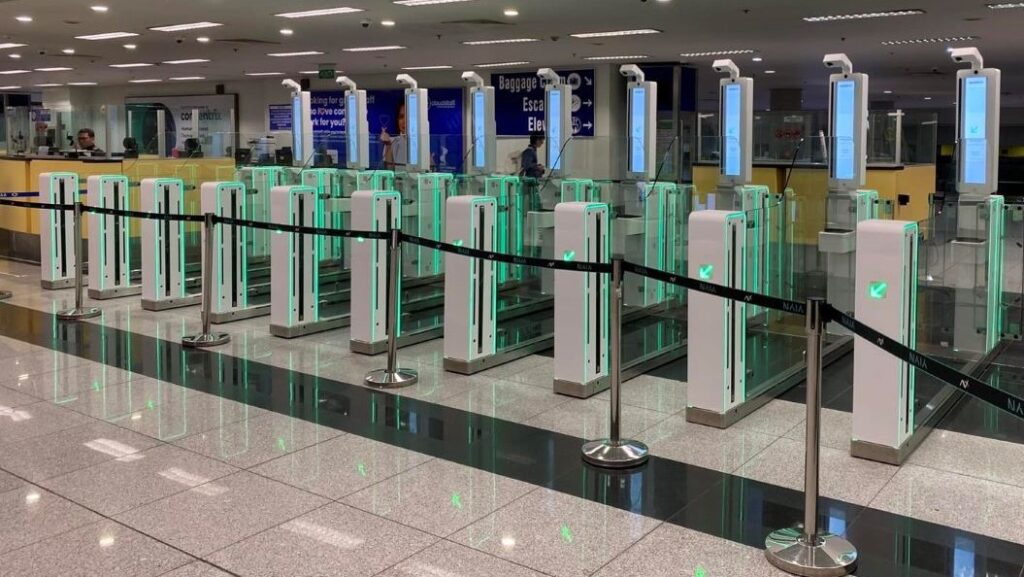
Airport biometrics projects and companies are breaking new ground and intersecting with other industry trends, from digital wallets to biometric ticketing. This week’s big acquisition and details of a successful trial illustrate the market segment’s growth potential, as other top headlines on Biometric Update show the bullish future of AI agents, digital wallets and even physical access control for entertainment venues.
The billion-dollar acquisition of Idemia PS by Amadeus marks a bold move to expand the digital travel ecosystem, while Silverfort is adding Fabrix’ Security’s native AI expertise to its IAM strengths.
Travel biometrics expand horizons
Amadeus is acquiring Idemia Public Security in a 1.2 billion euro ($1.4 billion) deal that significantly expands the former’s biometrics capabilities and market reach. The plan laid out by Amadeus refers to an expanded set of use cases for biometric travel beyond airports.
An IATA trial successfully showed how digital ID and face biometrics can enable international flights, even with a transfer in the middle. A journey from Japan to London via Hong Kong was completed through interoperability between multiple digital wallets and types of face biometrics implementations.
Pakistan is considering its options to deploy biometric e-gates and passenger screening systems at the country’s airports, but the process has been somewhat fraught. A PAA project to supply the e-gates has drawn allegations of procurement process violations, and now the U.S. government supports a $2.4 billion, 25-year bid from Securiport.
As biometric travel credentials expand to the hospitality sector, biometric access control is already on the agenda or deployed at the entrance of destinations like NCAA football stadiums and Disneyland. Wicket has struck a deal with live event ticketing and analytics provider Paciolan, which serves three-quarters of schools from the Power Four Conferences, which are the SEC, Big Ten, ACC and Big 12.
AI and IAM
Silverfort has acquired Fabrix Security to integrate its AI capabilities, while private equity firm Bridgepoint has taken majority ownership of iC Consult to steer it through the growth period AI agents are spurring in IAM.
World is targeting enterprise authentication with its 4.0 service expansion, but GetReal Security CEO Matt Moynahan argues on his company’s blog that World ID is designed for consumers to prove they’re human, not enterprises use cases.
Public projects plod along
Separate findings from the EC’s EUDI Wallet Launchpad and ENISA’s draft European Cybersecurity Certification Scheme show the digital IDs will be able to serve many use cases with a robust security framework. But not anytime soon. The former says few states will meet November’s deadline, and the latter says no security standard or spec will be ready either.
The UK’s national digital ID is bypassing some of the steps, like a launch or a clear plan, that usually precede a public inquiry by the Public Accounts Committee, which pounded one of the nails into GOV.UK’s coffin in 2019. The Ada Lovelace Institute warn the project risks undermining the basis of common law.
David Crack of ADVP and Phil Booth of NO2ID debate what good digital ID for the UK might look like in last weekend’s episode of the Biometric Update Podcast.
Sri Lanka is currently setting up the trust architecture, including the nascent Data Protection Authority, for its digital ID. The country’s Deputy Minister of Digital Economy tells Biometric Update citizens will have control over their own data, with biometrics hashed before storage.
The longer governments take to establish working private markets or public alternatives, the better for Google, Apple and Samsung. The digital wallets offered by the three smartphone giants are getting fatter with more IDs, age verification and digital travel features.
Australia has begun the process to contract a biometric liveness detection supplier for myID. The ATO has been using iProov’s spoof protection since 2021, and wants to take advantage of new technologies like NFC scanning on smartphones.
Armenia is getting new biometric passports and ID cards compliant with current ICAO and EU specifications. Biometrics cards will be supplied by Haypass, a consortium founded by Idemia Identity Security and ACI Technology, and IN Groupe.
Please let us know if you spot any online presentations, podcasts or other content we should pass along to those in biometrics and the digital identity community, either in the comments below or through social media.
Related Posts
-
 November 21, 2025
 -
 September 12, 2025
 -
 April 10, 2026
 -
 June 30, 2025
 -
 November 18, 2025
 -
 August 4, 2025

Comments