
Ryanair boss calls EES ‘a s***show’ with full biometrics check launch days away
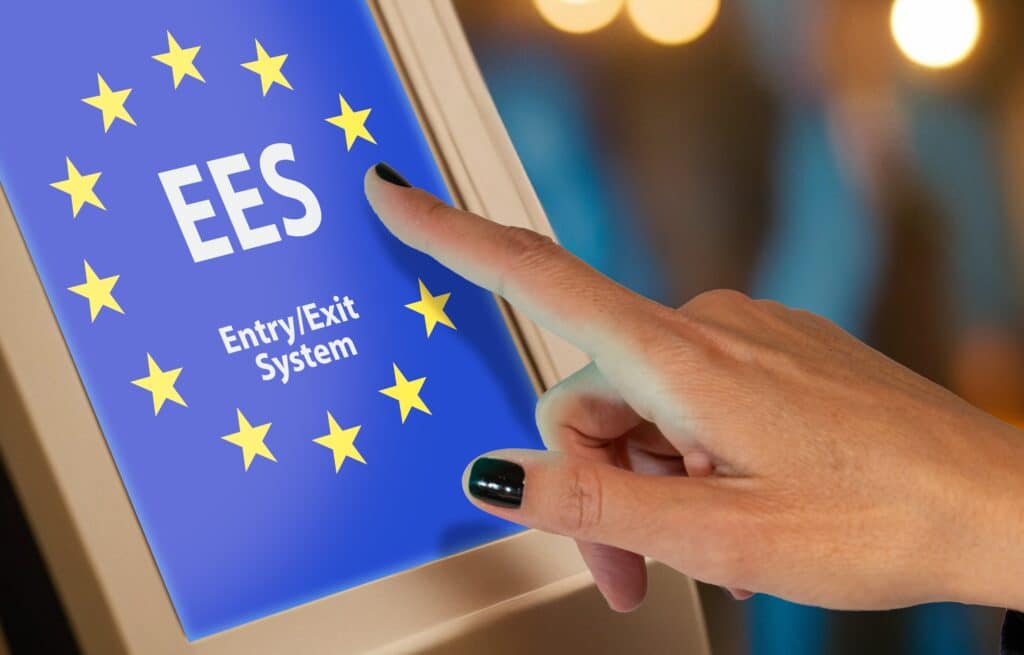
With just four days until the scheduled full rollout on April 10, Europe’s Entry-Exit System (EES) is causing anxiety in the air travel industry, with the UK confirming that biometric border checks will not be rolled out on time.
Michael O’Leary, the CEO of Ryanair, said last Friday that “significant disruption” has been seen at airport passport control, where the system is already in place. Additional delays have been caused by understaffed immigration kiosks, while passengers who had already registered for EES had to wait in the same queues as everyone else.
“EES has just been a s*** show and a shambles,” O’Leary told The Times.
The EU has allowed countries to partially suspend EES operations where necessary during an additional 90-day period after the launch, with a possible 60-day extension to cover the summer peak. States should take advantage of the suspension options, he notes.
Smaller airports, including Seville, Alicante, Tenerife and Faro, are most likely to be impacted by delays, he adds.
Together with its subsidiaries, Ryanair forms Europe’s largest airline group, carrying upwards of 200 million passengers last year. Other airlines are also feeling the squeeze of EES deadlines.
Last week, European industry organizations Airlines for Europe (A4E) and Airports Council International reiterated their call to the European Commission to allow full or partial suspensions of the EES during the 2026 summer season.
“Data collected from airports across Europe shows a continued deterioration in waiting times at border crossing points located in airports,” they say. “Waiting times are now regularly reaching up to two hours at peak traffic times.”
If the technical and operational issues with EES are not resolved, the EU should remain flexible during future peak travel periods, such as winter 2026/2027, the organizations argue.
Delays continue at Eurotunnel and Port of Dover
Last Saturday, UK ports again confirmed that British travelers to France taking the Channel routes will not have to undergo biometric border checks for the next few weeks.
Eurotunnel announced that it would start creating EES files with the French border police on April 10th, but the stage will not involve the collection of biometric data, the Guardian reports. The delay was first announced earlier last week, when the Port of Dover shared that the French side is experiencing technology issues.
During his interview with The Times, O’Leary also blamed Brexit for long queues for British travelers to Europe.
“There’s a bit of Brexit in this, too. Here, you voted for Brexit – f*****g join the queue,” he says.
Other countries, however, seem to be less threatened by the rollout. In an email to Biometric Update, the Portuguese Homeland Security System (Sistema de Segurança Interna) said that no additional disruptions are expected as a result of the EES launch.
“However, as we are entering the peak travel season, we recommend that passengers allow more time for connections within Europe and make use of the available electronic systems and equipment to help streamline border control procedures,” it says.
EES caught 600 people posing security risks: EU
Despite anxiousness in the travel industry, the EU has been showing its evidence for why a biometric border system is necessary.
Since the launch of the EES in October 2025, the system has helped identify over 600 people who posed a security risk to Europe, according to data released by the European Commission on March 30th.
“They were refused entry and recorded in the system,” says the notice. “As a result, if they attempt to enter another European country using the system, border authorities will be able to see their previous refusal of entry.”
Schengen countries have also flagged multiple cases of identity fraud at borders. In a recent Romanian case, biometric data revealed a traveler who was using two separate identities with different documents. The person had already been denied entry to the Schengen area three times by different member states.
The EES has so far registered over 45 million border crossings. Over 24,000 people had been refused entry for different reasons, including expired or fraudulent documents.
Related Posts
-
 June 9, 2025
 -
July 7, 2025
-
 October 1, 2025
 -
 April 17, 2025
 -
 November 14, 2025
 -
 March 30, 2026
Article Topics
airport biometrics | biometrics | border security | Entry/Exit System (EES) | identity verification | UK

Comments