
EU defends biometric EES rules as border delays and exemptions fuel confusion
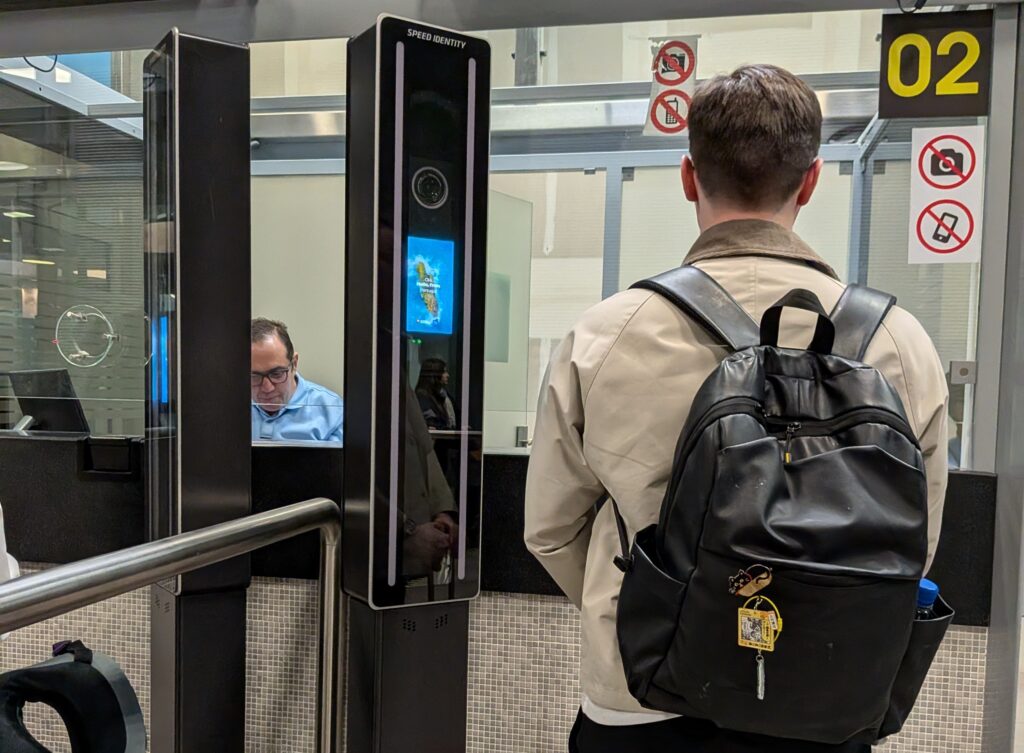
The rollout of the EU Entry/Exit System (EES) is exposing operational and political strains in Europe’s biometric border strategy.
The EU Commission remains firm on EES regulations
The European Commission has made clear that there has been no new pause or fresh authorization for countries to stop collecting EES biometric data, despite recent media reports and growing pressure from airlines such as Ryanair.
Brussels told The Connexion that Greece acted unilaterally when it stopped taking fingerprints and facial images from British travelers, and that no EU permission was granted for this. The Commission has contacted Athens to “recall the existing rules” and underline that only limited, temporary suspensions are allowed.
The Commission also said that Italy and Portugal have confirmed to it that they do not plan to exempt any nationality, countering rumours that they might follow Greece’s approach. Any reports suggesting that the EU has quietly authorized broader relaxations are incorrect, the Commission insisted.
According to the Commission, the EES regulation already contains built‑in flexibilities: border posts may suspend biometric collection for up to six hours when queues become excessive, a measure available until July and potentially into September. But Brussels stressed that the legal framework does not allow blanket or long‑term exemptions for specific nationalities.
It added that the regulation itself has not changed, and that Member States are expected to comply to ensure the system functions properly, even though no specific sanctions are set out for non‑compliance.
Brits and Moroccans raise concerns
The European Union’s Entry-Exit System (EES) is causing issues not only for the British but also for those of North African heritage.
With the EES requiring face and fingerprint biometrics, Moroccans living in Europe are facing concerns as they prepare to travel to Morocco via Spain this summer, reports Atalayar.
Each summer, large numbers of Moroccans living in France, Belgium and the Netherlands travel through Spain to reunite with family in Morocco, creating one of Europe’s largest seasonal cross-border travel flows. The annual pilgrimage this year has been plagued by worries vocalized across social media and in online groups, with Moroccans desperate to know about documentation and delays.
Spanish and Moroccan authorities have stepped up collaboration to try and ease technical and administrative challenges. However, the busy checkpoints of Algeciras and Tarifa have perhaps inevitably caused bottlenecks. Vehicles waiting on the Spanish side form queues to board ferries. Similar to what’s occurred in some European airports, the implementation of the EES system has caused delays, with the news sparking larger concerns.
These larger concerns have been such that some governments have even gone to the lengths of suspending the EES system. Greece announced in April that it would halt EES checks for British tourists this summer, with British visitors representing such a big proportion of tourism takings. The EES has “built-in flexibility” for temporary suspension during peak periods, and the Portuguese border authorities are reportedly “informally” relaxing EES checks at airports when queues are severe.
Increasing wait times
The Times reports on British travelers’ troubles in Berlin, Paris, Geneva and Bologna, among others, with hours long queues and other difficult conditions. The newspaper went to the trouble of compiling a chart measuring average minimum wait times at passport control in Amsterdam, Frankfurt, Zurich and Munich after EES was rolled out.
Amsterdam was the worst affected. Before EES, the average minimum wait time was 5.06 minutes, and after it was rolled out this increased to 7.69 minutes. The differences for Zurich and Munich were much more muted, while interestingly, for Frankfurt the average minimum wait time actually decreased after EES was rolled out (from 6.43 minutes to 5.81 minutes).
However, the highest maximum wait times were all longer after EES was rolled out, except for Zurich where it was the same. Amsterdam and Frankfurt both jumped to 120 minutes from 90 minutes. The difference for Munich was more negligible.
The Times claims Charles de Gaulle in Paris is among the worst affected. Last month, the operator for the French capital’s ports, Aeroports de Paris, asked for a formal postponement of the EES until summer’s end. The operator is in the process of installing 90 more biometric kiosks and pre-enrollment pods for frequent fliers. Luke Petherbridge, director of public affairs at the Association of British Travel Agents (ABTA), believes more technology investment, such as for the Travel to Europe app, is a solution.
The rollout is increasingly exposing tensions between the EU’s push for standardized biometric border controls and the operational realities of processing millions of seasonal travelers through airports, ports and land crossings during peak travel periods.
Greece muddies EES enforcement picture
Greece seemed pretty conclusive in its decision to exempt British travelers from EES this summer.
The director of the Greek National Tourism Organization said as much to The Independent, and the Greek embassy in London made it clear that UK passport holders are excluded from biometric registration at all Greek crossing points.
Now, a publication reports that there is, in fact, no exemption from biometric checks for British travelers this summer. The conflicting statements from Greek authorities underscore growing ambiguity over how aggressively some member states intend to enforce EES requirements during peak tourism periods.
A spokesperson for the Greece foreign ministry last Thursday said that they had “not received any further update or clarification as to whether, for example, specific nationalities are temporarily exempt from the relevant procedure,” in response to a question from The Associated Press.
Greek police have claimed the EES system is fully operational but that they would take “all necessary measures to ensure the smooth flow of visitors … making full use of provisions in [European] Union legislation,” reports Ekathimerini.com.
It seems probable that the Greeks will do as they like for the time being, making full use of their interpretation of regulations, unless and until sterner directions issue from Brussels.
As EES expands across Europe, the debate is increasingly shifting from whether biometric border systems can strengthen security to whether governments and transport hubs can scale them for mass international travel.
Related Posts
-
 July 7, 2025
 -
 May 21, 2025
 -
June 9, 2025
-
 February 3, 2026
 -
 May 20, 2025
 -
 May 12, 2026
Article Topics
biometrics | border security | Entry/Exit System (EES) | Europe | identity verification

Comments