
Singapore to roll out biometric, in-car border clearance for all vehicles
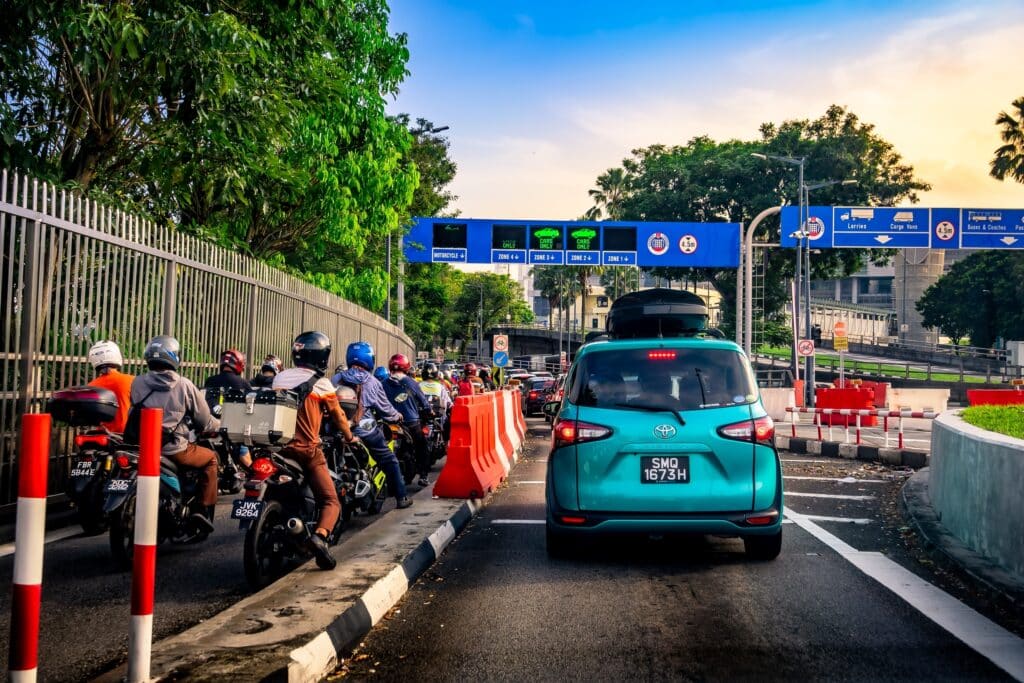
Singapore will roll out in-car biometric clearance for all vehicles at its land borders, alongside new AI systems to automate immigration processing.
The Immigration and Checkpoints Authority (ICA) said drivers and passengers will scan a QR code and undergo facial biometric verification without leaving their vehicles.
A new multimodal AI tool called Matrix will be added to ICA’s Integrated Processing System, the agency said at its annual Workplan Seminar. The system will automatically extract and classify information from passports and supporting documents.
The agency said this will reduce manual checks and speed up processing for applications including citizenship, permanent residence, long‑term visit passes, NRICs, re‑entry permits, APEC Business Travel Cards and passports.
ICA will also expand machine-learning models for risk profiling at the border. High‑risk vehicles will be screened using these tools from July 2026, with high‑risk cargo to follow in June 2027.
From early 2027, automated immigration clearance will be introduced for all vehicles arriving at Tuas Checkpoint, replacing the need for passport presentation and officer‑manned counters.
It comes as face biometrics was trialed for motorcycle border crossings at land checkpoints from March 31. It replaced fingerprint biometrics as part of the ICA’s push toward fully contactless clearance. The change reduced clearance times from 30 seconds to 20 seconds in lanes using facial scanning.
ICA is phasing in face biometrics to refine deployment and reduce operational risks such as delays from technical issues. The contactless shift forms part of the ICA’s New Clearance Concept (NCC), which aims to deliver faster and more secure immigration processing via biometric automation.
ICA said the system will allow continuous operation of clearance lanes, with officers monitoring multiple lanes remotely via live camera feeds and intercom links. Live trials of the Automated Passenger Clearance System (APCS) lanes will begin in the coming months.
ICA plans to progressively roll out APCS lanes for cars at Tuas from 2027, before extending them to the redeveloped Woodlands Checkpoint. Lanes may also be configured to process two motorcycles simultaneously.
ICA will also test an AI‑based fingerprint quality checker in the second half of 2026 to support biometric enrolment for new citizens, permanent residents and long‑term pass holders.
“The [AI] technology needs to be trialled to make sure it works well,” said Coordinating Minister for National Security and Home Affairs Minister K. Shanmugam (via The Straits Times). “And if it does work well, then the public may no longer need to wait to be served by an ICA officer to enrol their biometrics.”
The ICA is developing Matrix with the Home Team Science and Technology Agency and will introduce an AI‑based anomaly detection system to flag irregularities in submitted documents such as education or marriage certificates.
ICA said the initiatives are intended to reduce manual workloads and allow officers to focus on assessment and complex casework as the agency continues to digitize immigration processes.
Singapore has worked with multiple biometric vendors across its border systems. Trials of in-car facial recognition were conducted with Tascent at Woodlands in 2022, alongside an existing partnership with NEC Corporation.
IDEMIA provides automated border control systems used across Singapore’s checkpoints, enabling passport-less clearance through facial recognition, while Toppan Next has delivered kiosk and robotics systems integrating iris biometrics from Iris ID.
Related Posts
-
 January 27, 2026
 -
 February 3, 2026
 -
 September 9, 2025
 -
 April 29, 2026
 -
 October 1, 2025
 -
 November 14, 2025
Article Topics
automation | biometrics | border security | contactless biometrics | face biometrics | QR code | Singapore

Comments