
Face biometrics to accelerate motorcycle border crossings in Singapore
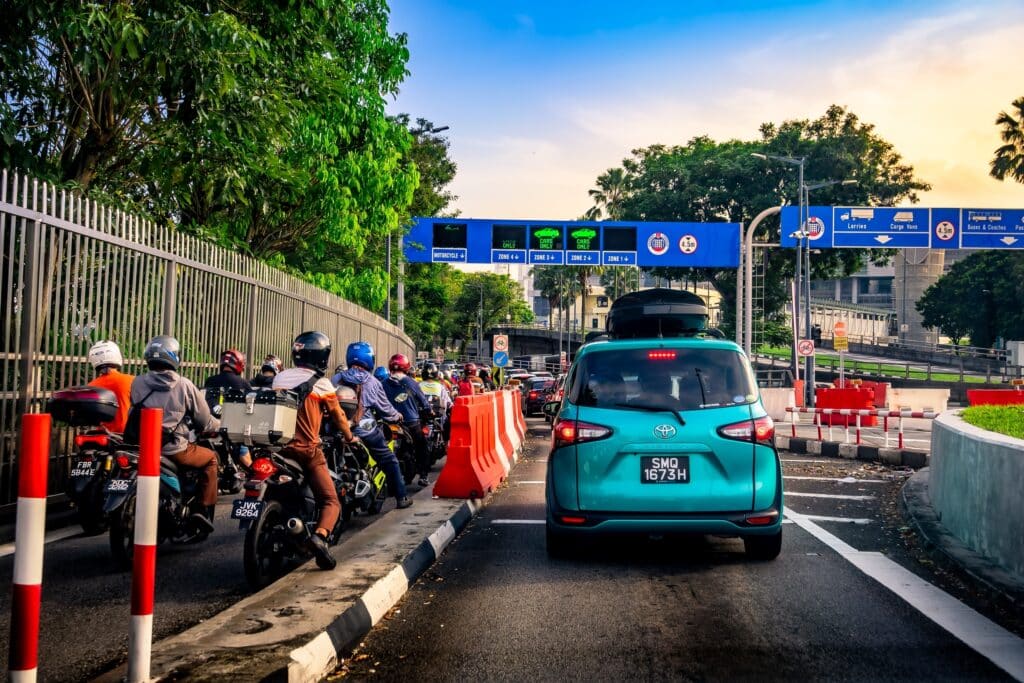
Faces can be better than fingers, particularly in wet weather. That’s what Singapore has discovered following what appears to be a successful border biometrics trial.
Singapore will begin phasing in facial scanning as the primary biometric identifier for motorcyclists and pillion riders at land checkpoints from March 31. It replaces fingerprints as part of the Immigration and Checkpoints Authority’s (ICA) push toward fully contactless clearance.
Superintendent Eliane Chee, senior assistant director of operations at ICA, told the Straits Times that face biometrics are “especially useful on rainy days, as wet fingerprints are harder to detect.” The same publication reports clearance times are reduced from 30 seconds to 20 seconds at lanes using facial scanning.
The decision follows trials launched in January at selected motorcycle lanes in the Arrival Zone of Woodlands Checkpoint, where more than 150,000 travellers tested the face biometrics system.
ICA said feedback from the trials helped refine the technology, including improving its ability to detect when facial features are obscured by masks or sunglasses and adding on‑screen prompts instructing travellers to remove such obstructions.
From the end of March, facial recognition will be deployed at 18 automated motorcycle lanes in the Woodlands Arrival Zone, with the rollout expanding to all 70 automated arrival and departure motorcycle lanes in the months that follow. Tuas Checkpoint is expected to adopt the system in the third quarter of 2026.
Singaporean border officials began trialling face biometrics from Tascent for in-car clearance of motorists at Woodlands in mid-2022, before the company folded. At the time Tascent had an existing partnership with NEC at Singapore’s borders. Idemia provides the Automated Border Control System (ABCS) and Borderguard Lanes used across Singapore’s air, land and sea checkpoints. The system employs high-accuracy facial recognition to allow passport-less clearance. Idemia has been supplying biometrics to Singapore’s government for border security checks since a 2017 deployment at Changi Airport.
As part of the new clearance sequence, motorcyclists and pillion riders must present either a QR code or their passport before undergoing biometric verification. ICA reports that 62 percent of travellers in this group already use QR codes generated through the MyICA mobile app, and the agency is encouraging wider adoption to speed up traffic flow.
Travellers are still required to carry their passports, which may be requested for verification, and must update their QR code if their passport details change.
The contactless shift forms part of the ICA’s New Clearance Concept (NCC), which aims to deliver faster and more secure immigration processing via biometric automation. The process applies to Singapore residents, long‑term pass holders and foreign visitors who have previously entered the country. First‑time visitors, or those arriving with a different passport from their last trip, will continue to undergo manual clearance but will be eligible for automated, biometric‑based clearance on subsequent visits.
Related Posts
-
 January 27, 2026
 -
 October 1, 2025
 -
 April 17, 2025
 -
 November 14, 2025
 -
 February 10, 2026
 -
 February 3, 2026
Article Topics
biometrics | border security | face biometrics | IDEMIA | Singapore | Tascent

Comments