
Building digital ID systems that last: African countries share experiences as ID4Africa 2026 opens
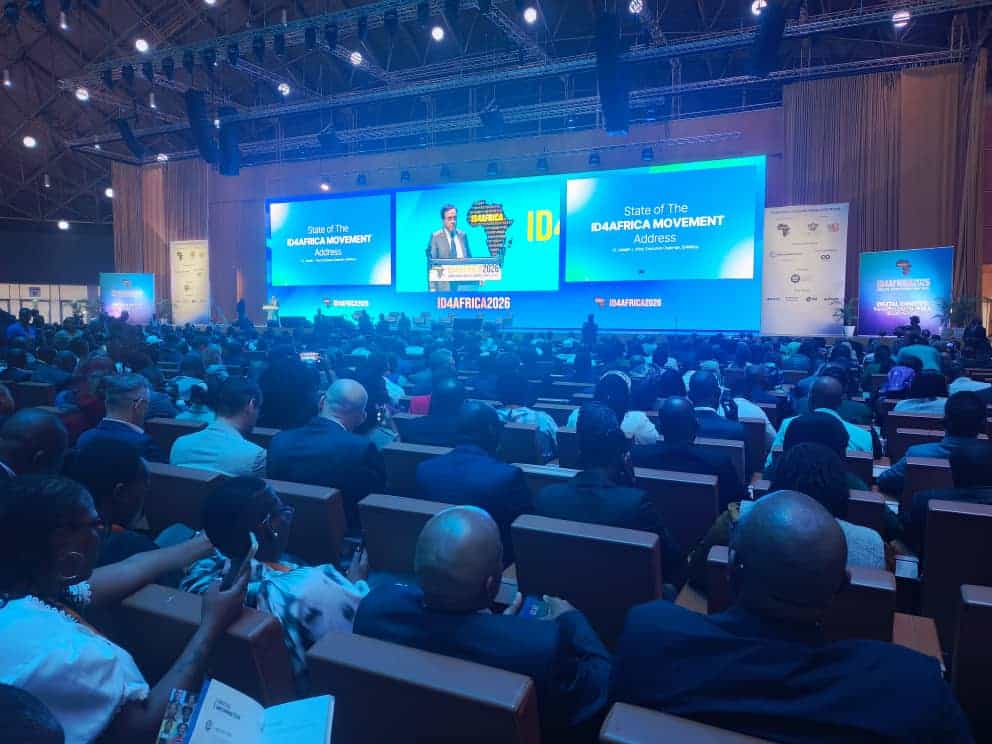
It is no longer enough to just build national digital ID systems. It is critical to ensure that the systems not only facilitate access to important services, but also remain useful to the country and its people for a long time to come.
This understanding set the stage for several plenary session segments on May 12 as this year’s ID4Africa Annual General Meeting got underway in Abidjan, Côte d’Ivoire.
In the different segments, ID authority leaders from over a dozen countries shared their experiences, mentioning specific actions they took to implement their national ID systems. They also spoke about the strategies they are deploying to ensure their systems not only scale but also remain relevant, trusted, inclusive, and enduring.
Nigeria runs one of the largest identity systems on the continent, with more than 130 million citizens already enrolled as of March. But reaching that point has not been by chance. It first required streamlining what had been a fragmented identity architecture, said the CEO of the National Identity Management Commission (NIMC), Engr. Abisoye-Coker Odusote.
The country, she added, also had to move away from a closed, vendor-locked model that was expensive to upgrade and maintain, to an open-source, API-driven architecture that is more interoperable, scalable, and secure. Nigeria is migrating its identity database to a MOSIP-based system.
“Open source, for the long term, will be a much more adaptable approach. Many African states complain about the cost of new identity systems across Africa, and that has created challenges. So that is one big focus for Nigeria,” Odusote said, adding that they are also building partnerships to make their system more flexible and adaptable to changing realities.
For Côte d’Ivoire, setting up its national ID required three key pillars to overcome the limitations of the old system. The head of ONECI, the national ID authority, Ago Christian Kodia, said it needed very strong political will, institutional governance, and solid, sustainable investments.
“These three approaches have allowed Côte d’Ivoire to have a simple, solid identification system that serves as a strategic state infrastructure supporting development,” Kodia said. He added that measures continue to be taken to advance reform, clarify roles among the actors involved, and implement a structural investment strategy.
The Ghana Card is one of the success stories of national digital ID in Africa. This is because Ghanaian authorities made choices that have enabled the ID system to be able to survive in case of regime changes and donor exits, to reach its current maturity. The card has been issued to more than 20 million people so far and is used across multiple use cases in the public and private sectors. Discussions have also been ongoing about activating the digital wallet feature of the card.
Pathways for inclusion
Fred Bedzrah, Deputy Executive Secretary in charge of technical services at Ghana’s National Identification Authority (NIA), said: “From the outset, Ghana was clear. We wanted the card to be the mandatory single source of truth for all transactions requiring identification in banking, SIM card registration, passport registration, and others. But this created a risk of exclusion.”
“So we derived pathways for inclusion: adjudication pathways to address situations where a technological system might reject citizens through no fault of their own, the vulnerable without primary documents, and people whose biometrics are rejected. We created an adjudication pathway for appeals,” he added.
In Morocco, the country took advantage of existing infrastructure to set up its digital identity system, avoiding the temptation to start everything from scratch. Mouhcine Yejjou, head of the digital ID project at the General Directorate for National Security (DGSN), described it as a pragmatic vision anchored in the country’s institutional realities and the needs of Moroccan citizens.
“From the very beginning, we faced a decisive choice. Technological innovation makes it tempting to make a clean slate and renovate everything from scratch. But Morocco made the bet on continuity. We chose to build an ecosystem on an existing one,” Yejjou said.
“We capitalized on information systems that have already proven themselves: the national ID card management system, which has been used since the 1950s and was the basis of all physical-world transactions. We simply extended this use to the digital world. Continuity is not incompatible with modernization.” Morocco is looking to go a step further with the introduction of a digital wallet super app, on which work is ongoing.
Regarding Benin’s experience, the Director General of the National Agency for the Identification of Persons (ANIP), Aristide Adjinacou, said they set out to build a pragmatic system where responsibilities were clearly defined, as a way to correct the mistakes of the old system, where ID documents were issued by different institutions at different levels. That is no longer the case, he said.
“We made a structural decision, not a technical one. We assigned responsibility. Now in Benin, one institution, the National Agency for Identification of Persons (ANIP), is in charge of all identity matters. This agency, which is directly attached to the presidency, is responsible for identity management, the national population register, and above all, the electoral register. The Director General also has authority as National Civil Registrar. That changed everything,” Adjinacou stated. Benin has reported a high rate of digital access for identity services.
Trust, scale
In another segment of the same conversation, ID authority chiefs from Ethiopia, Uganda, South Africa, and Tanzania also shared thoughts on trust and how they are moving from identity enrollment to systems that enable access to services across a wide range of sectors in government and the private sector.
In Ethiopia’s case, authentication was on their mind early on, and it has proven to be a key driving force of the Fayda digital ID. “We were thinking of this since the early stage. I remember when we had one million people with digital IDs, we had about five or six agencies already linked and leveraging it for KYC. One million is a small number, but we still believe starting authentication early had a long way to go,” said Yodahe Zemichael, Executive Director of Ethiopia’s National Identity Program (NIDP).
Uganda’s Rosemary Kisembo used the analogy of what she called Uganda’s “migration dance” to describe the challenges they grappled with while having to switch from a vendor-locked system to a MOSIP brownfield implementation. She said one of the government’s key decisions was not to reissue new identification numbers to everyone.
“The government took a firm decision that as much as we were migrating to a new technology platform, we were to maintain the same NIN that a person had in their previous identification. That was to anchor inclusion, reduce confusion, but also ensure continuity of identification,” she noted.
Kenya’s Principal Secretary in the State Department for Immigration and Citizen Services, Dr. Belio Kipsang, said that for them, the most critical thing was to look at the policy direction, which enabled them to adopt institutional reforms to bring in a coherent, trusted, and responsive identity ecosystem.
“The most important thing was to shift from fragmented systems to a unified lifecycle-based system. Among the core lessons that we have today is the lifecycle identity approach, where identity spans from birth through maturity and exits at death,” he said.
Other related segments followed, with more ID authorities sharing perspectives on topics that were rich, diversified, and thought-provoking. These included value creation for digital ID systems, sustainable financing models, data governance and protection, as well as the decentralization of digital ID trust.
Related Posts
-
 September 23, 2025
 -
 February 23, 2026
 -
 May 12, 2026
 -
March 18, 2026
-
 December 15, 2025
 -
 June 16, 2025
Article Topics
Africa | Benin | Côte d’Ivoire | digital ID | digital public infrastructure | Ethiopia | Ghana | ID4Africa | ID4Africa 2026 | Kenya | Morocco | Nigeria | Uganda

Comments