
Bank of Ghana governor backs biometric digital ID for financial trust
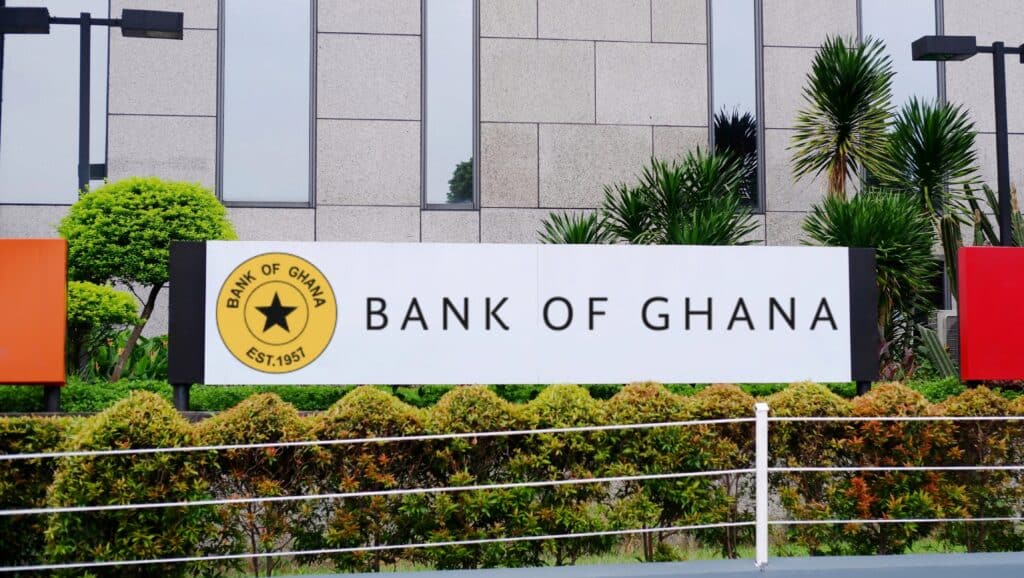
The Governor of the Bank of Ghana, Dr. Johnson Pandit Asiama, has asserted that robust biometric digital ID systems are vital in supporting efforts aimed at ensuring that Africa’s financial system evolves in a way that is structured, predictable, and capable of supporting innovation at scale.
The apex bank chief made the remarks recently as he presented a keynote at this year’s Innovation, Investment, Impact (3i) Africa summit which took place in Accra.
First organized in 2024, this edition of the 3i Africa Summit was hosted by the Bank of Ghana, in partnership with the Ghana Interbank Payment and Settlement Systems (GhIPSS) and the Global Finance and Technology Network (GFTN) of the Monetary Authority of Singapore.
It is an event that brings together stakeholders to share perspectives on how to grow Africa’s fintech landscape and the digital economy.
In his address, Asiama recognized the fact that there’s been considerable progress in the continent’s financial system, citing a World Bank report which indicates that almost 50 percent of adults in Sub-Saharan Africa have access to digital finance.
Given the expansion, which is largely being driven by mobile money adoption, Asiama opined that the responsibility now has to do with building the next layer of value and having in place appropriate conditions to make sure digital financial services grow at scale.
“The work ahead is not only about issuing laws, guidelines, or frameworks. It is about strengthening the service infrastructure around regulation. Processes have to be clear. Submissions must be trackable. Decisions have to be timely. This is how confidence is built,” the Central Bank chief said.
“Confidence will also depend on the strength of our digital identity and our KYC frameworks. Weak authentication increases fraud risk, affects credit quality, and undermines trust in digital financial services. So the next phase will require stronger coordination across institutions, improved data quality, and more robust identity systems,” he added.
According to Asiama, another challenge the continent must deal with in building these digital infrastructure is the development of indigenous firms.
His words: “Africa’s digital finance ecosystem must not only grow; it must mature. Firms with strong potential must have access to the partnerships, capital, and infrastructure required to scale sustainably. A strong financial system is not defined by activity alone; it is defined by discipline, transparency, and competitiveness.”
A strong financial system also needs digital infrastructure that is interoperable, both locally and across borders.
That’s the point Ghana’s Vice President Jane Naana Opoku-Agyemang made in her address during the summit. She stated that Ghana is looking to work with countries like Zambia and Rwanda to develop interoperability for infrastructure needed to boost cross-border digital trade transactions, Ghana Web reports.
The collaboration, she said, will involve a pilot on the mutual recognition of national IDs for KYC, mobile money payments interoperability, and digital invoicing.
Per the VP, the move is in line with the implementation of the single market vision led by the African Continental Free Trade Area (AfCFTA).
Last month, the AfCFTA Secretary General, Wamkele Mene, emphasized the need to develop digital infrastructure necessary to boost cross-border digital trade.
Stakeholders in Ghana’s financial services sector have in the past also underscored the importance of robust identity verification, especially in the wake of rising financial fraud.
Related Posts
-
 July 29, 2025
 -
 November 21, 2025
 -
 November 7, 2025
 -
 November 13, 2025
 -
 May 9, 2025
 -
 December 8, 2025
Article Topics
Africa | biometrics | digital ID | digital trust | financial services | Ghana | KYC

Comments