
Latvia extends e-signature service to keep 400,000 eIDs valid
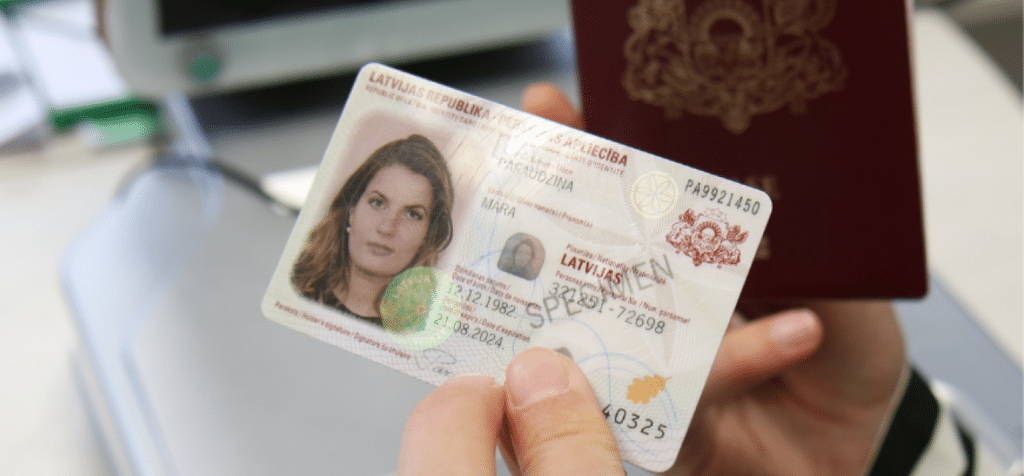
The Latvian government will temporarily extend an agreement with its current service provider to avoid losing electronic signature capabilities for almost 400,000 national ID cards. The country, however, will need to find a “stable medium-term solution” in order to maintain the service in the coming years, according to the Ministry of Smart Administration and Regional Development (VARAM).
The contract between Latvia’s Office of Citizenship and Migration Affairs (PMLP) and the Latvian State Radio and Television Center (LVRTC) will be extended for one year, allowing citizens to continue to use their eID cards and e-signatures, Deputy State Secretary at VARAM, Gatis Ozols, said on Tuesday. Funding for 2027 will be provided in the Ministry of the Interior’s basic budget.
The e-signature capability is being extended to national ID cards issued between 2019 and 2022 that contain a microchip model whose certification is set to expire by June this year. The supplier had announced in 2022 that it would discontinue support and certification for it.
The government has decided against replacing the affected cards, as such a move could cost around an estimated 11 million euros (US$12.6 million).
“In accordance with the decision made, we can continue to be confident that every resident and entrepreneur will have access to a personal digital identity and electronic signature options free of charge,” says Ozols. “In turn, the e-signature service provider LVRTC has reason to invest in further improving the service so that it becomes even more multifunctional and convenient.”
Latvia still needs to decide what the eID and e-signature systems will look like after the current extension, which ends in 2027. This includes adapting the system to the upcoming European Digital Identity (EUDI) Wallets, Latvian Public Media reports.
Earlier this year, the Office of Citizenship and Migration Affairs (PMLP) said it was considering legislation to keep ID cards valid for digital signature transactions even without EU-level certification.
The government has also discussed creating a new national ID issuance system. The system, however, is unlikely to be ready within the next four years, according to reports.
Related Posts
-
 March 17, 2026
 -
 June 19, 2025
 -
 July 7, 2025
 -
 July 21, 2025
 -
 March 31, 2026
 -
 August 7, 2025
Article Topics
digital ID | e-ID | electronic-signature | Latvia | national ID

Comments