
ID4Africa 2026 shifts focus to digital identity ecosystems and sustainability
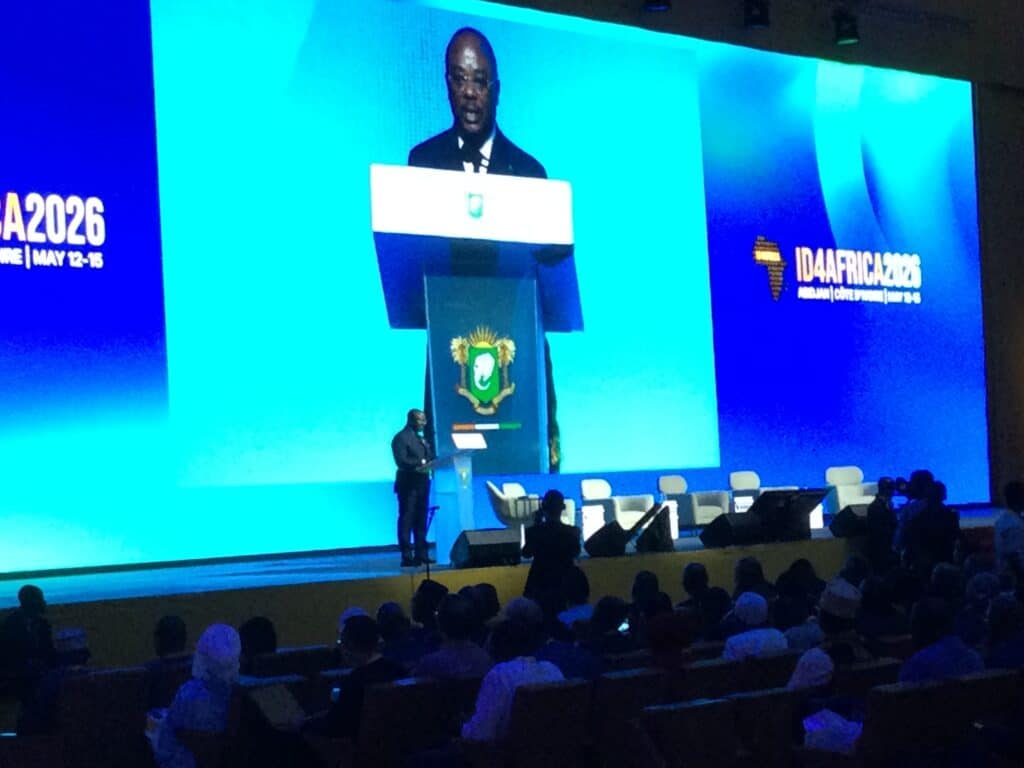
ID4Africa’s 2026 AGM opened in Abidjan, Cote d’Ivoire with the arrival of over a thousand delegates and participants at the Parc des Expositions d’Abidjan, despite the major travel disruption caused by war in the Middle East.
Executive Chairman Dr. Joseph Atick began the AGM by recognizing the difficulties posed by the international situation, which prevented some delegates from attending.
“Once again, Africa finds itself paying the price for someone else’s war, and bearing the consequence for geopolitical agendas that are not its own. And yet,” he told the packed conference center, “you are here.”
Despite the challenges, ID4Africa’s 12th AGM, more than a thousand government delegates from across Africa converged on Abidjan for the event. Eighty percent of them are senior officials. Seventy percent of speakers at the 2026 event are African, the most ever at the event.
A number of high-ranking officials from the Republic of Côte d’Ivoire were present and several addressed the assembled attendees, capped off by Vice President Tiémoko Meyliet Kone, who emphasized Africa’s readiness to improve economies and social inclusion through digital identity and DPI.
The moment of the pan-African meeting is therefore one of repeated challenge. But it is also one of victory and progress, as Atick explained.
Enrollment to infrastructure to ecosystems
The initial metric of success in Africa’s digital identity journey was enrollment; a reflection of ID4Africa’s founding principle and many governments’ priority of universal inclusion.
Biometric kits were procured and deployed, ID numbers were issued, and in most cases, cards produced and distributed. Enrollment expanded into “building the foundations of identity ecosystems,” Atick says.
While “inclusion remains our moral anchor,” he continues, but the dialogue has involved to the point where enrollment figures no longer define success.
Services, efficiency and trust at scale are the goals which follow mass enrollment on the path to identity as an enablement platform – in other words, as digital public infrastructure.
Infrastructure differs from projects in several key ways, according to Atick. It is funded differently and expected to endure. That means sustainability must take a central role through value creation. The identity only generates value when it is used in “real economic and social activity,” says Atick.
That activity requires relying parties to use the identities, which in turn raises the need for entities like data protection authorities and civil society organizations to police how the data is used and shared.
The theme of the AGM, “Digital Identity: from DPI to Digital Public Ecosystems,” recognizes this situation.
Atick noted that DPI and DPE may be used interchangeably, as the middle term – “public” – is the important one.
ID4Africa’s principles, that “utility without trust is dangerous, scale without security is fragile, and adoption without safeguards is unsustainable,” Atick says, reflect the need to govern digital identity as a public asset.
Key themes and exhibition evolve
A preview of the country playbooks followed, introducing themes of centralization for accountability, decentralization for resiliency, technology ownership for sustainability and economic growth through easy verification.
The discussion then delved into different particular aspects of creating lasting, effective digital ID ecosystems. Further coverage of these discussions will follow in the days ahead.
The roster of vendors in the exhibition hall reflects an evolving technology provider ecosystem, too.
FaceTec is promoting its UR Codes as the gold patron of the AGM, while iDakto, Toppan Security, IN Groupe and Emptech are silver sponsors.
The number of companies based in Africa in the exhibition has also crept up, with the addition of Ivorian firm Impact Palmarès and Senegalese startup Oumou Group.
ID4Africa 13: Return to Cape Town
For 2027 the ID4Africa AGM will return to Cape Town, South Africa, in a multi-faceted break with the Movement’s past practice. Each year for the past eleven, the host country has been announced on the last day of the conference, and each time it was a new city. The announcement has been greeted each time with boisterous cheers and congratulations.
ID4Africa has only been held in the same country twice in one previous instance. Now South Africa will host for the third time. Cape Town hosted ID4Africa’s 2024 AGM.
The ID4Africa executive did not offer a reason for its different decision, but the disruptions that Atick referred to as the AGM kicked off may provide a clue. Tenuous security and economic challenges in many countries across Africa make hosting an event of this size problematic. They also reinforce the urgency of the work of attendees and the entire African identity ecosystem.
Biometric Update will continue reporting on ID4Africa 2026 from on location in Abidjan throughout the week and in follow-up coverage following the event.
Related Posts
-
 August 4, 2025
 -
 July 29, 2025
 -
February 11, 2026
-
 October 7, 2025
 -
 January 7, 2026
 -
May 22, 2025
Article Topics
Africa | biometrics | digital identity | digital public infrastructure | ID4Africa | ID4Africa 2026

Comments