
Planned Digi Yatra feature to enable credential sharing for global expansion
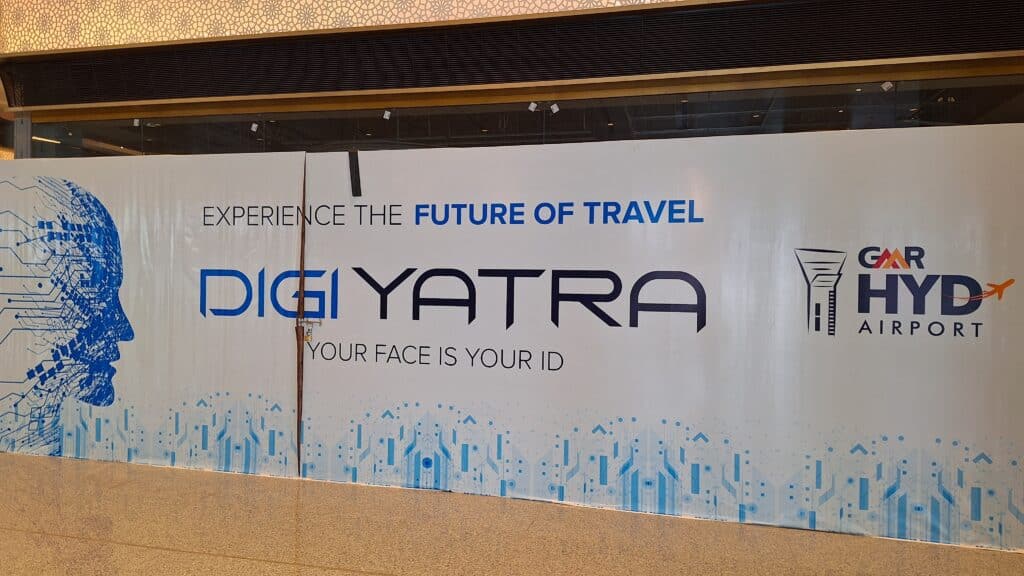
India’s facial biometrics-based air travel platform Digi Yatra has completed testing for passport-based enrolment, as part of its plans to go global, according to Digi Yatra Foundation CEO Suresh Khadakbhavi.
The passport enrolment feature will allow travelers to share verified digital credentials with both departure and destination airports, Khadakbhavi said during The Hindu Tech Summit 2026 in Chennai last Thursday.
“If you are travelling from Chennai to London, you can share credentials at Chennai, enjoy a seamless process, and when you reach London, you do not have to stand in two-hour queues again for immigration,” he says.
The industry-led digital initiative coordinated by the Indian Ministry of Civil Aviation is currently in talks with international aviation bodies, including the International Air Transport Association and the International Civil Aviation Organization (ICAO).
The Digi Yatra app has 21 million users across, with approximately a third of all domestic air passengers relying on the platform. In some airports and terminals, adoption is over 60 percent. The app has been used 85 million times over the past three years, the Hindu reports.
Currently, Digi Yatra is available across 24 Indian airports with plans to expand to another 17 during the current financial year. The organization has been pushing the platform into other travel scenarios, including hotels, taxis and public spaces.
Digi Yatra’s move to decentralization
During the Summit, Khadakbhavi explained how the platform’s self-sovereign identity technology gives users control over data, while its decentralised architecture helps the system remain secure.
The project was launched in 2015 with a central repository that stored users’ personally identifiable information, including their names and faces. A number was attached to the air ticket, which was used to query the database and fetch the data.
During the Covid-19 pandemic, however, Digi Yatra pivoted to a decentralized model.
The platform is linked to the Unique Identification Authority of India (UIDAI). Users can enter their unique Aadhaar number, after which they receive an OTP – the two-factor authentication. An eKYC is retrieved, including five parameters: name, date of birth, gender, photograph and the last four digits of the Aadhaar number. The user captures a selfie, which undergoes a liveness check and is matched against the facial information in the eKYC face.
“We discard the Aadhaar face for obvious privacy reasons, and we keep the selfie face and then that is the verifiable credential that gets created,” says Khadakbhavi.
The credential is stored on the user’s phone, in line with the principles of decentralized architecture. Hackers would need to compromise each device individually rather than targeting a single central storage point.
“If somebody has to hack into Digii Yatra’s 21 million database, then they have to hack 21 million phones, because that’s where the data resides,” he continues.
The data is also encrypted in transit using TLS 1.3 and at rest using AES-256. Session tokens created during the enrollment process are kept locally and automatically expire after 90 days of inactivity.
Last week, Digi Yatra Foundation announced its plans to achieve ISO 27701-PIMS certification to enhance its privacy and published a tender.
Related Posts
-
 June 30, 2025
 -
 July 21, 2025
 -
October 20, 2025
-
 April 1, 2025
 -
 December 1, 2025
 -
 November 13, 2025
Article Topics
airport biometrics | biometrics | decentralized ID | Digi Yatra | India | verifiable credentials

Comments