
US bill would require warrants for digital surveillance, biometric searches
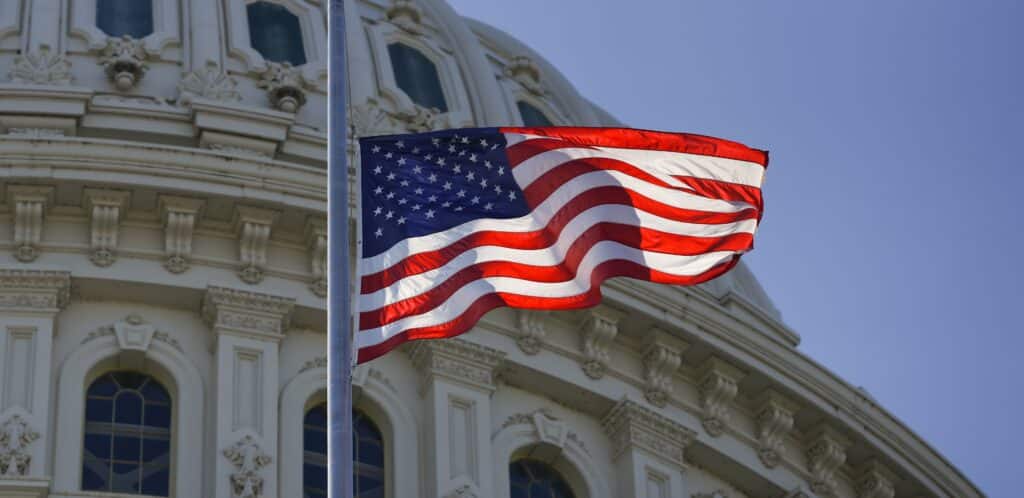
A House bill introduced by Reps. Thomas Massie and Lauren Boebert would impose a broad warrant requirement on government searches that intrude on Americans’ privacy by targeting the expanding use of facial recognition, automated license plate readers, commercial data brokers, cloud data, Internet records, and other digital surveillance tools.
The Surveillance Accountability Act, introduced as H.R. 8470, would amend Title 18 of the U.S. Code to state that, with limited exceptions, “no search may be conducted” without a warrant issued by a neutral magistrate, based on probable cause, and describing the place to be searched and the persons or things to be seized.
The bill is framed by its sponsors as an effort to bring Fourth Amendment doctrine into the digital age, where government agencies can obtain sensitive information not by entering a home or seizing a device, but by querying databases, buying commercial records, or using automated surveillance systems in public spaces.
The bill’s central provision is its treatment of third-party data. It would prohibit the government from accessing data, metadata, or personal information held by third parties, including financial services providers, telecommunications companies, Internet service providers, cloud storage companies, and data brokers, unless the government first obtains a valid warrant.
It also says a user’s contract with a company cannot be treated as a waiver of the government’s warrant obligation unless the waiver is knowing, voluntary, and explicit.
That language directly challenges the long-standing third-party doctrine, under which courts have often held that people have diminished Fourth Amendment expectations in information they voluntarily disclose to businesses.
In practice, privacy advocates have argued, that doctrine has become increasingly untenable as ordinary life has moved onto phones, cloud services, apps, connected vehicles, and commercial identity systems.
The bill also takes direct aim at biometric surveillance and automated license plate readers.
While it preserves certain exceptions for plain view searches, identity verification, publicly available information, consent, and exigent circumstances, it says those exceptions cannot be used to justify the warrantless collection, retention, querying, or analysis of biometric data or vehicle movement data when a person has not given informed and voluntary consent.
The covered biometric data includes facial images, faceprints, gait, voice recognition, and other unique physical identifiers obtained through facial recognition or comparable surveillance systems.
The vehicle data provision covers license plate images, vehicle metadata, and movement patterns collected through automated license plate readers or similar systems.
“The Bill of Rights is not a suggestion, and Fourth Amendment protections against warrantless searches conducted by the government are not optional,” Massie said.
“The Surveillance Accountability Act requires government employees to first obtain a warrant based on probable cause before searching Americans’ personal information – even if the information sought is stored on a phone, in the cloud, or held by a third party,” Massie continued.
He further stated that “warrantless searches are unconstitutional, and this does not change when the data the government seeks is in digital formats or held by a third party.”
Under the bill, federal employees who violate those rights could be sued for damages.
The accountability mechanism is a second major component of the bill. The legislation would create a statutory cause of action for Fourth Amendment violations, allowing injured parties to sue a person, including a federal employee, who deprives them of Fourth Amendment rights under color of federal law.
Courts could also award reasonable attorney’s fees to prevailing parties other than the United States.
The bill’s definition of “search” is broad. It includes government-initiated acts that intrude on a reasonable expectation of privacy, investigatory acts aimed at a specific person or entity, non-consensual surveillance or monitoring of communications, associations, employment, social media use, Internet use, financial transactions or travel, and the acquisition or analysis of data tied to a person’s digital or physical life.
The data covered by the bill includes geolocation, communications records, personal device activity, assets, liabilities, biometric identifiers, behavioral signals, and financial transactions.
The proposal arrives as Congress is again debating the relationship between national security authorities, commercial data markets, and domestic surveillance.
In March, Senators Mike Lee and Ron Wyden introduced the Government Surveillance Reform Act of 2026, a separate bipartisan measure that would reauthorize Section 702 of the Foreign Intelligence Surveillance Act (FISA) through April 20, 2030, while adding warrant requirements and other privacy restrictions.
The Section 702 provision of FISA expires on April 30, and Congress at press time is stalled on moving forward on its reauthorization. Monday 12 Republicans crossed party lines to oppose voting on legislation put forward by House Speaker Mike Johnson because it didn’t contain any limits on warrantless “backdoor searches.”
Lee and Wyden’s bill includes provisions to close the “backdoor search” loophole, restrict reverse targeting of Americans, limit retention of certain Section 702 data, and prohibit federal law enforcement agencies from buying personal data from data brokers.
Together, the two proposals reflect a broader push by lawmakers from both parties to restrict government access to Americans’ personal data when that access occurs outside traditional warrant procedures.
The Surveillance Accountability Act is narrower in some respects because it is structured around Fourth Amendment searches and a civil remedy, but it is also sweeping in its attempt to define modern surveillance as a search when it meaningfully intrudes on privacy.
The legislation is likely to draw resistance from law enforcement and national security officials who argue that some forms of rapid data access are necessary for investigations, public safety, and emergency response.
The bill attempts to address those concerns by preserving exigent circumstance exceptions, consent searches, plain view searches, limited public source investigations, and ordinary policing authorities such as brief investigatory detentions, protective frisks, arrests, and searches incident to lawful encounters.
Even so, the bill would mark a significant shift in how federal law treats digital surveillance. Its premise is that the government should not be able to bypass the Fourth Amendment by outsourcing surveillance to commercial platforms, buying data from brokers, or relying on automated systems that can identify, track, and profile people at scale.
Whether the bill advances remains uncertain. But its introduction underscores a growing recognition in Congress that privacy law has not kept pace with the technical reality of modern surveillance.
Related Posts
-
 July 29, 2025
 -
February 4, 2026
-
 February 13, 2026
 -
 December 4, 2025
 -
 March 5, 2026
 -
 March 1, 2026
Article Topics
biometrics | data brokers | facial recognition | legislation | license plate readers | surveillance

Comments