
DHS guides cops on investigating crime committed using mDLs
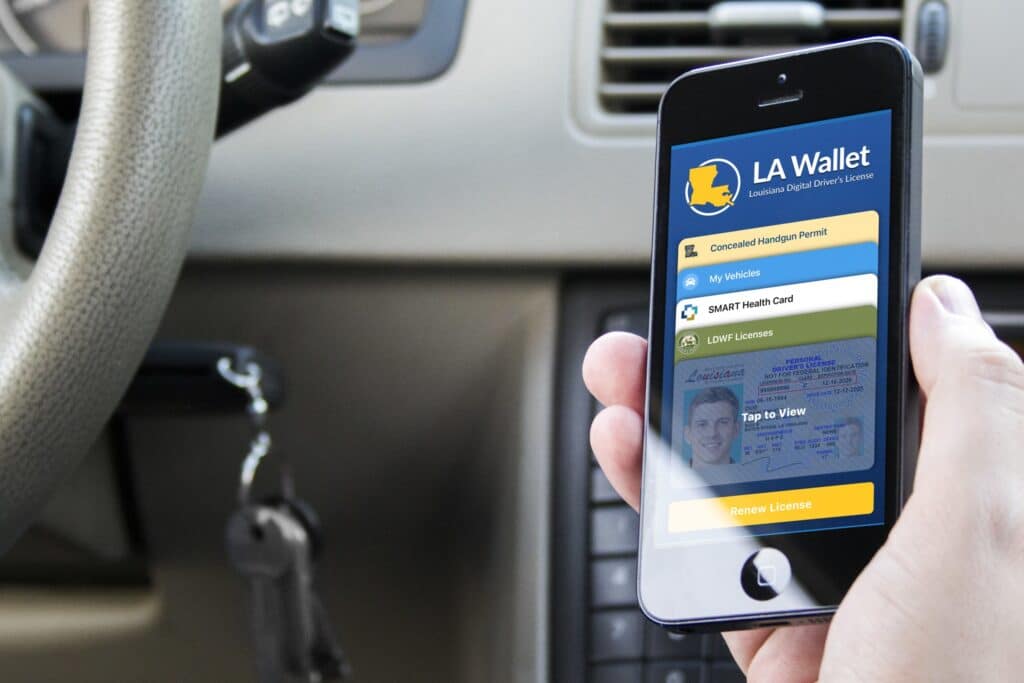
The U.S. Department of Homeland Security’s Science and Technology Directorate (S&T) has issued a five-page guide for law enforcement officials involved in investigating crimes using a mobile driver’s license (mDL).
DHS said the guidance provides a quick “foundational understanding of digital evidence that may be collected for a crime where someone leveraged an mDL to fraudulently open a financial account in person.”
The investigative aid also has an accompanying Investigative Aid Reference Guide that provides additional details regarding “relevant evidence.”
DHS warned that “cases of identity fraud associated with digital identities will likely increase as mDL usage becomes more widespread. As a result, investigators will need to be prepared for this new technology and know what type of evidence may support investigations.”
DHS said that “recent cases highlight the need to understand how mDLs will impact future law enforcement investigations.”
DHS cited a 2020 case in Louisiana it said was “one of the first cases where a criminal used an mDL to fraudulently open financial accounts. The criminal obtained personally identifiable information (PII) from the victim to access the victim’s mDL and generate additional fake documents (e.g., W-2, lease agreement). He then leveraged these items to open accounts with several financial institutions across the state.”
In March 2023, Louisiana man Robert Daniel was sentenced to more than five years in prison for using a state-authorized mDL app to defraud credit unions and banks.
DHS said investigators had access to key pieces of information, including but not limited to:
- Electronic time stamps that confirmed when the mDL was accessed;
- Video surveillance showing the crime taking place at financial institutions;
While the investigation “was straightforward,” DHS said, “many future cases may not be so fortunate.”
DHS’s investigative primer walks the user through three stages that are relevant to obtaining and using an mDL: Opening an account at the Department of Motor Vehicle (DMV), provisioning with a digital wallet, and verifying identity at a financial institution. It also walks the reader through the general activities that must occur for the crime.
The investigative aid also provides an overview of potential digital evidence unique to leveraging an mDL as opposed to a physical driver’s license as well as other relevant evidence that is not unique to an mDL but may support the chain of evidence.
The guidance addresses:
- What evidence can be used by law enforcement;
- Why is this evidence important to build the case;
- Who owns or has access to the evidence; and
- How can law enforcement obtain the evidence.
The investigative aid also highlights potential challenges obtaining digital evidence, which DHS described as the “pain points.”
Related Posts
-
 July 10, 2024
 -
 July 8, 2024
 -
 May 17, 2024
 -
 July 12, 2024
 -
 May 15, 2024
 -
March 26, 2024
Article Topics
DHS | digital ID | digital wallets | driver's license | fraud prevention | identity verification | mDL (mobile driver's license) | mobile app | United States

Comments