
Georgia mDL now valid at traffic stops, Louisiana wallet valid for TSA nationwide
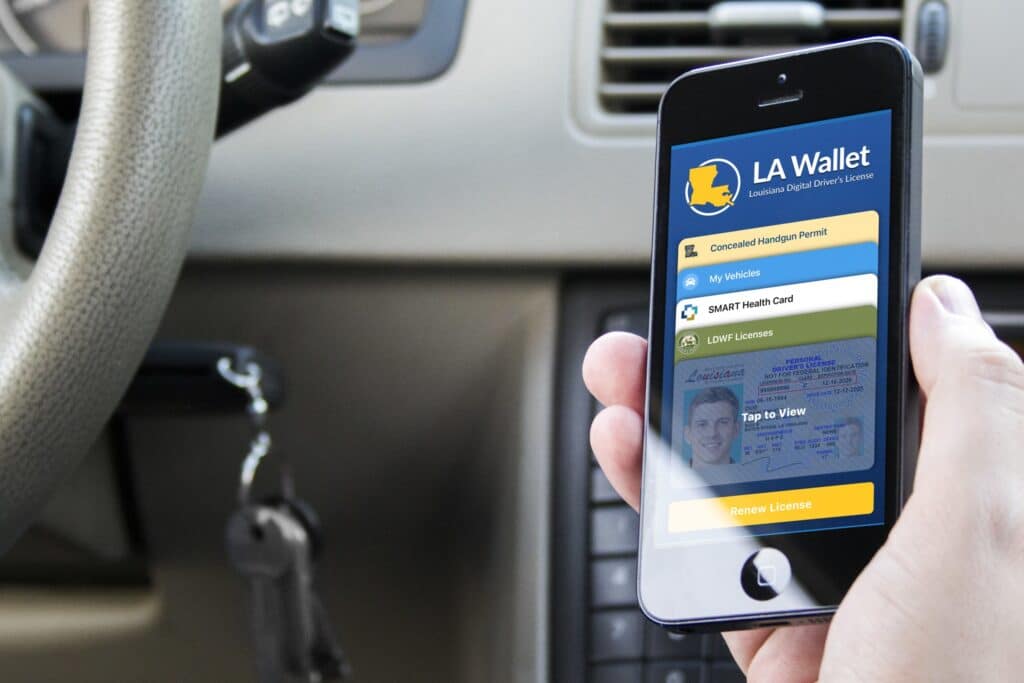
In Georgia, digital drivers licenses stored in secure mobile wallet apps are now valid for identification during traffic stops. News outlet 11Alive says House Bill 296 is now law, marking the state’s first step in embracing mobile drivers licence (mDL) technology. For now, the law “allows, but does not compel, law enforcement to accept these digital versions.”
State law enforcement agencies will have to start accepting digital IDs and must have equipment capable of verifying them – but not until July 1, 2027. Police have two years to procure the technology needed for digital identity verification, meaning drivers are well advised to carry their physical IDs until then.
The move away from plastic cards and toward digital driver’s licenses continues to be both slow and fast, depending on one’s perspective. The U.S. federal government plans to accept mobile driver’s licenses for online access to government services via Login.gov by March of 2026.
The appetite for digital ID appears to be there. According to the Georgia Department of Driver Services (DDS), over half a million customers have added a digital driver’s license and/or ID to their smartphone wallet since the program launched in May 2023.
In a press release, DDS Commissioner Angelique B. McClendon says that adding a digital driver’s license to your smartphone wallet is “a smart move for anyone who wants to streamline everyday interactions and keep their license or ID safer and more accessible.” On the other hand, she also notes that “currently the digital driver’s license and ID is optional and is not a substitute for customers’ physical cards. Therefore, DDS reminds customers to continue to always carry their physical driver’s license because it is the law.”
North Dakota to introduce mobile driver’s license in fall
The law does change, however slowly. The Grand Forks Herald reports that North Dakota’s digital driver’s license is on track to be launched in the fall.
Officials there acknowledge the time it may take for adoption, but believe that convenience and habit will win out. “Over time, the more people start seeing this, the more comfortable they will get with it,” says Brad Schaffer, a drivers license division director with the state’s Department of Transportation.
“Digital ID is rapidly replacing plastic. We’ve seen it with banking and now we’re seeing it with the driver’s license. Getting a mobile license now is going to put you ahead as more services go digital. They are going to be more accepted across the state and across the country.”
LA Wallet: original U.S. mDL valid at all TSA checkpoints until 2028
When all is said and done, Louisiana will be seen as a pioneer in mDLs in the U.S. The state was the first to launch a mobile driver’s license program through its LA Wallet app, which has been available since 2018. Now, according to a release, the Transportation and Security Administration (TSA) has certified LA Wallet compliant with federal requirements, meaning Louisiana residents can present it at TSA security checkpoints, federal buildings and courthouses for the next three years.
The program will undergo a compliance review in 2028.
“We are thrilled to see Louisiana utilizing innovative technology to allow for a more flexible and accessible TSA experience,” says Adam Stahl, TSA deputy administrator.
ACLU leads No Phone Home push
Some, of course, believe drivers licenses are digitizing much too quickly – and that privacy risks need to be addressed. Government Technology has an interview with the American Civil Liberties Union (ACLU)’s Jay Stanley, senior policy analyst from the organization’s Speech, Privacy and Technology Project. Stanley addresses growing concern over “phone home” digital identity systems built using server retrieval, which “calls back” to a credential issuer to verify identity.
“If you’re going to do a digital ID, then at the very least it should have strong privacy protections in the way that it’s built as a technological matter,” Stanley says. “But we’re seeing that the version that’s being pushed in the states, some of them will allow the states to ping the government every time you show your ID to a doctor’s office, a liquor store, a bar, a website, maybe an adult website – and all that data would flow to the government. This is not a way to design a digital ID system if we’re going to have a digital ID system.”
Stanley identifies a state he sees as leading in digital ID and privacy: Utah, where SB 260 requires that “when a digital ID is used, the transaction must be free from surveillance, tracking or monitoring” and “guarantees that the individual, not the state, controls their digital identity and the data it transmits.”
Idemia’s Theresa Wu talks relying parties on Riley Hughes podcast
Few people have more experience with mobile digital credentials than Theresa Wu, VP of smart credentials and access for Idemia North America. On his podcast, The Future of Identity, Trinsic CEO Riley Hughes speaks to Wu about whether or not relying parties should wait for standards to become more mature before adopting digital credentials, where the balance needs to be between innovation and standardization, and how the wallet landscape will evolve: will Big Tech dominate, or will a more diverse ecosystem emerge?
Related Posts
-
 October 31, 2024
 -
 March 26, 2025
 -
 January 21, 2025
 -
 November 1, 2024
 -
 March 24, 2025
 -
 June 18, 2025
Article Topics
digital ID | digital wallets | Georgia | Louisiana | mDL (mobile driver's license) | No Phone Home | North Dakota | Teresa Wu | United States

Comments