
Australia releases Age Assurance Technology Trial final report
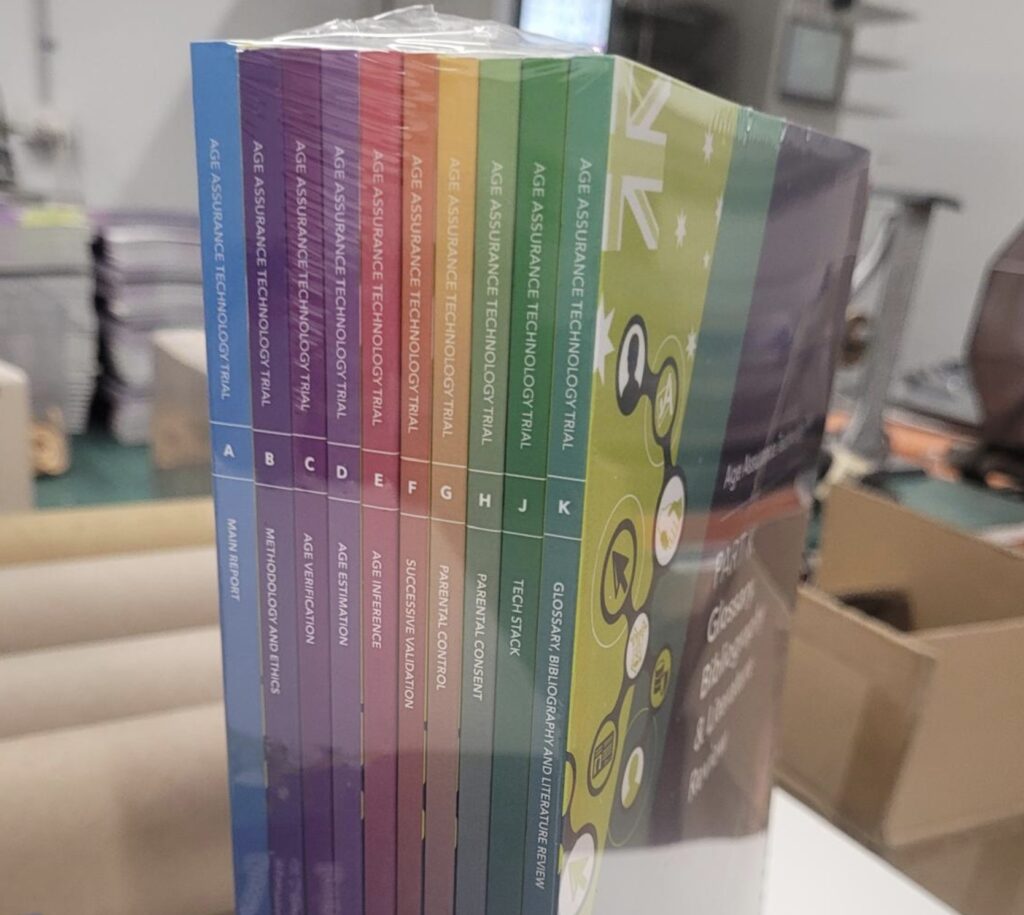
Age assurance systems, including biometric age estimation, facial age analysis, identity document verification and parental control measures, are an effective way to protect young people from age-inappropriate content online, according to the Australian government’s final report of the independent Age Assurance Technology Trial (AATT).
The report was published on Sunday with Communications Minister Anika Wells promising that the Albanese Government will push forward in its plans to introduce age restrictions for accessing social media and other platforms.
“This report is the latest piece of evidence showing digital platforms have access to technology to better protect young people from inappropriate content and harm,” says Wells.
Commissioned by the Albanese government in January, the trial evaluated the effectiveness, reliability and privacy impacts of different age assurance technologies. The assessment included more than 60 technologies from 48 age assurance vendors and was conducted by the Age Check Certification Scheme (ACCS) with testing partner KJR.
According to the findings, there are no “substantial technological limitations” preventing the use of age assurance systems. Despite a lack of data related to Indigenous populations, the testing found no “substantial difference” in using age assurance systems for First Nations and Torres Strait Islander Peoples.
“While there’s no one-size-fits-all solution to age assurance, this trial shows there are many effective options and importantly that user privacy can be safeguarded,” Wells adds.
The solutions were tested for accuracy, usability and ability to safeguard personal data in real-world applications with the core task of understanding if age assurance can be done without compromising Australian citizens’ privacy and security. A preliminary report was published back in June.
The trial relied on international standards, including ISO/IEC 27566-2 Series2 , the IEEE 2089.13 and the ISO/IEC 250004 series. A detailed breakdown of the results of the 1000-page report alongside recommendations will be published by Biometric Update this week.
Private sector welcomes final results as lawmakers kick off new probe
The Age Assurance Technology Trial was welcomed by age assurance organizations, including Yoti, k-ID and the Age Verification Providers Association (AVPA). Lawmakers, however, are yet to be convinced with the Australian Senate voting this week in favour of a parliamentary inquiry into the federal government’s social media ban.
“The results are very bad news for many opponents who have persistently claimed that even leading safety tech age check methods, including those from Yoti, are inaccurate, immature, insecure, privacy chilling and discriminatory,” Robin Tombs, co-founder and CEO of Yoti, wrote on LinkedIn.
k-ID noted that the trial represents the world’s largest independent evaluation of age assurance technologies, which will inform policymakers and regulators as they develop future safety requirements.
AVPA, on the other hand, says that the report gives insight into areas that should be improved, including unnecessary data retention, data minimization and the ongoing need for security vigilance.
“None of these is insolvable,” says the London-based organization. “They are the kind of issues that good regulation, independent audit and certification and continuous improvement are designed to address.”
According to the report, the age assurance services sector has private-sector investment and opportunities for growth.
The document, however, also highlights that the trial was written only to examine the technology behind age-assurance, not to offer policy solutions. These were discussed this week among Australian lawmakers, some of whom remain skeptical, despite the independent testing.
On Wednesday, the Senate voted in favor of a new probe examining the privacy and data protection implications of age verification for both the social media age ban and the Search Engine Services Online Safety Code introduced in March 2024.
“The age ban will force every Australian to hand over personal data to access social media,” says Greens Senator David Shoebridge. “The verification codes will mean the same for search engines. Everybody will go through age-checking to make this work.”
The inquiry is expected to produce its report by October 31st and will also study “technical implementation and efficacy of age verification and content filtering mechanisms,” alongside additional technical approaches to online safety. The probe will be conducted by the Environment and Communications References Committee, InnovationAus reports.
Here comes the age check: BU Podcast talks age assurance with AVPA’s Iain Corby
Related Posts
-
 April 9, 2025
 -
 June 19, 2025
 -
 May 22, 2025
 -
 June 20, 2025
 -
 November 15, 2024
 -
February 26, 2025
Article Topics
Age Assurance Technology Trial | age verification | Australia | Australia age verification | biometric age estimation | biometrics | children | digital identity | social media

Comments