
Rebranding will not stop retail crime – biometrics might
By Professor Fraser Sampson, former UK Biometrics & Surveillance Camera Commissioner
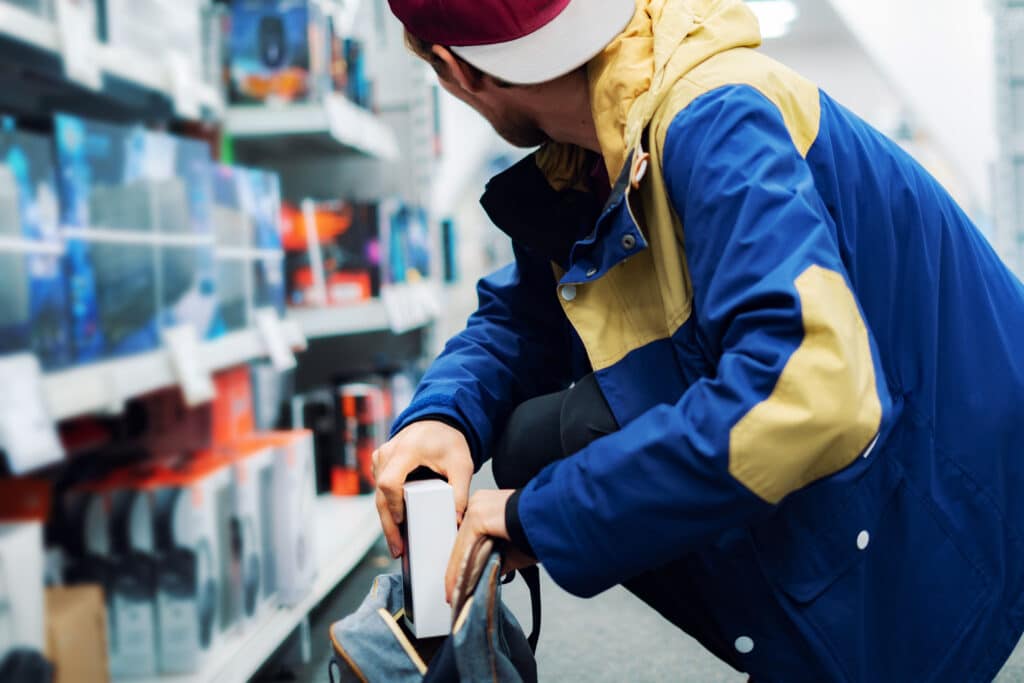
Shoplifting is up, burglary is down.
Two contrasting headline claims from the UK, but what if store theft and burglary were the same thing?
The Economist reports “shoplifting” is up eight-fold in a decade, to around 20 million offences per year, a staggering figure for any crime. At the same time, others say we should celebrate the consistent fall in burglaries recorded over the past 20 years. But here’s the thing:
There’s no such offence as shoplifting. The criminal law in England and Wales has a basic offence of theft and it’s a serious one. Stealing (its verb form) can get you 10 years’ imprisonment. If convicted of stealing from a shop, you’re not a shoplifter, you’re a thief.
Most countries recognize that not all thefts – or thieves — are equal and it’s more than 50 years since the UK parliament acknowledged this. Stealing is made more serious where there are aggravating circumstances. For example, if the thief uses or threatens force towards someone present, in order to carry out their stealing, it’s robbery. Robbery carries life imprisonment and can only be tried by a jury. There’s no offence of “mugging” and robbery isn’t a “street” crime. Threaten a shop worker or use force against them in order to steal, you’re a robber and your offending is about as serious as it gets.
Then there’s burglary, another serious offence. Most countries have a specific crime for when the perpetrator enters a building. In England and Wales it’s called burglary and its additional gravity reflects the invasiveness of the offender’s behaviour. If you enter someone’s home or office and then steal, you are a burglar. Enter my premises with the mere intention of stealing, you’re a burglar. And enter with anything that can be used as a weapon and your offence carries life imprisonment. Burglary also covers some assaults if the offender causes or intends serious injury.
Shops can be burgled and not just when they’re closed. By opening up for business, shops are inviting us into their premises. If the shopkeeper knew we planned to steal, attack staff or harass other invitees, they could withdraw our invitation – that seems obvious. Less obvious is the law of trespass which operates retrospectively. It means if the shopkeeper sees you stealing and cancels your invitation, the law regards you as having been a trespasser from the moment you came in. And, as every police officer in the country knows, theft after entering a building as a trespasser is burglary.
If by now you’re thinking “who cares about all this legal blah?” then I’ve made my point. Who’s bothered about the administrative detail? Probably not the shop staff who’ve been spat at, insulted, harassed; not the store security team who are sick of watching known offenders walk in and thousands of pounds-worth of stock walk out every day; and not the police trying to eke out their resources across a growing spectrum of crimes, each of which is serious to someone.
The UK government’s Crime and Policing Bill aims to treat shop theft “more seriously” by removing the artificial limit on the value of goods that must be stolen before they are tried in a certain way – but to what effect? Lowering the bar so all shop thefts can be tried by a jury when there aren’t enough juries to go round already doesn’t seem like an answer to an additional 20 million crimes. Wouldn’t it be better to stop the behaviour, whatever label we give it?
British Retail Consortium reports there are 2000 assaults on UK shopworkers every day – some already meet the legal definition of robbery and all are very serious. If retailers wanted to report the 50,000 daily thefts as burglary, that may get the undivided attention of the police and the Home Office but rebranding the offending won’t stop the offender.
In every jurisdiction I have worked with, trespassory theft is treated specifically and seriously. Shop theft already meets most of the criteria for burglary but relabelling it is unlikely to have any material impact on the enormous problem that retail crime has become. The thing that will improve the situation is prevention. And we know that can be achieved because it’s already happening up and down the UK’s high streets. Shops that have installed live facial recognition security systems have seen immediate and sustained reductions in incidents of up to 70 percent while the labels haven’t changed.
Some believe facial recognition is too intrusive, and we still have a situation where internationally the law is shaped by the invasiveness of the offender yet the debate about solutions is shaped by the invasiveness of the technology. Have we got that right?
Pity the bewildered English store owner recently warned by the police for displaying a sign in his shop castigating thieves. The law gives him the right to eject the trespassers (after allowing them an opportunity to leave) yet he gets a police response by just putting up a notice decrying the behaviour of those who keep stealing from his premises.
Tackling crime effectively involves recording and responding, and the main difference between classification and prevention is that one puts victims first. We are seeing how biometrics can put thousands of potential victims of serious retail crime beyond the harm that lies behind each statistic.
There is no doubt that biometric technology can help prevent retail crime – and who’s going to care how you might have categorised something that didn’t happen?
About the author
Fraser Sampson, former UK Biometrics & Surveillance Camera Commissioner, is Professor of Governance and National Security at CENTRIC (Centre for Excellence in Terrorism, Resilience, Intelligence & Organised Crime Research) and a non-executive director at Facewatch.
Related Posts
-
 November 6, 2024
 -
 June 19, 2025
 -
September 4, 2024
-
 September 11, 2024
 -
 October 13, 2024
 -
 December 13, 2024
Article Topics
biometrics | criminal ID | facial recognition | Fraser Sampson | retail biometrics | UK | video surveillance

Comments