
Toss looks to scale up face biometric payments
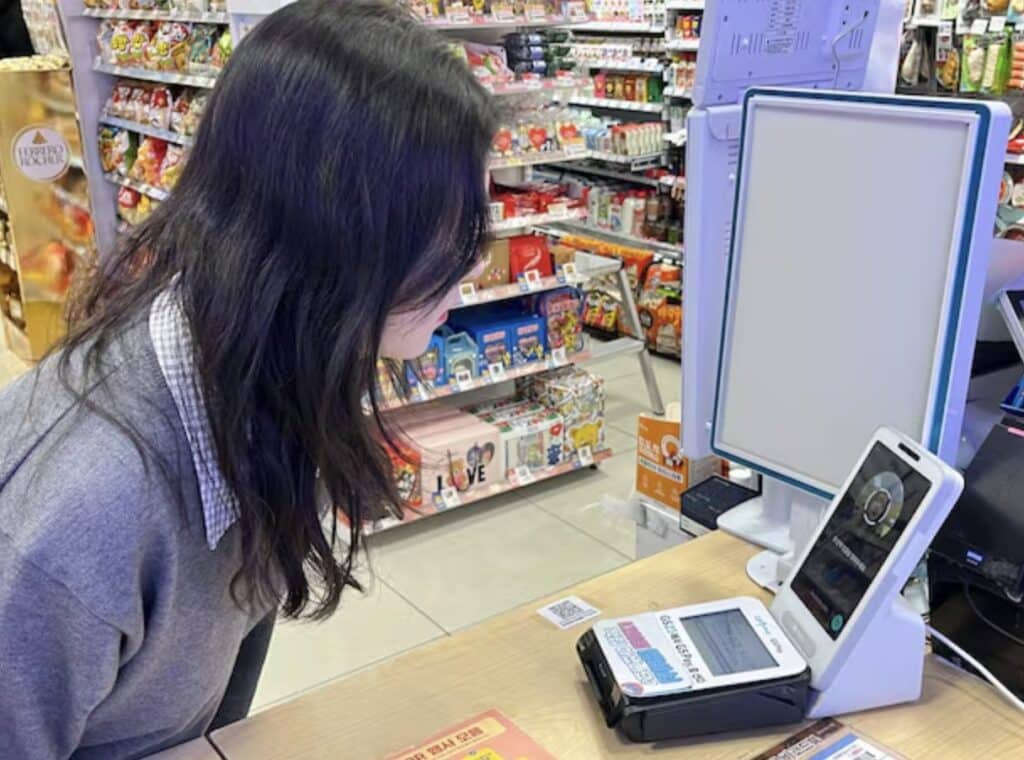
South Korea’s Toss says the number of subscribers for FacePay has exceeded 400,000 and that it has plans to expand nationwide by the end of the year.
Launched in pilot mode this March, the face biometric payment system expanded to 20,000 merchants across Seoul within two months. By August, subscriber numbers had surpassed 400,000, with around 60 percent of users returning to use the service again within a month.
Toss, which is operated by Viva Republica, now wants to scale up. The company aims to deploy FacePay at 300,000 stores nationwide by year end, with a target of one million locations by 2026.
South Koreans are embracing face biometric payments at physical stores, as companies such as Shinhan Card, Toss and Naver offer their biometric systems across supermarket chains. Financial services company Shinhan Card was the first to allow shoppers to pay with their faces, launching its service in April 2020 at Hanyang University’s campus and later spreading to retail chain Homeplus.
FacePay launched its service in April 2024. The app had more than 24 million monthly active users as of December, just under half of the country’s population. Approximately 135,000 stores have installed Toss terminals with the FacePay functionality, around nine percent of 1.5 million card terminal-equipped stores nationwide.
FacePay enables customers to register their face biometrics and payment method in advance via the Toss app. At checkout, users simply look at the in-store device to complete a transaction. The entire process takes just one second with no need to handle cash, cards, or even open an app.
Choi Jun-ho, a technical product developer for FacePay, highlighted the system’s layered security (via Biz Chosun). He explained that multiple technologies operate simultaneously within that one-second window and noted ongoing efforts to integrate identity and age verification more seamlessly, making the offline experience even smoother.
It is also the only face biometric payment solution to undergo a preliminary review by Korea’s Personal Information Protection Commission. Toss has implemented safeguards in line with the Personal Information Protection Act, including encrypted data storage in network-separated environments and a proactive compensation system for fraud cases.
Naver Pay, a mobile payment service launched by Naver Corporation, is another operator. The company began testing its Face Sign payment system in March 2023. The payment system is currently limited to the Kyung Hee University campus, where the pilot began. Naver Pay, however, is Korea’s second most popular mobile payment service after Line Pay and the company is planning an expansion into the point-of-sale terminal market during the second half of this year.
In July, financial authorities approved another face biometric payment service, this time from Lotte Card. The system will be used at airports and will rely on biometric data registered with the Korea Airports Corp.
As for Toss, it’s also integrating FacePay with its app-based ecosystem through Apps-in-Toss, an open platform that lets users browse stores, make reservations, access benefits, and pay—all within the Toss app. After payment, users automatically receive rewards, coupons, and rebooking options.
Meanwhile, more industries are adopting face biometrics. Shinhan Bank has implemented the technology in ATMs, while Incheon Airport introduced the face biometrics-based Smart Pass service for a streamlined departure process. K-pop label Hybe has offered entry to concert venues with face biometrics and online lender KakaoBank is also planning to introduce a face biometrics-based mobile identification service this year.
Related Posts
-
 August 1, 2025
-
 February 4, 2025
-
 August 4, 2025
-
 January 14, 2025
-
 November 26, 2024
-
 April 29, 2025
Article Topics
biometric payments | biometrics | face biometrics | retail biometrics | South Korea | Toss

Comments