
South Korea embraces facial recognition for retail payments
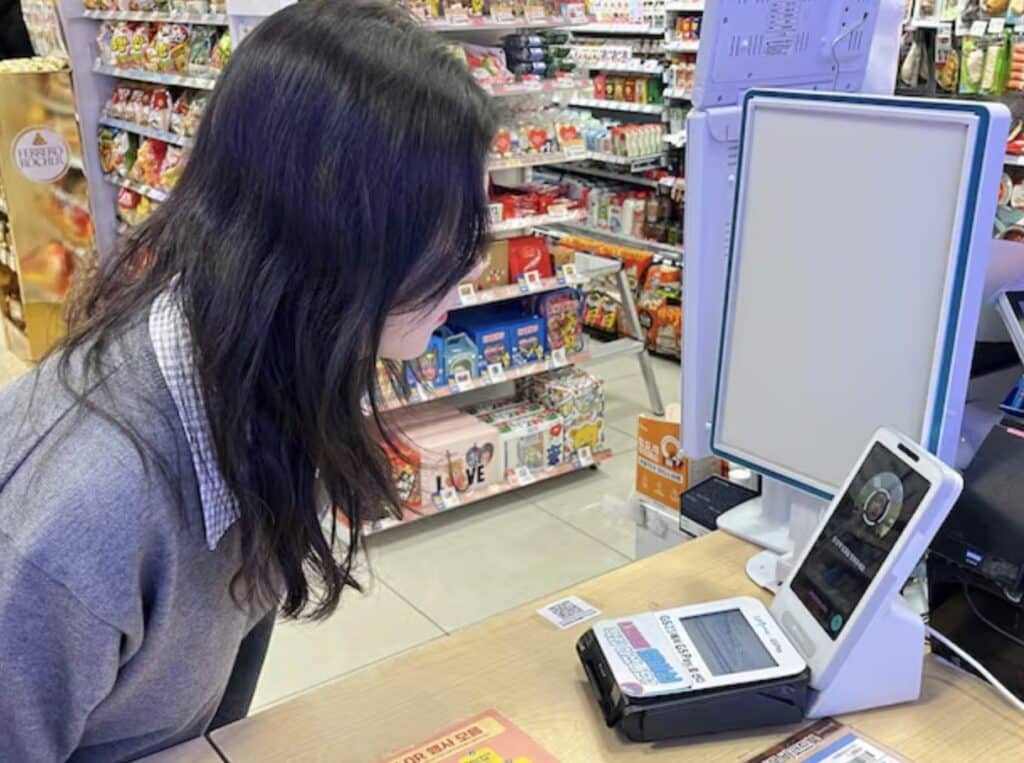
South Koreans are embracing facial recognition payments at physical stores, as companies such as Shinhan Card, Toss and Naver offer their biometric systems across supermarket chains.
In the first half of 2025, the number of users across the three facial payments providers has reportedly grown by at least 10,000. Millennials and Gen-Z are driving the trend, according to industry estimates cited by The Chosun Daily.
Financial services company Shinhan Card was the first to allow shoppers to pay with their faces, launching its service in April 2020 at Hanyang University’s campus and later spreading to retail chain Homeplus. However, it wasn’t until its rivals entered the market that interest in face payments began to grow – with Toss leading the game.
The financial app, operated by Viva Republica, launched its Face Pay service in April 2024. The app had more than 24 million monthly active users as of December, just under half of the country’s population.
Since March, the company has been deploying Face Pay in select CU and GS25 convenience stores, with plans to expand to 7-Eleven stores in the second quarter of 2025. Approximately 135,000 stores have installed Toss terminals with the Face Pay functionality, around 9 percent of 1.5 million card terminal-equipped stores nationwide.
The terminal allows merchants to turn on the biometric payment system by pressing a button. Currently, more than 20,000 stores across the capital of Seoul have enabled this feature, according to Korea Times.
Toss claims its payment system verifies faces within a second with 99.99 percent accuracy. The system is equipped with liveness detection technology and a Fraud Detection System (FDS) that captures fraudulent transactions.
Naver Pay, a mobile payment service launched by Naver Corporation, is another contender. The company began testing its Face Sign payment system in March 2023.
The payment system is currently limited to the Kyung Hee University campus, where the pilot began. Naver Pay, however, is Korea’s second most popular mobile payment service after Line Pay and the company is planning an expansion into the point-of-sale terminal market during the second half of this year.
July saw yet another rival enter the scene: Financial authorities have approved a facial recognition payment service from Lotte Card. The system will be used at airports and will rely on biometric data registered with the Korea Airports Corp.
Korean companies, however, still have to manage concerns from users regarding biometric data. According to the country’s financial regulation, companies implementing facial recognition payments may be held liable for any resulting damages. This means businesses are incentivized to invest in developing highly accurate facial recognition models to ensure reliability and minimize risk, according to the Seoul National University AI Policy initiative.
Meanwhile, more industries are adopting facial recognition: Shinhan Bank has implemented the technology in ATMs, while Incheon Airport introduced a facial recognition Smart Pass service for a streamlined departure process. K-pop label Hybe has offered entry to concert venues with face biometrics and online lender KakaoBank is also planning to introduce a facial recognition-based mobile identification service this year.
Related Posts
-
 May 30, 2025
 -
 February 7, 2025
 -
 December 13, 2024
 -
 January 7, 2025
 -
March 17, 2025
-
 October 16, 2024
Article Topics
biometric payments | biometrics | contactless biometrics | face biometrics | Lotte Card | Naver | Shinhan Card | South Korea | Toss

Comments