
CLEAR+ enrollment opens US biometric lanes to passengers from 40 more countries
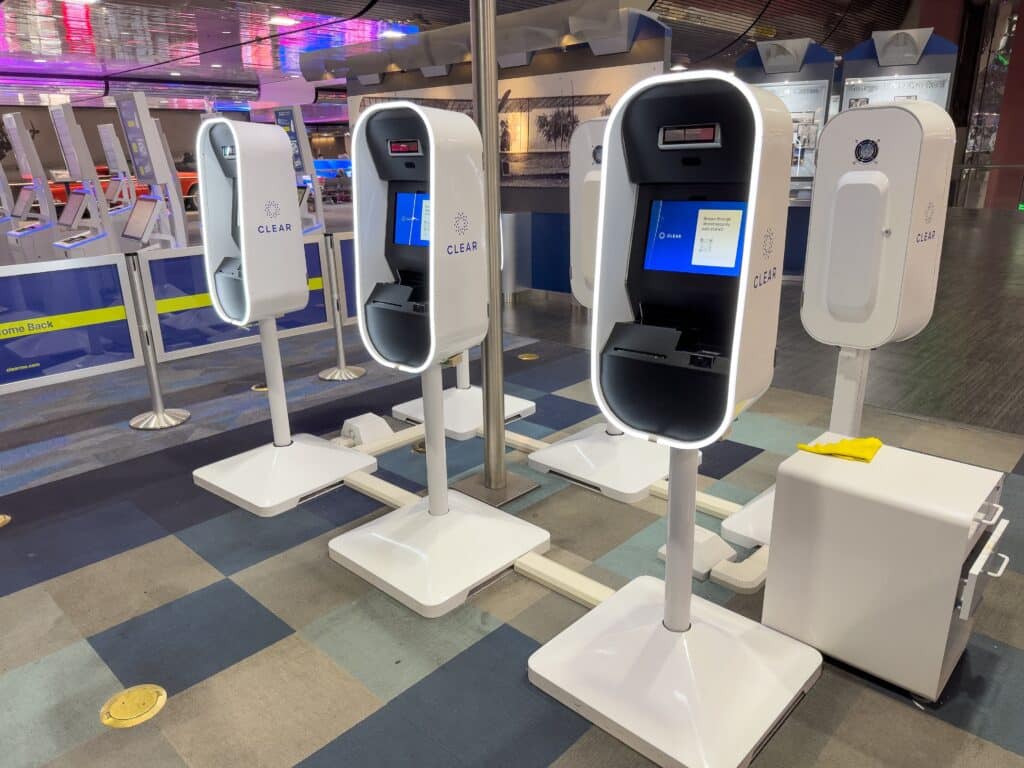
Clear Secure, Inc. announced a sweeping expansion of its premium identity service, Clear+, opening enrollment to passport holders from 40 additional nations across Europe, Asia, and the Americas.
With this move, international travelers arriving in the U.S. can now join Clear+ by beginning the process online and finalizing it in person at participating airports with a valid passport.
Enrollment opens the door to Clear’s network of more than 150 biometric lanes across 60 U.S. airports, enabling members to expedite the identity-check stage of airport security.
Caryn Seidman Becker, CEO of Clear, framed the announcement as more than a product extension. “We’re thrilled that travelers from 40 additional countries can finally enjoy a seamless airport experience here in the U.S. with Clear+,” she said.
“As millions arrive for holidays, sporting events, and once-in-a-lifetime celebrations, we’re excited to provide more international visitors with the ability to relax on their travels knowing that CLEAR is their partner helping them move through airports more quickly and easily,” Becker said.
This expansion builds on a prior enlargement of eligibility in August when Clear opened enrollment to travelers from the U.K., Canada, Australia, and New Zealand.
Together, these moves enlarge Clear’s addressable market globally and position the company for heightened traffic during major upcoming events such as the 2026 FIFA World Cup and the U.S.’s 250th anniversary celebrations.
The list of newly eligible countries now includes France, Germany, Spain, South Korea, Singapore, Switzerland, Italy, Poland, Portugal, and Taiwan. Once travelers enroll, they can use Clear’s lanes to skip parts of the identity verification line and move more directly into screening.
Clear said it currently serves more than 7.6 million Clear+ members and over 33 million users on its broader secure identity platform.
The company asserts that this global enrollment expansion is part of its continuing investment in a technology-enabled airport experience, and is accompanied by plans to scale automated biometric gates deployment across its airport footprint.
The timing is strategic. The biometric eGate model, already deployed at airports including Atlanta’s Hartsfield–Jackson, John F. Kennedy International Airport and LaGuardia Airport in New York, Ronald Reagan Washington National Airport in Washington ,and Seattle–Tacoma International Airport in Seattle, gives enrolled Clear+ members a gateway that captures and matches a live facial image to booking and ID data, opening the gate in a few seconds and ushering travelers into the screening zone without stopping at a manned identity station.
The deployment of eGates dovetails with TSA’s broader push to modernize checkpoint operations through advanced technology such as Credential Authentication Technology (CAT-2) systems, AI-enhanced threat detection, and upgraded Computed Tomography (CT) carry-on scanners.
One of the arguments behind automation is that freeing up personnel from manual identity checking allows them to be redeployed to more critical security tasks as passenger volumes rise.
Instead of handing a boarding pass and identification to a security officer, Clear+ members step up to an automated portal where a live facial image is captured and compared against their booking and ID data. If the match is successful, the gate opens and the traveler walks directly into the physical screening area.
According to TSA and Clear, the process takes between three and six seconds. For TSA, the benefit is not just faster lines, but the ability to reassign personnel to higher-priority security functions. As passenger volumes continue to rise, automating identity verification is viewed as essential to maintaining efficiency.
Clear operates and finances the gates, but TSA retains authority over access, vetting, and watchlist enforcement. TSA officials have stressed that the arrangement comes at no cost to taxpayers.
The program is expected to expand soon to Washington Reagan National Airport and Seattle–Tacoma International, with additional airports likely to follow if the pilot proves successful.
For Clear, the eGates are not merely an add-on to its service, but a sign that the company is becoming part of the mainstream security checkpoint architecture.
The eGate initiative is part of TSA’s larger modernization agenda, which includes deploying CAT-2 machines and advanced CT scanners. Automating the ID check aligns with TSA’s long-term strategy of using technology to offset staffing pressures while attempting to improve both security and customer experience.
For Clear, this alignment with TSA’s modernization plan is strategically advantageous. By funding and operating infrastructure that TSA endorses but does not directly pay for, CLEAR strengthens its value proposition to airports and the federal government alike.
The company’s executives argue that their biometric network complements TSA’s mission while creating a scalable business model based on membership fees rather than taxpayer dollars.
While Clear and TSA insist the program is voluntary, the reality of long lines and slow processing in conventional lanes can pressure travelers into opting in, an issue that has provoked the ire of lawmakers.
Privacy advocates also question whether images truly remain ephemeral. TSA says they are deleted after successful matching except in limited testing scenarios. The collection and transmission of biometric data in real time, combined with the use of private contractors at critical choke points, has sparked calls for stronger statutory safeguards.
Another concern lies in the perception of a two-tier system. Clear+ is a subscription service that costs members $189 a year, though airline partnerships and credit card perks often lower the effective price. That price point means only certain travelers will benefit from faster, automated lines, raising questions about equity in access to public infrastructure. While TSA PreCheck and Global Entry are also fee-based programs, critics argue that outsourcing part of the checkpoint to a private subscription model represents a more profound shift.
Today’s expansion announcement underscores Clear’s ambition to scale its membership base at a time when biometric eGates are gaining traction.
By opening enrollment to dozens of new countries, the company ensures that the system will not be limited to U.S. citizens and a small group of allied nations. Instead, international travelers who enroll can arrive in the United States already prepared to use the biometric gates.
The move also expands Clear’s operational leverage. With physical infrastructure already in place at more than 60 U.S. airports, each additional enrollee increases throughput and revenue without proportionally increasing costs. The economics become more favorable as more travelers subscribe, and the network effect strengthens as biometric gates become more common place.
Related Posts
-
 August 21, 2025
 -
 June 4, 2025
 -
 January 22, 2025
 -
 December 20, 2024
 -
 November 28, 2024
 -
 March 26, 2025
Article Topics
airport biometrics | biometrics | CLEAR | digital travel | identity verification | passenger processing | Traveler Verification Service | TSA

Comments