
Touchless ID pilot gains momentum as TSA eyes private screening model
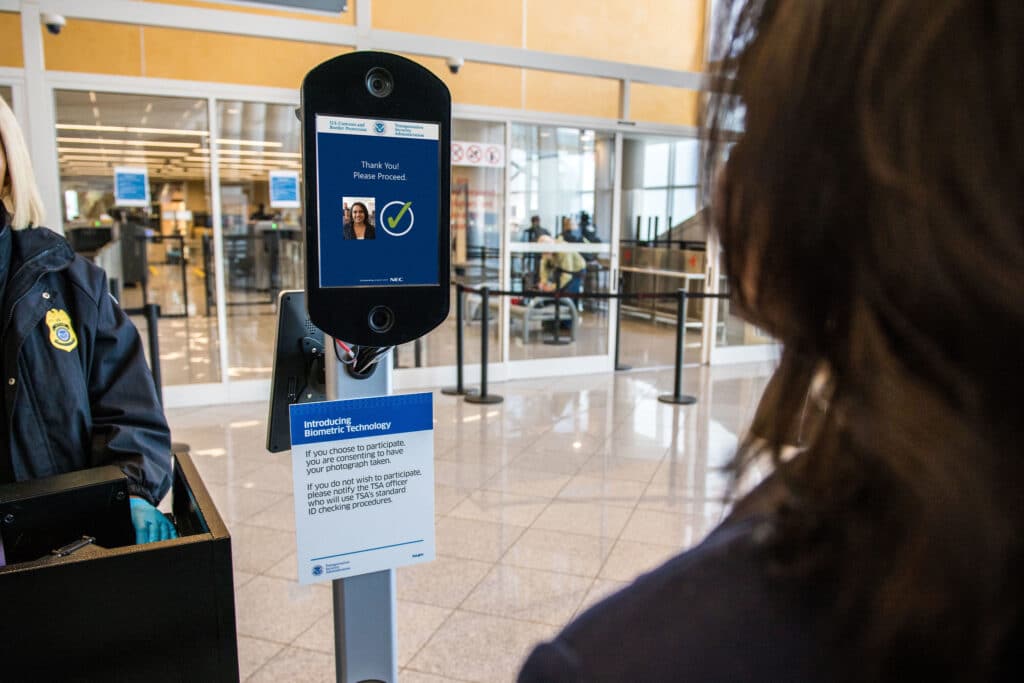
The Transportation Security Administration (TSA) is moving to fuse its touchless identity experiments with a broader shift toward privatized, technology-heavy airport screening. The effort merges cutting-edge biometric screening trials with a reimagining of how security at U.S. airports is staffed and managed.
In July, TSA issued a Request for Information under its Screening Partnership Program (SPP) seeking input from private-sector entities capable of delivering fully integrated, turnkey biometrics and digital ID screening solutions. SSP allows airports to hire private companies to perform security screening under TSA oversight.
Traditionally, SPP has been a niche option used by a handful of small and medium-sized airports to outsource screening personnel while following the same federal protocols as TSA-run checkpoints.
The new RFI envisions private-sector partners supplying not just personnel, but integrating and operating a full suite of advanced security technologies in unified, turnkey screening lanes.
This vision dovetails with TSA’s ongoing PreCheck Touchless ID pilot, a program designed to replace traditional ID checks with biometric facial recognition for eligible travelers.
Now in operation at 14 U.S. airports, the program partners with Alaska Airlines, American Airlines, Delta Air Lines, and United Airlines. In July, Denver International Airport became the latest to add dedicated touchless lanes. “No need to show physical ID or a boarding pass. Just your face gets you through,” TSA says in an explanatory video on its website.
At Denver, two lanes are now dedicated to travelers who are enrolled in TSA PreCheck, have a valid passport linked to their airline profile, and opt into the program in advance. American Airlines adds the extra condition that participants must also be members of its AAdvantage loyalty program.
TSA says the live image captured at the checkpoint is compared to government-held photos from passports, Global Entry, or visas, using Customs and Border Protection’s Traveler Verification Service. “Images are not used for law enforcement, surveillance, nor shared with other entities,” TSA states, and they are “deleted within 24 hours of your scheduled flight departure.”
Phil Washington, CEO of Denver International Airport, framed the pilot as a step forward without compromising security. “This trial adheres to the highest levels of safety and security,” he said when announcing the new lanes.
The process differs from TSA’s more widespread use of Credential Authentication Technology with cameras in which a TSA officer checks a physical ID alongside the captured image, making the biometric scan itself the sole method of verification.
Airports currently offering Touchless ID lanes include major hubs such as Atlanta, Chicago O’Hare, Dallas-Fort Worth, Detroit, Las Vegas, Los Angeles, Newark, New York LaGuardia, Portland, San Francisco, Seattle, Salt Lake City, and Reagan Washington National. Passengers are still advised to carry a physical ID as a backup and present it if requested by a TSA officer.
The pilot is part of a larger trend at TSA toward streamlining checkpoints, which also includes rolling out Computed Tomography scanners, credential authentication devices, and even dedicated family lanes.
Homeland Security Secretary Kristi Noem has been explicit about her vision for where these efforts could lead. “My goal would be that someday someone could walk into an airport, walk through a scanner, and go right to their airplane,” she said.
But while industry groups and some travelers welcome the speed and convenience of facial recognition, the pilot has sparked political and civil liberties concerns. In May, the Privacy and Civil Liberties Oversight Board issued a report urging TSA to strengthen transparency, clarify opt-out procedures, and ensure robust auditing. Some travelers have reported confusion when declining the facial scan, with inconsistent signage and occasional pushback from staff.
Senator Jeff Merkley, an Oregon Democrat, co-sponsored the Traveler Privacy Protection Act, a bill that stalled out which would have made human ID checks the default, require explicit opt-in for any biometric scan, and mandate immediate deletion of images after verification.
“No one should be required to have their face scanned to travel, and no government should have the power of a national surveillance system at its fingertips,” Merkley said in a statement.
Acting TSA Administrator Ha Nguyen McNeill has sought to strike a balance. In testimony before Congress earlier this year, she said “nothing is off the table” when it comes to exploring new privatization models, but emphasized that participation in such programs would be optional and tailored to local airport needs.
She described TSA as being at a “strategic crossroads” and reaffirmed the agency’s “North Star” goal of providing “the highest level of security, the best passenger experience in the most efficient way possible.”
McNeill also acknowledged that budget constraints under a continuing resolution have slowed the full deployment of next-generation scanners and credential devices, stretching rollout timelines into the mid-2040s.
The RFI under the Screening Partnership Program could accelerate some of these deployments by shifting more responsibility to the private sector. TSA is preparing a new 10-year, $5.5 billion indefinite delivery/indefinite quantity contract to replace the current SPP vehicle, which is capped at $3.3 billion and expires in mid-2026.
By bundling staffing, technology, and operational management in a single procurement framework, TSA hopes to streamline contracting, encourage more airports to join the program, and shorten lead times for deploying advanced security solutions.
Meanwhile, private-sector interest is strong. The promise of steady task orders covering passenger, baggage, and even cargo screening – combined with the opportunity to integrate state-of-the-art biometric and AI tools – has attracted attention from established defense contractors, airport technology startups, and biometric specialists.
For supporters, the convergence of the Touchless ID pilot with a modernized, tech-integrated SPP could create a checkpoint experience that is faster, more accurate, and less dependent on manual ID checks. For critics, it raises questions about oversight, accountability, and the long-term implications of normalizing biometric identity verification at the federal level.
The outcome may hinge on how TSA manages the rollout in the months ahead and whether it can maintain privacy protections, ensure true consent, and keep the option for manual ID checks readily accessible.
Related Posts
-
 July 18, 2025
 -
 December 30, 2024
 -
 April 1, 2025
 -
 February 6, 2025
 -
 September 6, 2024
 -
 August 20, 2024
Article Topics
airport biometrics | biometrics | contactless biometrics | face biometrics | PreCheck Touchless ID | Traveler Verification Service | TSA | U.S. Government | United States

Comments