
ICE’s license plate app quietly expands a nationwide surveillance web
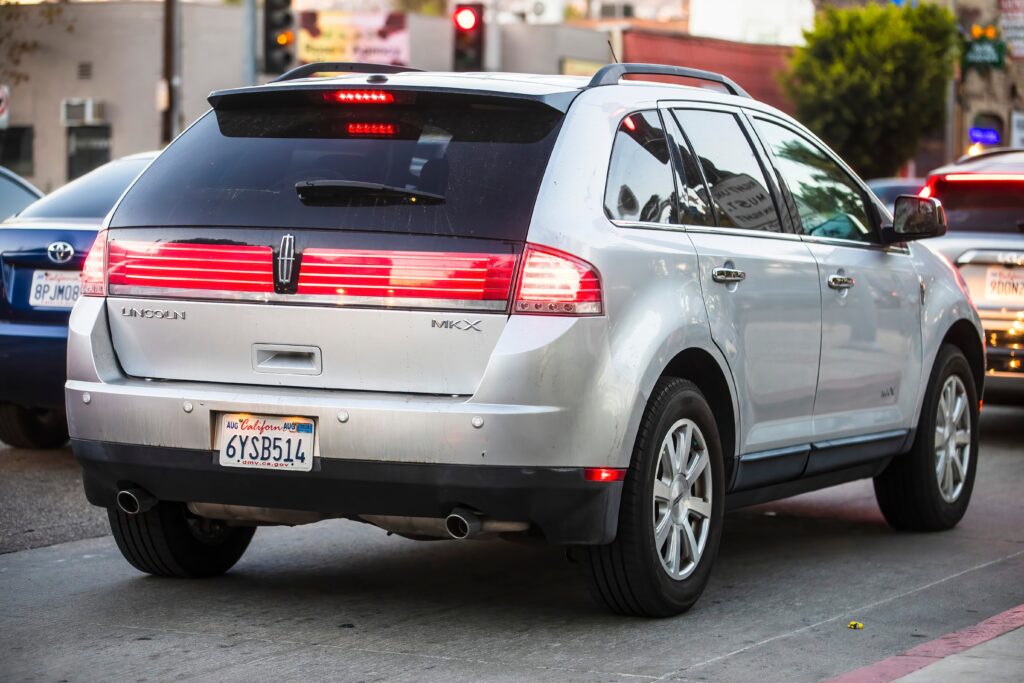
U.S. Immigration and Customs Enforcement (ICE) officers are now using a mobile app that lets them scan a license plate with a phone and instantly pull up a vehicle’s travel history, ownership records, and associated personal data.
It’s an enforcement capability that has rapidly expanded through commercial surveillance vendors and is already reflected in thousands of immigration-related license plate reader (LPR) queries appearing in local police systems.
Recent disclosures from California, Colorado, and Illinois show more than four thousand license plate reader searches were tagged with “immigration,” “ICE,” or “ICE + ERO” in local law enforcement agency’s logs, even in states that restrict sharing such data with federal immigration authorities.
These records point to active, widespread use of ICE’s mobile scanning tool, and they illustrate how deeply the agency has embedded itself into the private camera networks and commercial data ecosystems that now cover much of the country’s roads.
At the center of this capability is a field-ready smartphone interface that allows an officer to photograph a license plate, run it through commercial facial recognition platforms and instantly retrieve a vehicle’s historical sightings.
The results can include the registered owner, associated addresses, linked individuals, and patterns of repeated travel. The mobile scanning feature also ties into vendor supplied alert systems.
If a vehicle on an ICE watchlist is captured anywhere in the national camera network, officers can receive real time notifications, integrating that data directly into ICE investigative workflows.
While ICE has not publicly named the mobile application, its existence is evident from procurement records and vendor materials. The architecture behind it can be traced through the commercial companies that supply the data and the underlying software.
Motorola Solutions, through its 2019 acquisition of VaaS International Holdings, the parent company of Vigilant Solutions, controls one of the largest automated license plate reader (ALPR) networks in the U.S.
Vigilant’s VehicleManager and Mobile Companion products provide mobile, desktop, and analytic tools tied to an enormous collection of license plate sightings gathered from police cruisers, fixed cameras, toll plazas, commercial parking systems, and private contributors.
Marketing materials for VehicleManager advertise access to the largest license plate database in the country, a repository that now contains billions of historical detections and grows by tens of millions of scans each week.
Thomson Reuters, through its CLEAR investigative platform, supplies the identity and analytic layers sitting on top of the plate data.
CLEAR aggregates driver records, address history, vehicle registration information, family and associate linkages, and numerous proprietary datasets.
When an ICE agent scans a plate through the mobile interface, the system in seconds can connect movement history from Motorola’s network with identity and relational data supplied by Thomson Reuters.
The agency continues to fund and expand these tools. In May, ICE paid Thomson Reuters nearly $5 million for access to “license plate reader data to enhance investigations for potential arrest, seizure, and forfeiture,” according to federal procurement records.
The payment is one of the largest recent confirmations that ICE is still purchasing direct access to commercial license plate reader datasets rather than relying solely on its original 2017 arrangement.
That earlier contract – awarded in December 2017 to Reuters’ West Publishing Corporation – provided ICE with “query-based access to a commercially available LPR database.” It recognized explicitly that the data came from vendor owned networks, not government-built infrastructure.
The award, valued at more than $7 million, opened the door for ICE to tap into Vigilant’s plate network nationwide.
Federal spending records show the hardware side is expanding as well. This year, ICE issued a purchase order to Motorola Solutions for four mobile license plate reader units to support ICE’s Enforcement and Removal Operations. The award carried an obligation of approximately $95,500.
On the data services front, procurement data identifies a separate $15.6 million agreement with Thomson Reuters for tactical communications and related infrastructure, though the federal documentation does not break out exactly which components support vehicle tracking capabilities.
Together, these layers form a three-part system of commercial camera infrastructure feeding plate detections into a vendor managed database; an identity and analytics platform that maps those detections to people, addresses, and associated records; and a mobile interface that lets ICE agents access all of it from the field.
The scale is enormous. With billions of detections stored in Motorola’s network and deep identity datasets flowing from Thomson Reuters, the mobile app gives ICE a level of situational awareness that previously required specialized investigative teams and large analytic centers.
What makes the system even more far-reaching is something ICE acknowledges in a Privacy Impact Assessment (PIA). The agency often receives plate data indirectly through local and state agencies connected to commercial networks. ICE can therefore access LPR data from jurisdictions that, on paper, restrict sharing plate information with federal immigration authorities.
As long as a local law enforcement agency contributes data to a commercial vendor’s network, ICE’s contracted access to the vendor’s database can reveal those detections, even without a direct data-sharing agreement between ICE and the local police department.
ICE’s publicly released PIA acknowledged the mobile scan capability but provided limited information about user logs, frequency of queries, accuracy rates, retention rules, or audit mechanisms.
The PIA states that officer queries of vendor systems “must adhere to agency operating policies” but does not detail specific controls for handheld mobile access.
The practical effect is a shift in how immigration enforcement operates. Instead of relying on DMV records, stakeouts, fixed checkpoints, or investigative leads, ICE agents equipped with the mobile app can identify, track, and analyze a vehicle’s movements in real time.
A single scan can reveal travel patterns stretching back months. A hit in the network can trigger automated alerts. And an individual’s identity and associations can be cross-referenced instantly through commercial databases.
Related Posts
-
 December 13, 2024
 -
 March 17, 2025
 -
 March 31, 2025
 -
 August 25, 2025
 -
 December 9, 2024
 -
 April 1, 2025
Article Topics
biometrics | facial recognition | ICE - U.S. Immigration and Customs Enforcement | license plate readers | mobile app | Motorola | Thomson Reuters | U.S. Government | vehicle recognition | Vigilant Solutions

Comments