
Florida House passes bill to relaunch mDL program
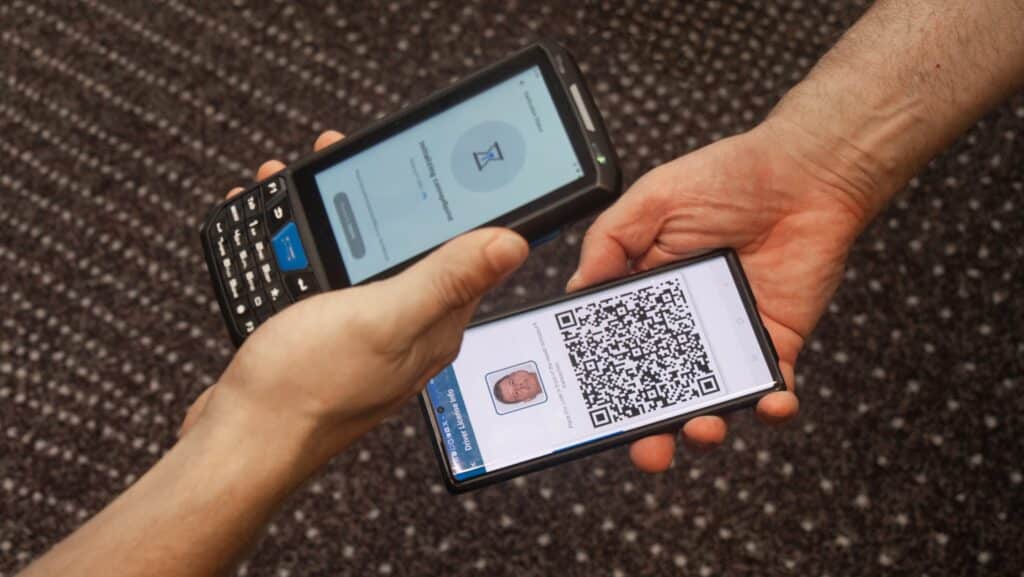
A package of transportation laws have been approved by Florida’s House of Representatives, setting up the potential return of mobile driver’s licenses (mDL) to the state.
HB 543 contains a wide range of changes, touching everything from red light cameras to enforcement of rules about excessive vehicle noise, and was passed by a 107-1 margin.
For mDLs, the bill establishes new data privacy protections and limit how businesses can use data from a digital ID.
Florida has a mobile driver’s license program, but pulled its Florida Smart ID from the iOS and Android app stores in mid-2024. At the time the Department of Highway Safety and Motor Vehicles said a new app could be ready by early-2025.
“Many of us, I’ve noticed, walk around without a wallet, a physical wallet,” the bill’s sponsor Fiona McFarland said, as reported by Florida Politics. “We have it all on our phone today. Other states have a digital driver’s license. It’s a convenience that I think we all want to enjoy in the state of Florida, I included, but we should make sure that there are significant data protections — whether it’s information communicating back to the government or information communicating between retailers.”
“Communicating back to government” is also referred to as “phoning home,” and is generally not implemented in mDLs.
The bill specifies that Florida’s mDL should comply with ISO/IEC 18013-5 and 18013-7, and that data from it should be used only for the purpose it was initially shared for unless its holder authorizes further sharing or reuse. The data should then be deleted or irreversibly anonymized, except in cases where there are narrow requirements for its retention. The state would be able to store only the data on the mDL required by law.
The mDL should be capable of selective disclosure and its holder should be able to audit verification requests. Transactions should not be linkable.
The bill still needs to pass through the state senate and be signed by the governor to become law.
Related Posts
-
 August 21, 2025
 -
 March 26, 2025
 -
 June 25, 2025
 -
 June 26, 2025
 -
 June 18, 2025
 -
 October 13, 2025
Article Topics
digital ID | Florida | ISO 18013 | legislation | mDL (mobile driver's license) | mobile app

Comments