
Amazon testing grocery service based on computer vision and deep learning technology
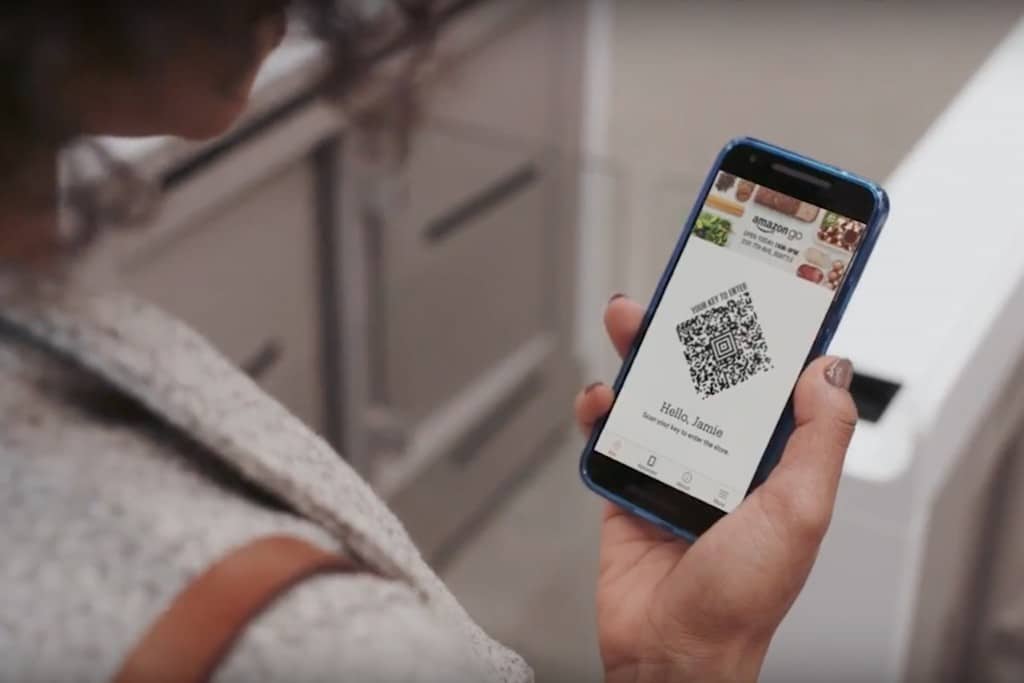
Amazon has been private beta testing in Seattle its new “Amazon Go” grocery shopping service, which uses computer vision and deep learning algorithms to intuitively provide consumers with the items they want without having to wait in queues, according to a report by Visions Systems Design.
Scheduled to open to the public early this year, the Amazon Go app uses computer vision, sensor fusion, and deep learning technologies to enable consumers to walk into the store, shop for products, and walk out without waiting in lines at the checkout.
The “Just Walk Out” technology automatically detects when products are taken or returned to shelves and tracks the consumer’s items in a virtual cart.
Once consumers are finished shopping, they can leave the store and their Amazon account will be charged accordingly within minutes.
The Amazon patent filings, which were filed in September 2014, describe the grocery shopping service as using RGB cameras, depth sensing cameras, and infrared sensors.
The patent filings also reveal that once the technology detects a shopper entering and/or passing through a transition area, various techniques may be used to identify the user.
When the position of the shopper enters or passes through a transition area, the person’s identity becomes known because the technology continues to track the individual.
In addition, the system is able to “automatically detect” when products are taken from a shelf by using cameras to “capture a series of images of a user’s hand before the hand crosses a plane into the inventory location and also capture a series of images of the user’s hand after it exits the inventory location.”
By comparing the images, the system is able to determine whether the user picked up an item or placed it back down.
The software can also identify if the shopper is holding an item before the hand crosses into the inventory location, but is not holding an item when the hand is removed from the inventory location.
The shopper’s previous purchase history can also be used to help identify an item when the user picks it up from the shelves. In some situations, data from other input devices may be used to help determine which items are either taken or dropped off in inventory locations.
The new grocery service is the latest in Amazon’s ongoing use of innovative technologies to provide a more convenient and seamless shopping experience.
“Amazon, for good or bad, has been setting the path,” said Robert Hetu, research director at Gartner Research. “Each retailer is going to have to respond in some way. But it’s not one size fits all. It all has to go back to the consumer. For each environment, you have to assess what the consumer will interpret as value.”
Amazon Go is currently only available to Amazon employees, but customers can sign up for the service on the Amazon site to be notified when the store officially launches.
This article was updated at 6:43pm EST on January 17, 2017.

Comments