
Nigeria launching multiuse biometric ID card to drive economic, financial inclusion
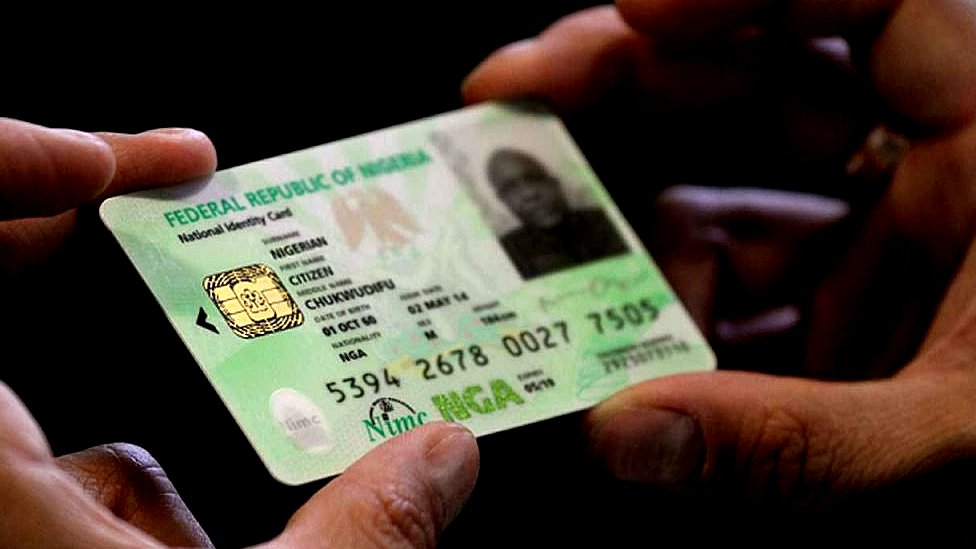
Nigeria’s National Identity Management Commission (NIMC) has announced the imminent launch of a General Multipurpose Card (GMPC) that will support the country’s efforts towards a more economically and financially included society.
Details about the new biometric three-in-one card, its features and potential benefits, were explained recently by the Director General of the NIMC, Abisoye Coker-Odusote, during a media briefing in Abuja.
Although a specific launch date was not mentioned, Coker-Odusote said the ID program aligns with President Bola Tinubu’s Renewed Hope Agenda and vision of providing all Nigerians with a reliable identification system which can enable them gain access to important public services.
She said as quoted by daily newspaper Vanguard that enrollment for the GMPC is already ongoing with the biometrics of more than 115 million Nigerian captured.
The social inclusion aspect of the card, she noted, seeks to help take around 133 million Nigerians out of the fangs of poverty, as it will be useful in the identification of Nigerians who benefit from different government safety nets and sector-specific programs.
According to the NIMC CEO, the improved card is a three-in-one NIN-linked card with an embedded chip, which can operate online and offline.
It has been designed to be used for three major purposes: facilitate access to government programs and services, act as a personal proof of identity, and enable economic and financial inclusion.
The card, Coker-Odusote explained, will be issued by banks through a local scheme known as AfriGo, an indigenous payment cards provider which has the primary goal of enhancing financial inclusion in Nigeria. The system is managed by the Central Bank of Nigeria (CBN) and the Nigeria Inter-bank Settlement System (NIBSS) which also issues the Bank Verification Number (BVN).
Currently, around 26 commercial banks and microfinance institutions issue AfriGo cards, according to Channels TV.
The card, which has advanced security feature, will also be used for a Government-to-People (G2P) program, which the NIMC says, will be crucial for the creation of a farmer digital ID registry.
The G2P card, to be linked to the farmer registry, has a large capacity in-card chip that stores beneficiary identity, know your customer (KYC), photo, and fingerprints, as stated in an NIMC announcement.
“In addition, it has two applets and several wallets dedicated to multiple types of programmes, which provides needed flexibility and channels for multiple interventions to be implemented against the same unique identity. This flexibility is required to address infrastructure challenges limiting identity verification and digital evidence of beneficiary access when implementing government programmes.”
In the course of the media briefing, Coker-Odusote disclosed that preparations were almost concluded for the launch of the ID card.
NIN for student ID, school meal program
As the NIN numbers keep growing, so are the use cases. Recently, a plan was unveiled to linked the digital ID with student ID cards in order to facilitate the identification of students.
Nigerian Tribune reports that the Senior Special Assistant to the President on Students Engagement, Hon. Sunday Asefon, discussed this recently in a chat with the NIMC Director general.
The official said while the integration will help establish a reliable and accurate database of all Nigerian students, it will also open up opportunities for them such as “internships, skills acquisition programmes, and job placements.”
Officials say they will carry out awareness campaigns on the importance of NIN obtention and integration with student ID cards, a process they say will facilitate not only school enrollment but the fight against fraud and other on-campus crimes.
Another school-related initiative for NIN use is that managed run by the Renewed Hope National Home Grown School Feeding (RH-NHGSF) Programme, which recently signed a “strategic partnership” with the NIMC.
According to an NIMC news release, the partnership aims at providing all school children in Nigeria with digital IDs so as to enable them have “inclusive access to the school feeding program” in a way that enhances transparency and fosters accountability.
“By integrating the NIN registration process into the school feeding program, the partnership underscores the Federal Government’s commitment to improving educational and nutritional outcomes for children while advancing the Digital Public Infrastructure in Nigeria,” the NINC assures.
Related Posts
-
 April 10, 2024
 -
 March 8, 2024
 -
 January 6, 2025
 -
 June 14, 2024
 -
 October 15, 2024
 -
 January 23, 2025
Article Topics
Africa | biometric identification | biometrics | General Multipurpose Card (GMPC) | identity document | National Identity Management Commission (NIMC) | National Identity Number (NIN) | Nigeria

Comments