
Armenia’s bank-backed imID buys mobile ID system
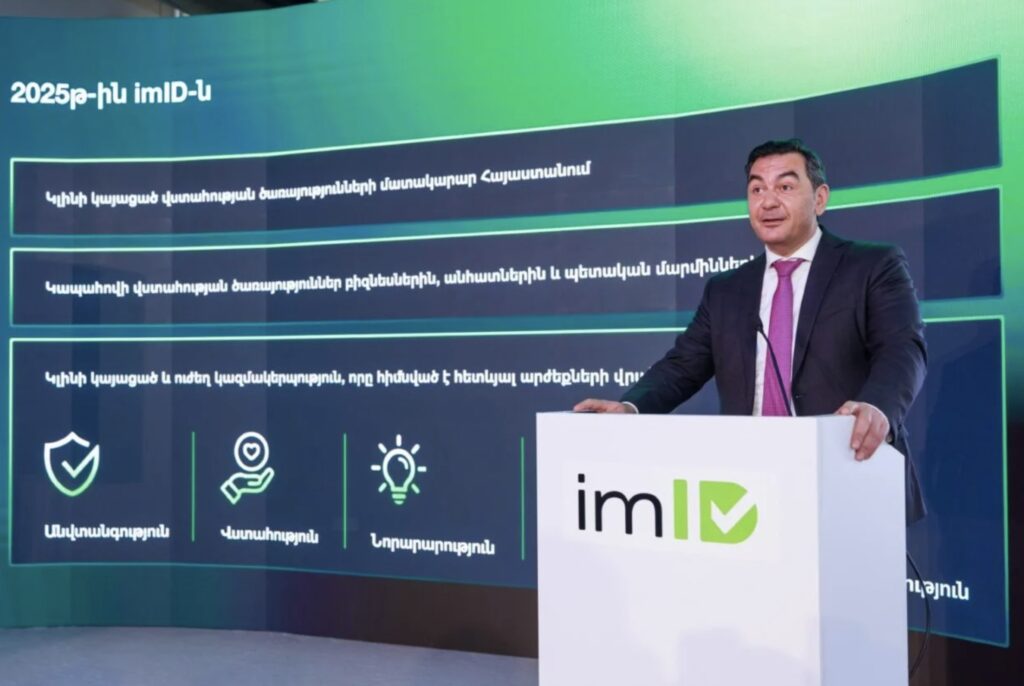
Armenia’s digital identity company imID has announced the acquisition of Mobile ID, a digital ID service created by telecommunication operator Viva in cooperation with the government.
The deal was officially sealed on Monday with Armen Avetisia, general director at Viva, calling it an “important step” towards the digitalization of Armenia.
“Viva is transferring its technological expertise and extensive experience to imID, believing that under this new structure, Mobile ID will expand more broadly and gain nationwide significance,” he says.
Founded in 2024 by a group of 10 Armenian banks and three telecos, imID is a trust service provider that offers Qualified Electronic Signatures and identity verification for both public and private organizations.
Mobile ID, on the other hand, was created to allow users to log into the YesEm (meaning ’It’s me’) national electronic ID service and digital services portal, created under the Information Systems Agency of Armenia in 2023. Aside from mobile IDs with SIM cards from mobile network operators Viva and Ucom, the service also allows users to log in with their electronic ID cards. Last year, the agency announced that YesEM ID solutions will be eIDAS certified.
The acquisition of Mobile ID is set to create a centralized platform that is mobile operator–agnostic and managed by imID. The platform is expecting a modernization, including strengthening security, improving accessibility and delivering a seamless experience to users across the country, according to Armenian news agency News.am.
“We are preparing a comprehensive package of services that will bring not only technological modernization but also significant progress toward building a digital society, “ says imID CEO Karen Mkoyan.
Related Posts
-
 May 9, 2025
-
 November 15, 2024
-
 January 31, 2025
-
 March 4, 2025
-
 March 26, 2025
-
 February 26, 2025
Article Topics
acquisitions | Armenia | Armenia Mobile ID | biometric authentication | digital ID | electronic-signature | identity verification | imID (Armenia)

Comments