
India’s gig-economy startups need Aadhaar verification, biometrics providers can help
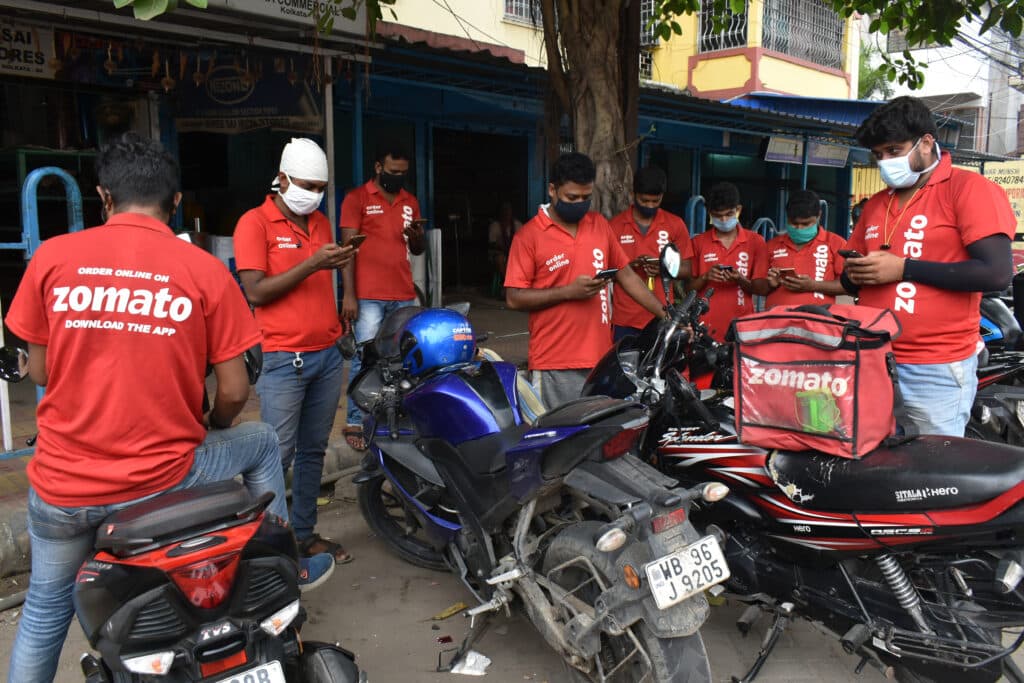
Indian start-ups in food delivery, ecommerce and ride-hailing are lining up to seek government approval for gig-worker identity verification.
Industry insiders say companies have been hamstrung by the inability to run simple Aadhaar online KYC checks at scale, prompting them to approach the Ministry of Electronics and IT (MeitY) for clearances.
The push comes after MeitY’s recent clampdown on unauthorized use of Aadhaar-based onboarding services. MeitY has already blocked access to platforms such as Zoop, Surepass and Digitap, in a bid to curb illicit access to the UIDAI database.
Under current rules, any private entity wishing to leverage the Aadhaar ecosystem must get explicit permission from the relevant government department. Without it, such firms face legal exposure and enforcement actions.
Globally, fraud challenges beset the food delivery and riding-hailing industry — an Incognia report found that fake accounts were employed in 57 percent of driver-side fraud cases. In the UK, food delivery firms are under increased scrutiny after concerns were raised over illegal workers, prompting them to increase their use of selfie biometric verifications.
In India meanwhile, The Economic Times highlights biometric service providers like Protean eGov Technologies that stand ready to bridge the verification gap. Once MeitY greenlights a private firm’s proposal, Protean can route authentication requests through a secured channel directly into Aadhaar rails.
“We now have the capability to offer Aadhaar authentication services to private platforms, particularly relevant for specific use-cases, such as verifying gig workers at scale, where the trust built into Aadhaar can significantly strengthen KYC processes,” said Bertram D’Souza, chief product and innovation officer at Protean eGov Technologies.
On January 31, the government announced that private companies can use Aadhaar for specified purposes once they get approval from the relevant ministry. Start-ups view this as a way to legally digitally verify delivery and frontline workers. Banks, telecom operators and other regulated businesses already have direct access to the Aadhaar database. The challenge is finding a secure channel for unregulated platforms to perform KYC on blue-collar staff.
Some ecommerce operators have resorted to using “offline” Aadhaar website screens via unauthorized methods, which is illegal, according to UIDAI and MeitY. “We are now in talks with these ecommerce players to migrate them to Digilocker-based verification of Aadhaar or a simple redirection-based process to verify the delivery executive against offline Aadhaar,” said Wriju Ray, chief business officer at IDfy, a Mumbai-based biometric identity verification start-up.
Another identity start-up executive told the Economic Times that many gig workers don’t have Digilocker installed on their phones, complicating assisted onboarding. With formal approval of the Aadhaar rails, ID verification firms could serve as technology service providers, acting as intermediaries between gig platforms and authorized Aadhaar gateways, all via a strict consent framework.
Last month, UIDAI introduced a QR code-based system for more secure digital document verification. UIDAI CEO Bhuvnesh Kumar told India Today that the new Aadhaar app may be ready within two months.
Protean’s quarterly presentation from March shows it has handled around 3.275 billion Aadhaar authentication requests since inception. In the 2024–25 fiscal year alone, the publicly-listed company processed 560 million of these authentications, averaging about one million approvals per day, and conducted around 1.2 million electronic KYC transactions daily.
According to UIDAI data, June saw 1.1 billion authentication and 287 million KYC processes through Aadhaar, a 7.8 percent YOY increase. In addition, a record 158.7 million face authentication transactions were recorded, up from 46.1 million in June 2024.
Related Posts
-
 May 8, 2025
 -
 July 3, 2025
 -
 September 20, 2024
 -
 August 30, 2024
 -
 March 19, 2025
 -
 December 9, 2024
Article Topics
Aadhaar | biometrics | identity verification | IDfy | KYC | Protean | UIDAI

Comments