
UK high court hears Wikipedia suit against Online Safety Act category rules
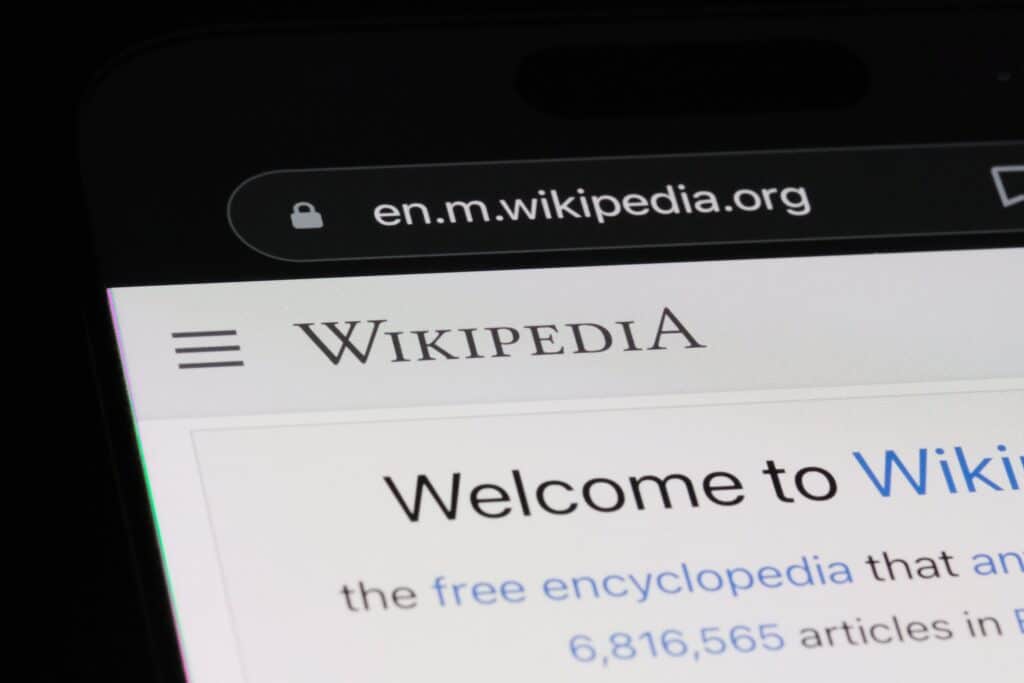
Web 2.0 is more than two decades old, but in many ways the world is just beginning to reckon with its legal and social consequences. Basic questions remain contested, with epistemological implications. For instance, who has a right to know what, and when? What role has anonymity played in shaping our online world? And how do analogues in the physical world translate into a digital scenario in which identity is unconstrained from the limitations of being-in-a-place?
All of these questions have a place in the current legal challenge that Wikipedia has mounted against the UK Online Safety Act, and specifically against its Categorization Regulations.
A statement from the Wikimedia Foundation says “the legal challenge focuses solely on the new Categorization Regulations that risk imposing Category 1 duties (the OSA’s most stringent obligations) on Wikipedia.”
Regulation 3 in the OSA divides online services into three categories. Category 1 covers those services that have an average number of monthly active users in the UK that exceeds 34 million and uses a content recommender system; or has an average number of monthly active United Kingdom users that exceeds 7 million, uses a content recommender system, and “provides a functionality for users to forward or share regulated user-generated content on the service with other users of that service.”
Wikipedia, one of the world’s most visited websites hosting user-generated content, easily meets the criteria. Per Statista, as of March 2024, the site saw around 4.4 billion unique visits monthly. According to Wikipedia, the UK accounts for around 5 percent of the site’s global traffic, and content on the site and other Wikimedia projects was viewed 776 million times in the UK in June 2025.
Wikipedia uses algorithms that qualify as content recommender systems to suggest pages, keep track of entries ready to be reviewed and assist in translating articles.
The foundation says that Category 1 demands would “undermine the privacy and safety of Wikipedia’s volunteer contributors, expose the encyclopedia to manipulation and vandalism, and divert essential resources from protecting people and improving Wikipedia, one of the world’s most trusted and widely used digital public goods.”
One particular sticking point is identity verification. Wikimedia worries that imposing ID verification requirements on anonymous volunteer moderators who edit entries would undermine their privacy and pose potential risks. “In addition to being exceptionally burdensome, this requirement – which is just one of several Category 1 demands – could expose contributors to data breaches, stalking, lawsuits, or even imprisonment by authoritarian regimes,” it says.
The foundation believes that by making content moderation riskier, the overall quality and reliability of the site will suffer.
The foundation’s joint claimant in the case is longtime UK-based Wikipedia contributor Zzuuzz (a pseudonym), to provide a volunteer’s perspective.
Like YouTube in Australia, the case of Wikipedia in the UK highlights the complexity of legislating sites that have been collected under the same umbrella, but provide vastly different experiences. There is an argument to be made that Wikipedia functions (fittingly enough) more like an encyclopedia than a website. As such, the foundation is hoping the UK will see fit to grant it an exemption from Category 1 threshold conditions.
Stephen LaPorte, General Counsel at the Wikimedia Foundation, says “the Court has an opportunity in this case to set a global precedent for protecting public interest projects online.”
“Wikipedia is the backbone of knowledge on the internet. It’s the only top-ten website operated by a non-profit and one of the highest-quality datasets used in training Large Language Models (LLMs). We trust the Court will protect Wikipedia – a vital encyclopedic resource – from rules crafted for the internet’s riskiest commercial sites and, in doing so, safeguard the open internet for everyone”.
The UK government has already shown signs that it is not one hundred percent confident in the law, and has conceded that categorization rules are based on a platform’s functionalities and user numbers, not perceived risks. MLex reports that, in hearings this week, the UK’s legal team told London’s Royal Court of Justice that, when drafting the rules, “the line had to be drawn somewhere.”
There is still no guarantee that Ofcom, which is enforcing the OSA, will consider Wikipedia to qualify as a Category 1 service, only that it is likely under the current framework. But the Wikimedia Foundation clearly believes the fight is worth having. The justice presiding over the case, Judge Jeremy Johnson, seems to share that opinion, going so far as to warn of the political consequences for UK Technology Secretary Peter Kyle should the legislation result in Wikipedia becoming unavailable for UK users.
In court, the site’s lawyers floated the idea of a monthly quota to keep it below the Category 1 threshold, meaning that UK access to Wikipedia could become less like browsing the web and more like trying to buy a concert ticket, with a cap on how many people get in.
Meanwhile, the lawsuit has already delayed parts of the OSA from coming into effect, with Ofcom waiting until the legal challenge is resolved to publish its register of categorized services.
Related Posts
-
 February 27, 2025
 -
 March 18, 2025
 -
 October 15, 2024
 -
 November 25, 2024
 -
 August 30, 2024
 -
 November 25, 2024
Article Topics
age verification | digital ID | Online Safety Act | regulation | UK age verification | Wikipedia

Comments