
Kurdistan reaches digital ID milestone, KRD Pass expanding reach
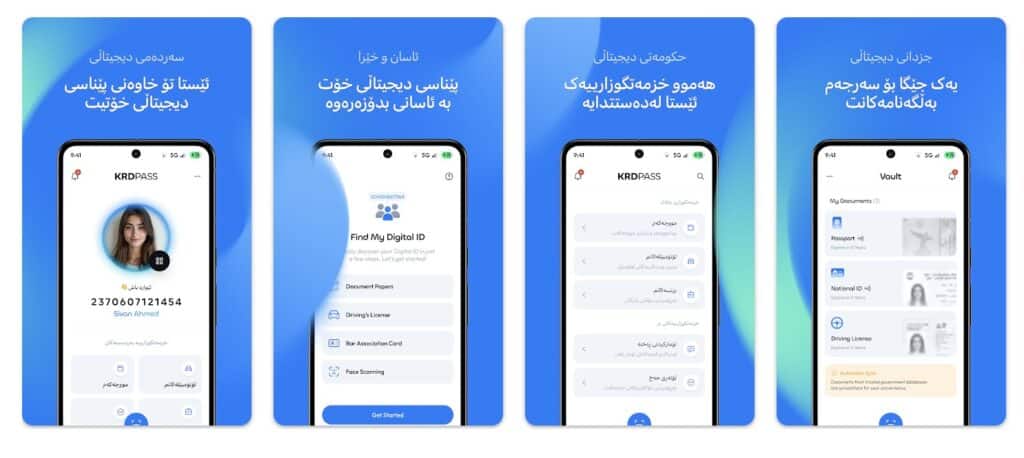
The Kurdistan Regional Government has surpassed a milestone as it drives toward being a fully digital administration, issuing over two million digital IDs.
Based in northern Iraq, where the KRG is the official executive body of the semi-autonomous Kurdistan Region, the initiative is spearheaded by the KRG’s Department of Information Technology.
At 26 centers across the Kurdistan Region, residents can register for their digital ID in around five minutes, according to Kurdistan24. Biometric data is captured: a personal photo, fingerprints, eyes. Participants then receive a 13-digit Unique Personal Number (UPN), which serves as their identifier.
The digital ID already enables citizens to submit Hajj applications and renew passports online as the KRG launched the beta of its KRD Pass mobile app to simplify access to public services. Available on both the App Store and Google Play, the platform gained over 85,000 users in five days.
Users verify their identity via an existing digital ID and face biometrics as part of the registration process. Once signed up, citizens and government employees can tap into services from checking monthly salaries to monitoring company records directly on their phones.
Future updates promise further functionality. KRD Pass will let users submit Hajj requests, track electricity bills, and receive and respond to official notifications in coming phases. A digital wallet will allow secure storage of important documents validated for all government transactions. Officials say integration with additional services from driver’s license renewals to property registrations is forthcoming.
Built over six years by the KRG’s Department of Information Technology, KRD Pass represents the region’s long-term push to cut bureaucracy and boost transparency. Digital transformation is a top priority for the KRG, which aims to be one of the leading digital governments in the Middle East and Gulf.
Utilizing GovTech is the path it sees to achieve this — digitalizing government services — which this white paper set out, signed by the Prime Minister of the Kurdistan Regional Government of Iraq Masrour Barzani. The KRG welcomed Pamela Hack, Deputy Consul General of the U.S. Consulate in Erbil, for high-level discussions on advancing the region’s digital transformation in June. Hiwa Afandi, head of the KRG’s Department of Information Technology, confirmed the visit on social media, highlighting talks with U.S. government representatives and tech firms.
Officials predict KRD Pass may surpass one million users given the rate of adoption. Shahla Abdullah, head of the Quality Control and Digital Service Delivery Team, confirmed that the initial target group — comprising government salary recipients, licensed drivers and company owners — has been fully covered. She added that the program will gradually expand, ensuring every resident eventually relies on their digital ID to avoid congestion at service centers.
With more than two million digital IDs issued, the KRG can look to expand e-government services.
Last year, Kurdistan issued around 438,000 biometric voter cards in run-up to elections after implementing the new voter registration system in March 2023, which requires electronic biometric cards for voting as introduced by Iraq’s Independent High Electoral Commission (IHEC).
Related Posts
-
 July 16, 2025
 -
 May 22, 2025
 -
 April 1, 2025
 -
 September 4, 2024
 -
 August 30, 2024
 -
 April 16, 2025
Article Topics
biometrics | digital government | digital ID | face biometrics | government services | identity management | identity verification | KRD Pass | Kurdistan

Comments