
Nigeria’s new tax ID could frustrate financial inclusion efforts, says analyst
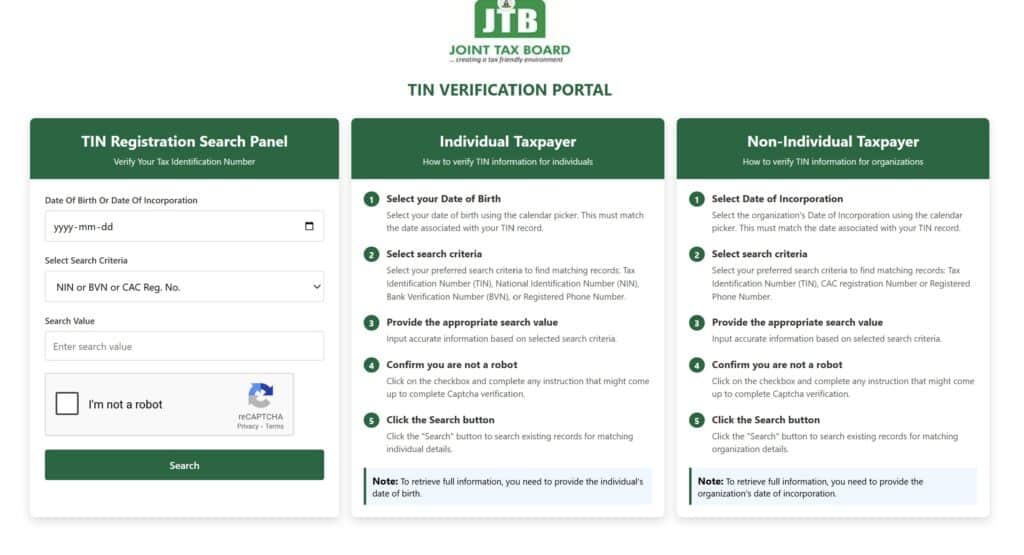
An economist and data analyst has warned that the introduction of a Tax Identification Number (TIN) under Nigeria’s new taxation legislation could compromise efforts towards stronger financial inclusion. An estimated 38 million Nigerian adults are currently unbanked.
The Nigerian Observer quotes Dr Daramola Omoyele as explaining that the TIN, which by the new law is a requirement for bank account opening and filing of tax returns, adds up to several other digital IDs existing in a siloed system.
There is the National Identification Number (NIN), the Bank Verification Number (BVN), and the general multipurpose card, among other existing ID numbers, he pointed out.
The TIN is provided for in the Nigeria Tax Administration Act 2025 which was enacted in June, but couldn’t immediately go into force due to contention from different national stakeholders in the country.
Recently, the federal government announced that the legislation is now expected to go into force in January 2026, and will help the country in efforts to strengthen tax compliance, broaden the tax base for more revenue, and digitalize the tax administration.
To Omoyele, it would have been better for the government to build on the blocks which are already in place, citing the NIN as an example, for a harmonized data system and single digital ID to be used for different purposes.
Beyond that, there are fears that the current challenges in obtaining the NIN and other digital IDs could be replicated in the process of obtaining the TIN.
The Nigerian governments has highlighted the need for data harmonization in the past, but concrete results are yet to be obtained.
Omoyele cited examples of countries like India where the Aadhaar digital ID is used across services. South Africa also recently unveiled a roadmap for a single digital ID system to be used for multiple services.
“The irony is that Nigeria already has the building blocks of a single digital identity. The NIN was designed to be the master ID, while the BVN has captured biometric and financial data for millions of bank customers,” The Nigerian Observer quoted Omoyele as saying.
“Instead of harmonising these, the new TIN law introduces another obstacle at a time when about 38 million adults remain unbanked.”
“Nigeria must stop building silos and start building systems that talk to each other. One number is enough. The new TIN law is well-intentioned, but it risks worsening an already messy identification system,” he added.
Related Posts
-
 March 28, 2025
 -
 December 6, 2024
 -
 July 29, 2025
 -
 May 9, 2025
 -
 February 6, 2025
 -
 January 2, 2025
Article Topics
banking | digital ID | digital identity | financial inclusion | identity management | Nigeria

Comments