
San Diego’s SITA upgrade, iProov stats underline US seamless travel ambitions
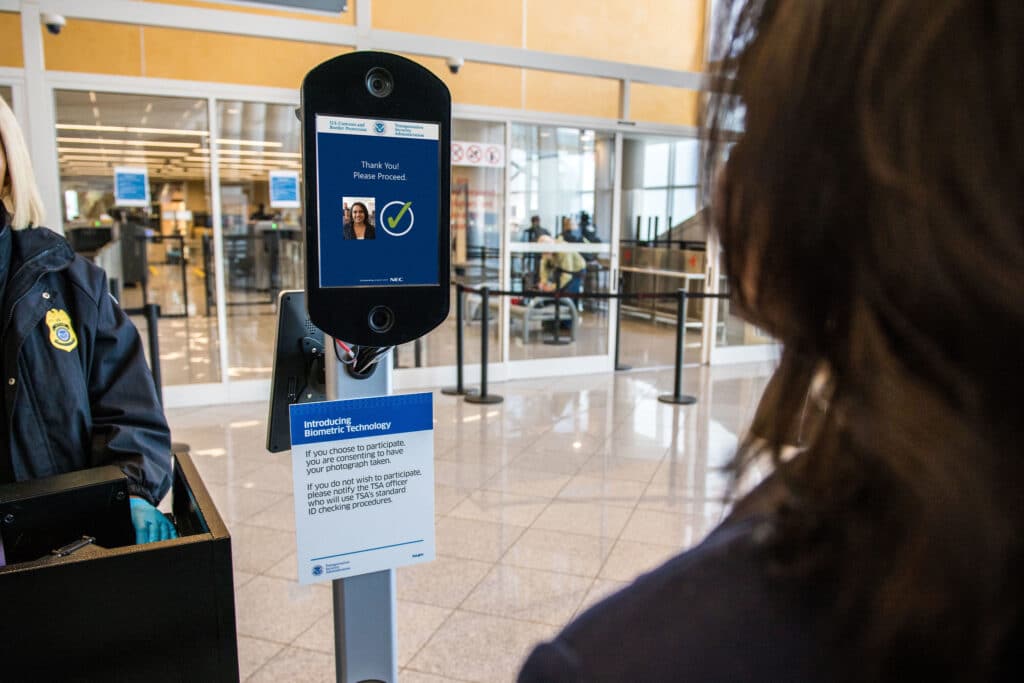
The U.S. Biometric Exit program graduated from a pilot program to production earlier this month with a revision to Customs and Border Protection’s rules. The agency is expanding the architecture for airport biometrics through a compliance test for its Traveler Verification Service (TVS), and airports are investing in upgrades.
The adoption of biometrics spans systems for the processes airlines are responsible for, as in San Diego’s integration of SITA biometrics, and those run by government agencies, like CBP’s iProov-powered programs.
San Diego International upgrades Terminal 1 with SITA biometrics
A major upgrade at San Diego International Airport’s Terminal 1 features SITA’s face biometrics as part of a full suite of passenger processing hardware and software.
The new, expanded terminal includes CUPPS (Common Use Passenger Processing) gear at check-in counters and boarding gates, 66 self-service Smart Path TS6 kiosks and face pods for biometric exit at some gates. The deployment also includes Airport Vision displays for flight information, dynamic electronic signage and integration with third-party sensors to display up-to-the-minute wait times for security screening, according to the announcement.
The common use technologies enable passengers to complete processes at counters across the terminal, regardless of the airline they are serving at the time, and allows airlines to shift flights or counters based on fluctuations in demand.
Perhaps most impressive, the terminal is opening on time and on budget, SITA says, in part due to its collaboration with construction partners Turner-Flatiron and Rosendin Electric.
“Partnering with SITA ensured our new terminal delivers a seamless and innovative experience for our passengers,” says Jessica Bishop, director of information and technology services at San Diego International Airport. “Their systems give us the flexibility to adapt in real time, and their collaboration throughout construction helped us open this world-class terminal on schedule.”
“Terminal 1 at San Diego shows what’s possible when technology is integrated from the ground up,” says SITA Americas President Shawn Gregor in the company announcement. “From common-use flexibility to real-time information and biometrics, our role has been to help the airport move passengers more efficiently while supporting the construction team in delivering this landmark project.”
iProov puts numbers to seamless travel’s speed impact
America’s airport efficiency goals are often expressed in terms of making travel “Seamless,” as in the name of CBP’s “On the Move” implementation of its Trusted Traveler Programs, Seamless Border Entry (SBE).
iProov puts some numbers to the impact of biometrics on seamless travel in a blog post on SBE and the Enhanced Passenger Processing (EPP) program, which automates Simplified Arrival checks.
On-the-move biometrics from iProov are enabling passenger processing in under three seconds in real-world deployments, according to the post, with an average of 14 passengers passing through each EPP lane every minute, with 99 percent completing their biometric image capture successfully on the first try. The result is wait times decreasing, by 65 percent on average at Orlando International, allowing passengers to pas through border control in as little as two minutes.
The fast, reliable biometric authentication through CBP’s TVS also frees up staff to concentrate on travelers who need extra attention.
CBP is up to 57 airports with face biometrics deployed, along with 39 seaports and all pedestrian lanes at both America’s Southwest and Northern borders. These biometrics deployments have caught more than 2,225 imposters so far, out of 697 million travelers screened, preventing them from entering the country.
“Incredibly seamless” is the traveler experience goal identified by Transportation Security Administration Acting Deputy Administrator Adam Stahl in a recent presentation at Skift Global Forum.
Stahl noted the proliferation of digital IDs in the U.S., and the importance of biometrics as a “critical anchor” for security checks, as quoted by PhocusWire.
TSA is also working on open architecture for baggage screening to allow multiple security screening companies to contribute algorithms that can be layered to speed up parts of the process with automation.
Related Posts
-
 December 12, 2024
 -
 July 4, 2025
 -
 April 14, 2025
 -
 October 2, 2024
 -
 November 27, 2024
 -
 July 29, 2025
Article Topics
airport biometrics | Biometric Enabled Seamless Travel | biometrics | face biometrics | iProov | passenger processing | SITA | Traveler Verification Service | TSA | United States

Comments