
US municipal ID efforts expand with library card upgrade

The humble library card is getting an upgrade in the Toledo, Ohio area, to provide identification for some of America’s many undocumented and under-documented citizens and residents.
Library cards enhanced with facial images are expected to roll out in 2026 so that area residents can use them as photo ID to access some programs run by the city and county, local publication The Blade reports.
Toledo Lucas County Public Library is using a points-based system for different credentials to establish the identity of the applicant. State and federal government-issued IDs like driver’s licenses and passports will count as all three points necessary. Social Security, voter registration cards and non-state issued photo IDs count as two points each, and less secure documents like birth certificates, electronic benefit transfer cards and immunization records count for one. These IDs are intended to fulfil identity verification roles and prove residency within the county.
Those who meet the requirements can obtain a photo ID library card for $5.
The cards will be valid for five years, with a one-year grace period for renewal without repeating the identity and residency verification process. In addition to a facial photo, the IDs will display the bearer’s address, date of birth, library account number and digital signature, along with the card’s expiry date.
Official suggest that marginalized groups like those re-entering society after serving a prison sentence and people living in shelters could benefit from the new photo ID, along with the elderly, teenagers, and people with little or no official identification.
“It helps a large swath of the population,” said Mely Arribas-Douglas, a community outreach specialist with the library said, according to The Blade.
Departments within the city and municipal government are working on recruiting partners to accept the IDs. There are limitations to where they can be used, however, and the library notes that some state and federal programs will still require state-issued IDs.
Library systems and local governments around the U.S. offering similarly ID cards intended for use beyond borrowing books include Harris County Public Library in Houston, Miami Valley in Dayton, Ohio, New York City, San Francisco, Los Angeles, Seattle, New Haven, Connecticut, New Orleans and Chicago.
Baltimore, Maryland approved a municipal ID card program in 2016, and was revisited by city council in 2023, but has not reached implementation.
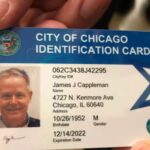
Chicago’s CityKey program was introduced to reduce barriers for some of the same groups as Lucas County is attempting to help, but shut down an online application process earlier this year when it was subpoenaed by Immigration and Customs Enforcement (ICE) earlier this year.
Soon after, New Orleans launched its Crescent City ID, but made the decision to allow applicants to opt-out of having their data stored, in part to maintain their access to local government services without exposing them to scrutiny by ICE.
Related Posts
-
 June 17, 2025
 -
 July 31, 2025
 -
 March 11, 2025
 -
 March 28, 2025
 -
 February 3, 2025
 -
 October 31, 2024
Article Topics
digital ID | identity document | identity management | municipal ID | Ohio | United States

Comments