
Sony AI releases benchmark testing database for computer vision fairness testing
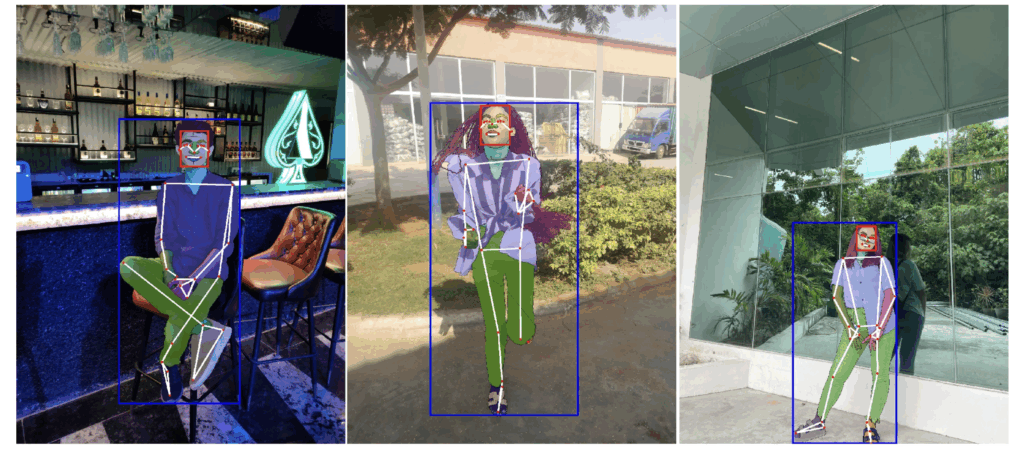
Computer vision models are based on image datasets that have historically been collected with little concern about ethics or lack of diversity. This has led to much controversy, especially in facial recognition, which has struggled with the issue of bias and misidentifying people of different races.
Sony AI is hoping to change this with a new benchmark testing database built to evaluate the fairness of computer vision models involving humans called the Fair Human-Centric Image Benchmark (FHIBE, pronounced Fee-Bee).
Although it’s not the first one to create such a dataset: In 2023, Meta released the FACET (FAirness in Computer Vision EvaluaTion). The company highlights that FHIBE is built on ethical data collection. It contains 10,318 images that were collected consensually from over 1,900 people from more than 80 countries and territories.
“It’s so important that computer vision models are checked for bias before they’re released, but there wasn’t any good ethical fairness benchmark that folks could use, and so we realized we had to create one ourselves,” Alice Xiang, lead research scientist for Sony AI, explains in a video released by the firm.
A paper on the publicly available dataset was published in Nature earlier this month, with researchers using the dataset to evaluate bias in both narrow models, which are designed for specific tasks and foundation models with a general purpose.
In the paper, Sony’s scientists conclude that FHIBE can help detect bias on a more granular level, thanks to its comprehensive annotations of demographic and physical attributes, environmental conditions, camera settings and pixel-level annotations.
“FHIBE can be used responsibly as a fairness evaluation dataset for many human-centric computer vision tasks, including pose estimation, person segmentation, face detection and verification, and visual question answering,” the study notes.
One of the results of testing the database was finding previously undocumented biases, including lower model performance for older individuals and stereotypical associations related to pronouns.
“We found that vision language models often reinforce gender stereotypes, for example, by associating long hair with she, her pronouns, and short hair with he, him pronouns,” says Xiang.
Sony is already employing FHIBE in fairness assessments as part of their broader AI ethics review processes, according to the scientist, who is also the company’s Global Head of AI Ethics.
Training AI systems still requires large amounts of images, which are often taken non-consensually through web scraping. FHIBE doesn’t solve this problem since it is still a small evaluation dataset and not a training dataset, Xiang explained for The Register. Sony, however, is hoping to inspire the development community and industry to obtain their data ethically.
“This is an incredibly important problem – arguably one of the biggest problems in AI now – but far less attention is paid to innovation on the data layer compared to the algorithmic layer,” says Xiang.
Related Posts
-
 August 25, 2025
 -
February 20, 2025
-
 February 18, 2025
 -
 February 27, 2025
 -
 October 1, 2025
 -
 November 3, 2025
Article Topics
biometric bias | biometric dataset | computer vision | demographic fairness | facial recognition | Sony

Comments