
Belize receives US funding under new biometric data sharing agreement
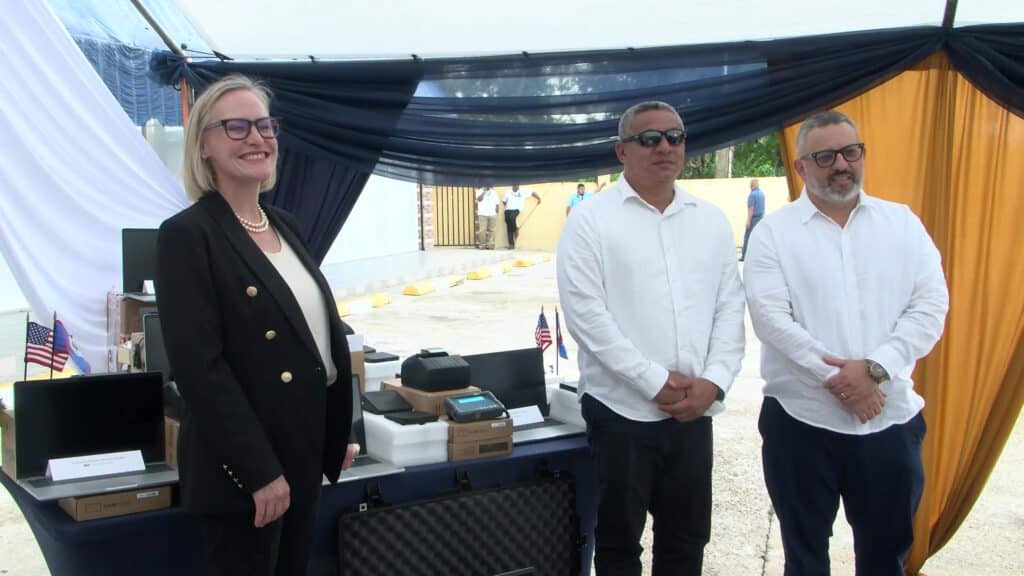
Belize has received roughly $250,000 in U.S.-funded biometric equipment and technology as part of a biometric data-sharing agreement with the U.S. Department of Homeland Security (DHS) expanding the use of U.S. identity screening tools at the country’s borders and ports of entry.
The funding and equipment transfer is made under the Biometric Data Sharing Partnership (BDSP) Memorandum of Cooperation between Belize and the U.S. which DHS publicly acknowledged in its Year in Review 2025 materials and in departmental summaries of recent agreements.
DHS says the agreement allows for the “real-time exchange and query of biometric and biographic information” to support border security and public safety operations.
DHS’s confirmation follows earlier announcements by the Belize government. In July 2025, Belize disclosed that it had signed a Memorandum of Cooperation with the U.S. establishing the BDSP framework. According to the Government of Belize Press Office, the agreement was signed by Belize’s foreign minister and U.S. Homeland Security Secretary Kristi Noem.
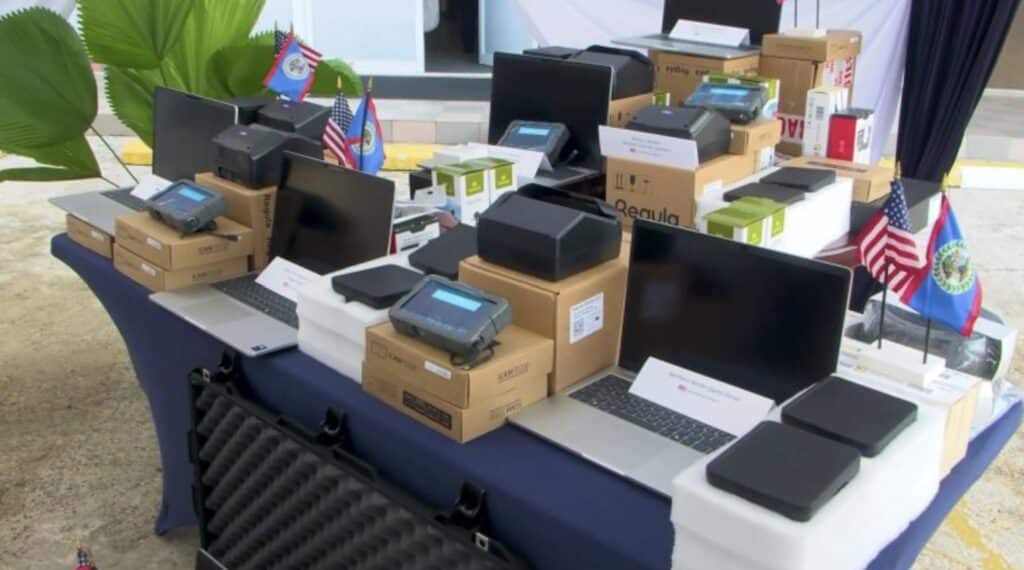
Under the agreement, Belizean immigration authorities are deploying biometric capture systems at key ports of entry, including the country’s international airport and land border crossings. A photo supplied by the Belize government appears to show the biometric capture systems include passport scanners from Regula and Iris ID‘s iCAM TD200.
The technology allows officers to collect biometric identifiers such as fingerprints and to submit queries to DHS-managed identity databases to determine whether travelers are linked to criminal records, immigration violations, or other security-related indicators.
Belizean and regional media reports say the roughly $250,000 in U.S. assistance has been used to provide biometric hardware, software, and related infrastructure, along with training for Belizean border and immigration personnel.
While DHS has formally listed Belize as a biometric data-sharing partner, the department has not released the full text of the Memorandum of Cooperation or any Belize-specific technical documentation.
DHS has also not published a Privacy Impact Assessment or System of Records Notice that explicitly addresses how biometric data exchanged under the Belize agreement is retained, audited, or subject to redress.
The agreement has prompted concerns in Belize about privacy, oversight, and transparency. Opposition politicians and civil rights advocates have questioned how much information is being shared with U.S. systems, how long biometric data is retained once queried against DHS databases, and what remedies exist if travelers are misidentified or flagged in error.
Belizean officials have said that personal data collected under the program remains governed by Belizean law and may not be forwarded to third parties.
Critics, however, argue that once biometric identifiers are checked against U.S. systems, Belize has limited visibility into how those identifiers are processed or how resulting matches are generated.
Privacy advocates have also pointed to the lack of publicly available safeguards on the U.S. side, noting that DHS has not explained whether biometric queries from Belize interact with long-term U.S. immigration or law enforcement databases, or whether those interactions create new records tied to Belizean travelers.
Patrick Faber, the lead opposition senator said “we don’t know what we have signed on to. A year ago, we saw the prime minister sign an agreement with the U.S. government about sharing biodata information and up to now we have not heard any clarification as to what that is.”
Faber said, “we have to be concerned when we are not hearing from our leaders about this information sharing … Think about your private information being shared with somebody, especially if it may land in the hands of your enemy or somebody working against you or trying to coerce you to do something that you might not find important to do. Think of it in that light.”
The Belize agreement is part of a broader DHS strategy to expand biometric data-sharing partnerships with foreign governments, particularly in Latin America and the Caribbean.
Through these arrangements, the U.S. aims to push identity screening beyond its own borders by allowing partner countries to query U.S. biometric systems during routine travel and immigration checks.
With U.S. funding already deployed and biometric systems now operating at Belizean entry points, the partnership has moved into an operational phase. What remains unresolved is whether additional documentation or oversight mechanisms will be made public to clarify the scope, limits, and privacy protections governing one of the United States’ newest international biometric data-sharing agreements.
Related Posts
-
 July 28, 2025
 -
 January 9, 2026
 -
 November 7, 2025
 -
 January 31, 2025
 -
 March 31, 2025
 -
 September 30, 2025
Article Topics
Belize | biometric data | biometrics | border management | Caribbean | data sharing | DHS | Iris ID | Regula | U.S. Government | United States

Comments