
USSOCOM maps future of battlefield identity intelligence, biometrics
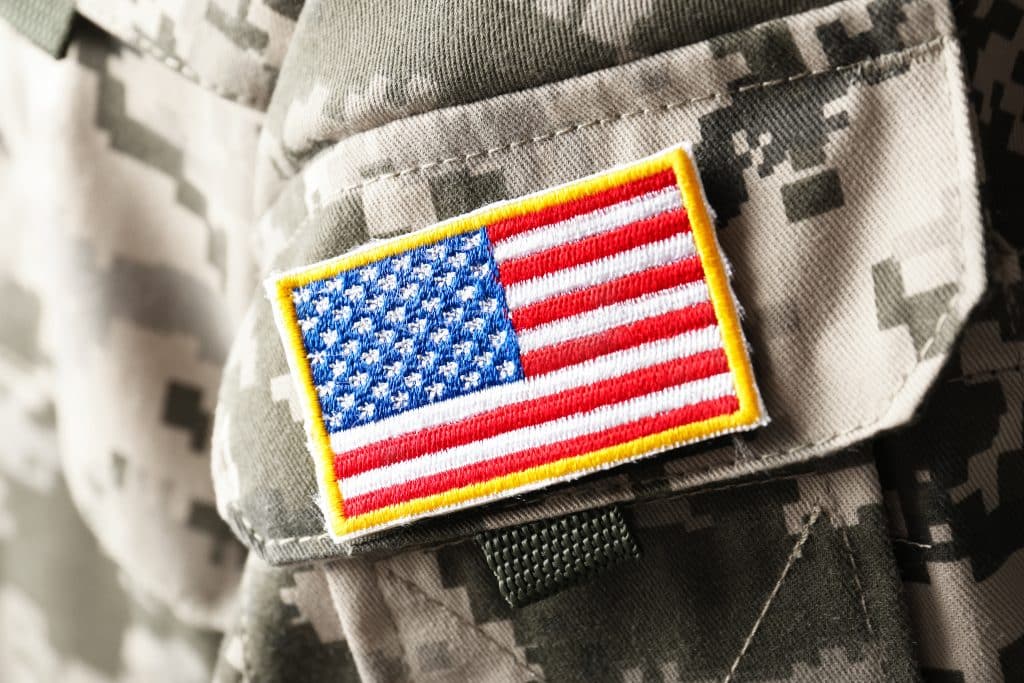
The U.S. Special Operations Command (USSOCOM) is laying the groundwork for a significant expansion of its identity intelligence and exploitation capabilities, issuing a sweeping Request for Information (RFI) that signals where future battlefield and counterterrorism technologies are heading.
At its core, the RFI outlines a broad and technically ambitious vision for how Special Operations Forces collect, analyze, and exploit identity-related data during missions.
To that end, USSOCOM is seeking insight into five primary technology areas: facial recognition, speaker identification and voice matching, a fully integrated SOF Site Exploitation application ecosystem, rapid DNA analysis, and AI and machine learning analytics.
Together, these capabilities point toward a future operational environment where biometric and identity intelligence is captured at the edge, fused in near real-time, and disseminated seamlessly across tactical and strategic networks.
Facial recognition capabilities are described in particularly demanding terms. USSOCOM is looking for solutions capable of accurately identifying individuals at distances of up to 100 meters, regardless of lighting conditions, environmental factors, or background interference.
The technology must operate in real-time and integrate seamlessly with both current and legacy identity intelligence databases.
Compatibility across a wide range of camera resolutions and processing environments is essential, from handheld mobile devices used by operators on the ground to fixed, high-resolution systems deployed at forward operating bases or other installations.
Equally important is speaker identification and voice matching technology. The command is seeking solutions capable of capturing and exploiting audio recordings that contain speech from real-time encounters or post-event sources.
These systems must be able to identify or verify voices in recordings that may include multiple speakers, unknown individuals, or significant background noise.
The RFI emphasizes the need to distinguish relevant speech from irrelevant data, whether that noise consists of non-speech audio, unrelated voices, or other ambient interference. Any solution also must integrate with existing identity intelligence repositories and remain interoperable with other tools already used across the SOCOM enterprise.
One of the most expansive portions of the RFI focuses on a next-generation SOF Site Exploitation application that spans the full lifecycle of operations.
USSOCOM envisions a system built around three tightly linked environments: a mobile exploitation environment for use on the objective, an administrative planning environment for pre-mission preparation, and a post-mission environment for reporting and dissemination.
Together, these components are intended to streamline the flow of identity intelligence from initial collection through analysis and integration into the broader Intelligence Community.
In the mobile environment, operators must be able to rapidly document and exploit people, materials, and biometric data encountered during missions. The system must integrate with both current and future SOF software platforms and support the linking of biometric records with other collected materials.
Required features include audio capture, speech-to-text transcription, tactical questioning aids, real-time translation, and photo and video capture with robust chain-of-custody documentation.
Facial recognition must be capable of being embedded directly into the mobile platform, and all collected data must be disseminated in real time across SOF devices.
The administrative planning environment is designed to support mission preparation and configuration before deployment. USSOCOM is seeking solutions with open application programming interfaces that allow integration with mission-critical software, data sources, and tools.
The platform must enable the creation of reference graphics, targeting folders, and customizable documentation, while also supporting the upload and linking of materials during mission execution.
AI and machine learning models must be deployable to edge or fog computing environments, with an interface intuitive enough for operators to use under operational pressure.
Following mission completion, the post-mission environment must consolidate all site exploitation activities into a single authoritative system.
This capability is intended to support immediate dissemination of intelligence across the SOCOM enterprise and into the wider Intelligence Community, reinforcing the full find, fix, finish, exploit, and analyze cycle.
Rapid DNA analysis represents another critical pillar of the RFI. USSOCOM is seeking technologies that allow operators to capture, digitize, and generate DNA profiles in austere and forward-deployed environments.
These profiles must be comparable against local databases and authoritative reach-back repositories to support decisions on whether to detain or release an individual within a 24-hour window.
Generated DNA profiles must align with the FBI’s Combined DNA Index System, (CODIS) core loci standards for short tandem repeat markers and be exportable in formats suitable for ingestion into CODIS-compliant or equivalent national databases.
In practical terms, USSOCOM is requiring that any DNA capability align with CODIS, which is the national framework used by U.S. law enforcement to store, compare, and share DNA profiles.
CODIS does not store entire genetic sequences. Instead, it relies on a standardized set of “core loci,” which are specific locations on the human genome that contain short tandem repeats, or STRs. These are short sequences of DNA that repeat a variable number of times from person to person, making them highly effective for identity matching.
The FBI has formally designated a set of core STR loci that must be captured for a DNA profile to be considered compatible with CODIS. These markers are used nationwide and internationally to ensure that DNA profiles generated by different agencies, devices, and laboratories can be reliably compared.
By requiring compatibility with CODIS core loci standards, USSOCOM is signaling that DNA profiles collected in forward or austere environments must be legally and technically interoperable with existing U.S. law enforcement and national security DNA repositories.
Just as important is the requirement that these DNA profiles be exportable in formats suitable for ingestion into CODIS-compliant or equivalent national databases. This means the system must generate structured, standardized digital files that can be transferred, validated, and uploaded without reprocessing or manual conversion.
In operational terms, this ensures that DNA collected by Special Operations Forces can move seamlessly from the tactical edge into authoritative databases for confirmation, intelligence correlation, or legal action, supporting rapid hold-or-release decisions while maintaining evidentiary integrity and chain-of-custody standards.
Operational constraints are a central concern in this area. DNA systems must remain mission capable during storage and operation without requiring refrigeration or specialized climate control.
AI and machine learning analytics tie these capabilities together. USSOCOM is looking for solutions that enhance processing, exploitation, and dissemination of data collected from unmanned systems, biometric encounters, site exploitation materials, and open-source intelligence.
These tools must automate categorization, fusion, and reporting across multiple data modalities, including biometrics, cellular exploitation, document exploitation, medical exploitation, and unmanned system feeds.
The goal is to identify shifts in adversary tactics, techniques, and procedures, highlight intelligence gaps, and reduce cognitive burden on operators in high-tempo environments.
All hardware and equipment submitted for evaluation must be production models capable of supporting real-world identity intelligence and exploitation mission sets, either on the objective or in forward operating base–like conditions.
While unreleased commercial devices may be considered if they meet most requirements, USSOCOM expects final product versions capable of demonstrating statistical confidence during evaluation events.
The evaluation process itself is structured around two major phases. A technical evaluation will assess accuracy, performance quality, and output, while an operational test and evaluation will focus on usability, training demands, and suitability for Special Operations Forces in realistic environments.
These activities will be conducted under the Tactical X Event 2026, scheduled to run between December and August in the greater Tampa, Florida area.
Responses to the RFI are due no later than January 30, and must be submitted through USSOCOM’s Vulcan platform. Selected vendors will be invited to present their solutions in early March, with invitations for technical evaluation issued later that month.
Related Posts
-
 January 9, 2026
 -
 January 8, 2026
 -
 October 25, 2025
 -
 February 4, 2025
 -
 August 7, 2025
 -
 July 31, 2025
Article Topics
biometric matching | biometrics | facial recognition | long-distance | military | Rapid DNA | real-time biometrics | RFI | U.S. Army | USSOCOM | voice biometrics

Comments