
Unofficial Colorado Digital Services Navigator scoops state portal redesign
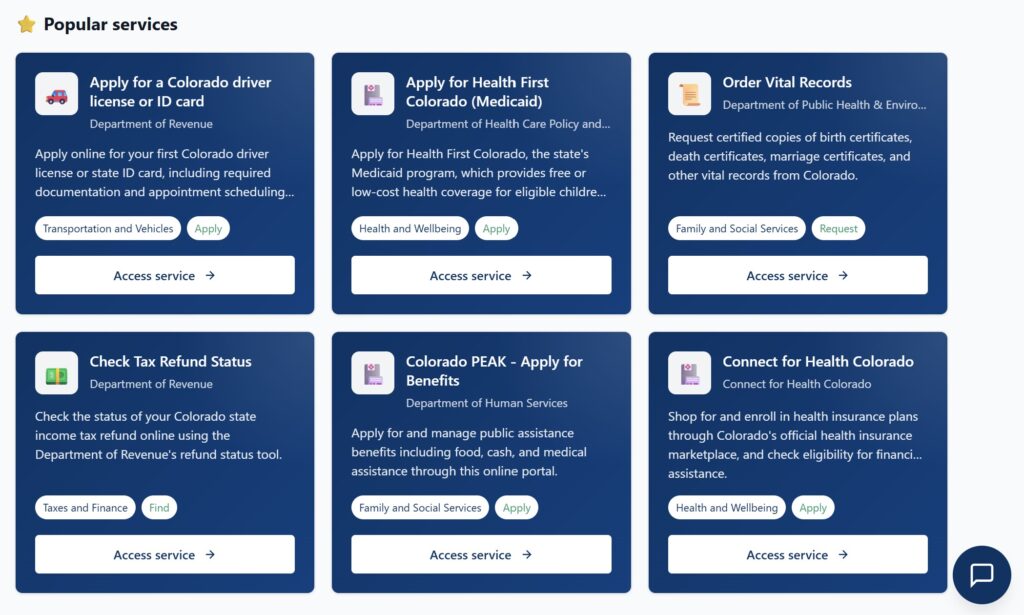
An ex-employee of the Colorado Digital Service has created a free tool for those looking to navigate the agency’s online offerings and digital transformation. Posting on LinkedIn, former product manager Brian Curtis calls his Colorado Digital Services Navigator “a small present to all Coloradans to celebrate the state’s 150th birthday this year.”
Curtis created the tool as an “an independent project exploring how modern design can improve government access.” Statescoop says the open source tool, which catalogs more than 200 state services across 12 categories including health, transportation, employment and recreation, is open and free for everyone to use.
While Curtis is positioning the tool as an act of good will, there is perhaps a measure of spite in its recipe, as well. The report quotes Curtis on why he left the Colorado Digital Service: “I quit, and I largely quit because I just felt like I was running into some barriers inside the Digital Service where I wasn’t able to have the impact I wanted to have, and I wasn’t able to kind of do the type of work that I wanted to be able to do. There were just several people who needed to be able to say yes to something before it could be done.”
Admittedly, it’s a pretty good burn to undercut the state’s forthcoming re-launch of its official state web portal, Colorado.gov, by releasing a similar service months in advance – especially since Curtis used Anthropic’s large language model (LLM) coding tool, Claude Code, to make it in three days.
For his part, Curtis says he didn’t know the government was working on something similar. That his URL for the tool, colorado-gov.org, is a lot like the government’s, and that the word “navigator” appears on several official digital projects of the Colorado government, is, he says, pure coincidence, and the announcement should not be taken as a formal soft launch of the government portal (even if that’s more or less what it is).
“I’m sure that if people search for Colorado government services, I’m never going to show up at the top of any Google search results,” he says “But my hope is that if residents use it and they get some value and utility out of it that they might not be getting through an official channel, that they can then go to those official channels and use their voice to advocate for improvement to those other official channels.”
The code for Colorado Digital Services Navigator is available on GitHub, and runs as a self-contained HTML file.
Related Posts
-
 February 6, 2025
 -
 November 25, 2025
 -
 August 19, 2025
 -
 September 29, 2025
 -
 July 16, 2025
 -
 February 21, 2025
Article Topics
Colorado | Colorado Government Navigator | digital government | digital ID | government services | open source | research and development

Comments