
PNG electoral commission says no funds disbursed yet for biometric voting system
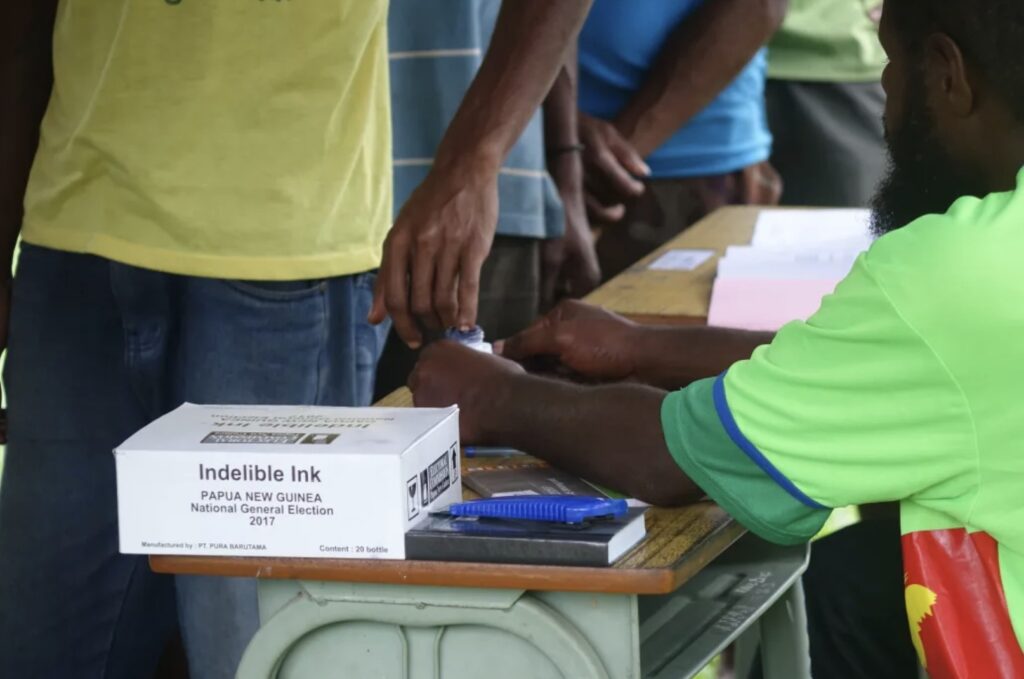
There is a plan by the Papua New Guinea (PNG) government to introduce a biometric fingerprinting and voter verification system for the country’s 2027 elections, but the electoral commission says money intended for the purpose is yet to be made available.
Last month, Acting Electoral Commissioner Margaret Vagi said consultations were far advanced on the biometric system project, with the goal of introducing it mostly in Highland provinces during next year’s election. She was re-echoing an announcement earlier made by Prime Minister James Marape as part of efforts to strengthen the country’s electoral credibility.
Speaking to a parliamentary committee, Vagi said discussions were underway with other relevant government institutions, and some vendors had already showcased their solutions to the PNG government for possible selection in October last year, The National reports.
Deputy Commissioner for Corporate Services Kila Vaname spoke recently about the funding issues. Responding to questions on a recent ABC Radio Australia podcast, Vaname disclosed that the allocated budget for the introduction of the biometric system is US$16 million, but not even a fraction of it has been made available to the electoral commission yet.
But before the funds come in, Vaname said they are already doing some work, including finding possible software and hardware providers and fine-tuning avenues for collaboration with various stakeholders and partners.
“Currently, we are looking at potential solutions to improve the electoral rolls while waiting for funds from the government. The first step we’ve taken is enhancing collaboration with relevant stakeholders, starting with the civil registry system, in partnership with the Department of Provincial and Local Government Affairs,” Vaname told ABC Radio Australia.
“At this level, we plan to display and verify the rolls at the board level in both urban and rural settings. We’ll also be engaging civil registrars to help confirm voter data. That’s currently in discussion,” the official noted, adding that they are also in discussion with the Department of Information and Communications Technology for services related to data verification and updating enrollment information.
“Those discussions are in progress. We’re looking at streamlining processes like voter registration, updating enrollment status via SMS or a mobile app. That’s what we’re exploring while waiting for funds. But those collaborations are already underway.”
“It’s a real concern for us now. We’ve set targets and specific outcomes, but the more funding is delayed, the more problematic it becomes. We may experience the same issues as in past elections.”
Vaname mentioned that all of the system updates will be completed in time for the elections slated for April next year.
Last month, Administrative Services Minister Richard Masere also spoke about the funding problems and the challenge of migrating the current electoral database onto a biometric system.
The introduction of a biometric voting system in PNG has been under discussion for years now, and the government considers it a major aspect of ongoing reforms aimed at making the electoral system more credible and transparent.
A 30-year-old last year developed a biometric app which officials said could help reduce electoral fraud in PNG if adopted.
Related Posts
-
 September 4, 2025
 -
 June 3, 2025
 -
June 10, 2025
-
October 30, 2025
-
March 25, 2025
-
 January 9, 2026
Article Topics
Biometric Voter Verification System (BVVS) | biometrics | elections | Papua New Guinea | voter registration

Comments