
Sierra Leone’s ‘brokers of citizenship’ recognized in digital identification project
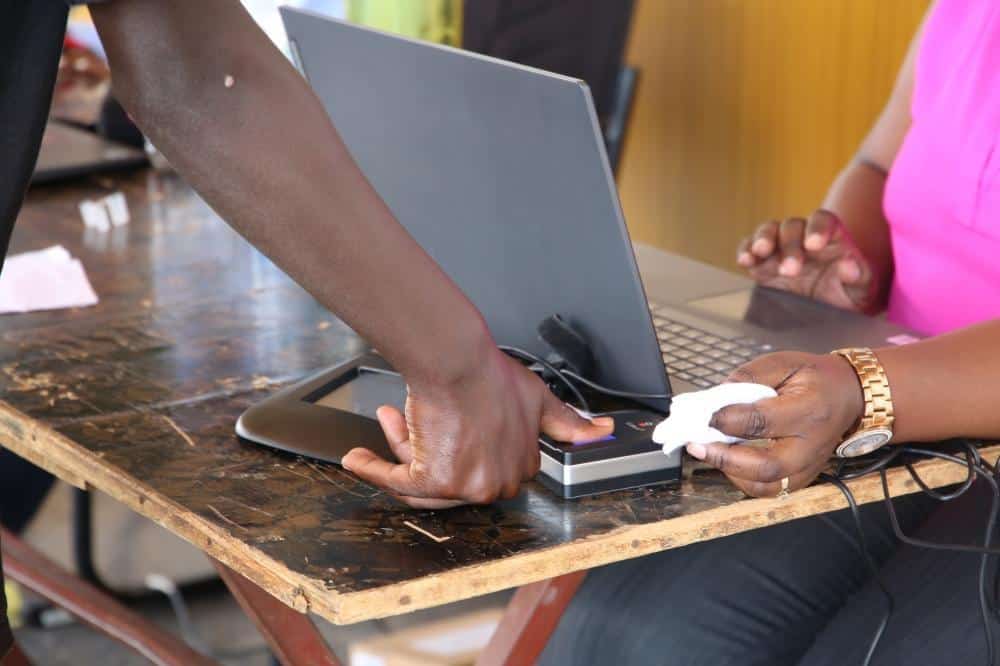
The promise of national digital identity systems is the tantalizing dream of direct connection between people, official identities and public bodies. Additionally, it onboards marginalized communities into society and can diminish corruption and discriminatory practices.
However, this doesn’t tell the full story. An academic study draws attention to the “invisible yet inevitable” human intermediation in digital identity systems. These important interfaces often cover the last mile — the areas where underserved communities reside — and show people how to navigate the verification and updating of their identities.
These “brokers” who help to make the technology work come with both benefits and downsides. But they serve as interfaces between the digitizing state and underdocumented citizens. Laura Lambert, writing in The Conversation, explored how local brokers in Sierra Leone’s digital ID push help citizens gain legal identity.
Based on her work in the field, the study helps to highlight these “brokers of citizenship” whose work gets “invisibilized” after the person becomes known to the state with an official identity. Lambert observes that in practice, it is an ecosystem of chiefs, legal personnel, local authorities, teachers, document brokers, family and friends who help to enroll, update and certify identities.
“These intermediaries make the system vulnerable to manipulation,” she notes. “But without them, hardly a legal identity could be established.”
Lambert conducted ethnographic research, immersing herself with intermediaries in Sierra Leone within a transnational research project on digital identification. These “brokers of citizenship” as she calls them support people in becoming citizens by establishing an understanding of who is a citizen and what it means to be a citizen in terms of rights and duties.
Enrolling people in digital identification in remote areas requires equipment and staff competent in technology, she observes, and in Sierra Leone the new digital ID card for citizens costs 165 Leones (about US$8). It costs seven times more than the old paper card.
The useful informality of justices of the peace
Those who lack the documents needed for digital identity registration can turn to a justice of the peace. These officials are mostly retired men and some women who are appointed to administer oaths, allowing citizens to swear to their personal details.
For a small informal fee, they record a person’s name, birth date, and birthplace on an affidavit. Lambert’s research shows that this document effectively makes the person’s identity claim official.
Citizens then present these affidavits to the National Civil Registration Authority for biometric enrolment. Staff there told Lambert they generally trust the information provided: “What you put on it is what we now believe in.” They see the work of justices of the peace as essential, since without them many undocumented people would be excluded and risk statelessness.
Justices of the peace, a colonial-era institution found in many countries, can in some cases reinforce discriminatory ideas about who belongs. Yet they have also been vital in helping underdocumented people gain recognition in digital identity systems.
In Sierra Leone, they are appointed by the president for their integrity and community standing, and they possess deep knowledge of administrative processes. Many work from modest setups in busy informal areas, making them accessible to people who may distrust or fear state offices. They explain how the bureaucracy works and advise citizens on how to obtain an ID card.
“In contrast to their promise, digital identities do not abolish intermediaries,” Lambert summarizes. “Instead, they rely on the intermediaries’ work for identifying people and orienting them in the process.”
“The work of these intermediaries has far-reaching consequences for achieving the Sustainable Development Goal 16.9 and for bringing citizenship into being.”
Lambert’s full paper on brokers of citizenship in Sierra Leone can be read in Citizenship Studies online here.
Related Posts
-
 June 5, 2025
 -
 September 16, 2025
 -
 March 6, 2026
 -
 April 11, 2025
 -
 June 6, 2025
 -
 February 27, 2026
Article Topics
Africa | biometric enrollment | civil registration | digital identity | identity management | legal identity | National Civil Registration Authority (NCRA) | Sierra Leone

Comments