
UK deepfake detection report forecasts continued growth for sector
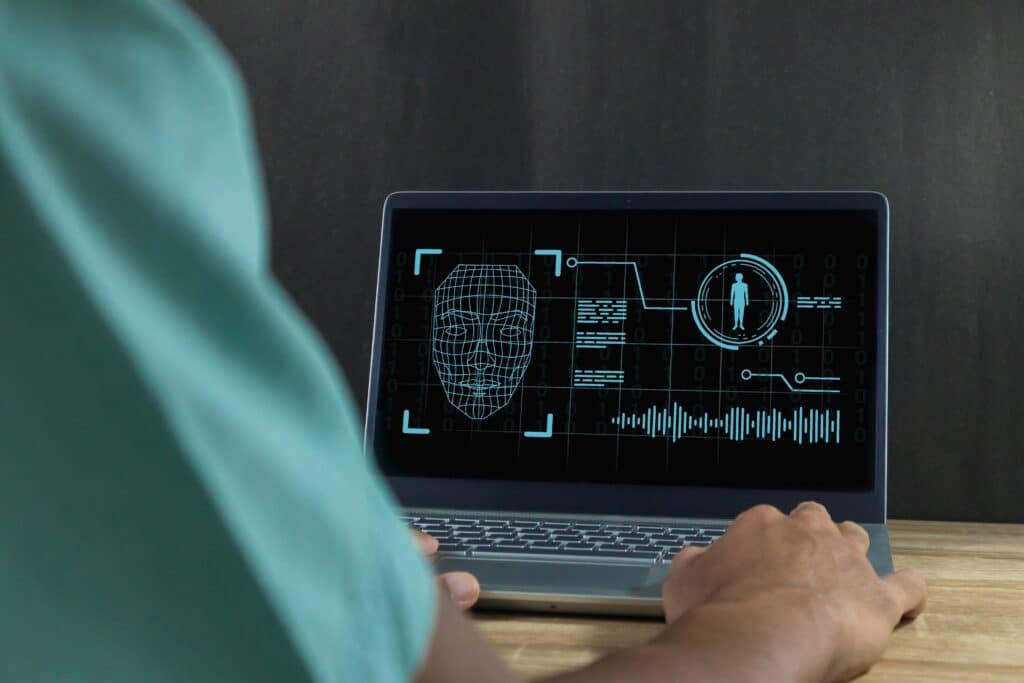
The UK has published a research report and analysis on deepfake detection technology.
The document, commissioned by the Department for Science, Innovation and Technology (DSIT), covers the current state of demand and supply in the UK deepfake detection market, existing barriers and key drivers shaping the future of the sector, and “an analysis of the future evolution of the deepfake detection market, with a focus on achievable future scenarios, and recommendations for the necessary changes to achieve those outcomes.”
Demand for deepfake detection is increasing, as is the number of firms offering the service. “The global deepfake detection market is experiencing rapid growth with the number of providers increasing nearly 380 percent since 2017 and U.S.-headquartered firms leading the sector,” says the report. The majority of providers (83 percent) are micro or small enterprises, still finding their financial footing.
Barriers to entry remain; specifically, the instability of the regulatory landscape globally, high technical costs and resource constraints, concerns about reliability and limited representative training data, and “variability in accuracy metrics and testing datasets,” making comparisons difficult.
“Despite growing regulatory momentum, ambiguity remains,” says the report. “While the Online Safety Act (OSA) addresses illegal harm, including both deepfakes and non-deepfakes, the safety tech industry perceives a lack of clarity around its application to deepfakes or synthetic media. This perceived ambiguity prompts platforms to take a reactive, ‘wait and see’ approach to addressing deepfakes.”
Policy, regulation, customer awareness could drive detection market
“The deepfake detection market is still in its early stages, with increasing adoption in key use cases such as fraud prevention, identity verification, content moderation, national security, and law enforcement,” says the report. “Despite notable growth since 2017, led by U.S. and UK players, most providers remain in early-stage funding rounds and struggle to scale.”
The future of the market depends on several factors. Chief among them is how widespread and rooted generative AI becomes. Also at play are political interests, the development of clear regulatory frameworks and enforcement mechanisms, and favourable market entry conditions for foreign vendors. Customers need to be on board. And better access to high-quality training data, and more established standardized accuracy testing will help bring certainty to the sector.
Despite patchy progress at scale, the report predicts continued growth in the market over the next few years. Use cases in government, defense, law enforcement and healthcare will expand, and evolving fraud tactics will drive deployments in banking, financial services and insurance, as they defend against identity theft, voice cloning and synthetic identity fraud. Corporate security, media and social platforms are also flagged as potential markets.
Among providers, some are dedicated deepfake specialists, while others are leveraging external capabilities. The report mentions Reality Defender and GetReal as deepfake-focused firms.
As far as growth in the UK is concerned, the report says market entry conditions must be friendly for foreign vendors. “Public procurement processes in the UK can be challenging for foreign providers to navigate. For example, a few U.S. providers have reported feeling restricted from participating in challenges and procurement processes compared to their UK counterparts as it requires them to join UK government frameworks.”
“There are also other collaboration challenges due to data sharing and protection as U.S. providers do not have GDPR.”
Related Posts
-
 November 7, 2025
 -
 March 19, 2026
 -
December 4, 2025
-
 February 5, 2026
 -
January 12, 2026
-
November 14, 2025
Article Topics
biometrics | deepfake detection | deepfakes | Department for Science Innovation and Technology (DSIT) | market report | UK

Comments