
AusPost gives up on its digital ID amid rising competition

Australia Post is shutting down Digital iD, the first privately operated digital identity service to earn accreditation from the Australian federal government. The service, which offers identity verification through face biometrics, will cease operations at the end of April.
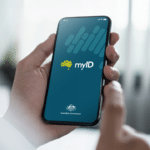
Digital iD launched in 2017 and by 2019, it had become the second identity service to be accredited under the Trusted Digital Identity Framework, after the federal government’s myGovID – later renamed to myID. The app allowed users to verify their identity through a selfie and access services such as banking, post services and proof-of-age through its Keypass feature.
AusPost says the closure is due to growth in the number of new digital IDs made available in recent years. Government-issued verifiable credentials in the form of mobile driver’s licenses (mDLs) have begun reshaping the sector in states including New South Wales, Victoria and Queensland.
“With many identity service options now available for consumers, including digital driver licenses and myID for online government services, and after careful consideration, Australia Post has decided to close its Digital iD product,” a spokesperson told tech news outlet InnovationAus.
The technology behind the service will remain in use for biometric identity verification within Australia Post and for certain government services until further notice. All user data, including photo IDs and Digital Keypass, will be deleted on April 30th, according to its official website. Keypass was already discontinued in 2023.
The announcement comes as private providers remain excluded from the Australian Government Digital Identity Service (AGDIS) until December 2026 – a concession that was made to secure passage of the Digital ID Act in 2024.
The Australian Taxation Office (ATO) and Services Australia are the only accredited providers remaining within the government system. A separate register of accredited entities run by the Australian Competition and Consumer Commission (ACCC) currently lists three private sector providers yet to gain entry: ConnectID, background-screening company Makesure Consulting and OCR Labs (“trading as IDVerse”).
“It’s literally a market failure. We should have free market identity providers everywhere by now, but about a dozen of them failed in the UK over five years,” digital ID consultant Stephen Wilson told the media outlet.
The Australian Government Digital ID System (AGDIS) is rolling out in four phases. Phase one has already begun, with the rollout of myID. In the second phase, accredited state and territory digital ID providers can apply to join AGDIS as a relying service.
Phase three opens applications to private sector services, while phase four allows accredited private sector providers, attribute providers and exchange providers to apply to join AGDIS. The last two phases are due to roll out in December 2026.
Australia’s Department of Finance is currently preparing to analyze the AGDIS, exploring future connectivity between identity exchanges that would enable connecting government digital ID services with private services. The department has previously said that only five to ten private-sector digital ID providers are expected to participate in the country’s national ID scheme, with more possibly joining later.
Related Posts
-
 January 20, 2026
 -
 March 20, 2026
 -
 July 18, 2025
 -
 March 10, 2026
 -
 July 16, 2025
 -
 May 22, 2025
Article Topics
Australia | biometrics | digital identity | government services | identity verification | Trusted Digital Identity Framework (TDIF)

Comments