
Madagascar navigates biometric enrollment challenges with Laxton’s help
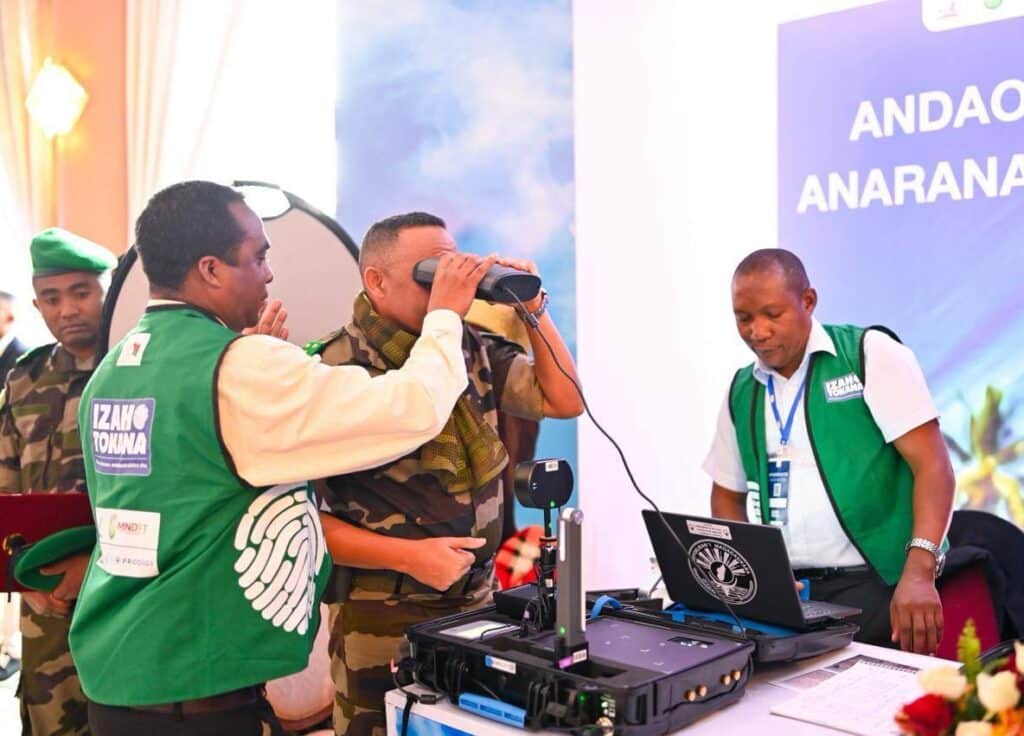
Madagascar has navigated an exceptional set of circumstances during the development and rollout of a secure, inclusive and scalable national digital ID project, in part with contributions from citizen registration firm Laxton.
The company explained in a case study that despite serious mid-project challenges such as regime change that led to civil unrest and a cyclone disaster, its cutting-edge technology such as its comprehensive suite of biometric enrollments kits, as well as field expertise, have facilitated the unfolding of the project.
Madagascar’s digital ID implementation is a major component of an ongoing digital transformation project known as the Digital Governance and Identification Management System Project (PRODIGY), with funding from the World Bank.
“Through the PRODIGY program, Laxton was commissioned to design, supply, deploy, and support the mass biometric enrolment solution that would underpin Madagascar’s National ID rollout,” the company said in the case study.
It added that its involvement had to do with the full cycle of the project including “biometric enrolment kits, software deployment, database integration, field logistics, commissioning, quality assurance, training, and in-country operational support.”
According to Laxton, its enrollment kits, which are made for any kind of weather, easily capture all three of the iris, face and fingerprint biometric modalities needed during registration. The kits’ ability to function with or without internet connectivity means that they can be used on-the-go and even in the remotest parts of the island country.
The company, which last month became a MOSIP full-service partner, mentions that it also provided massive support in the deployment of 2,500 biometric enrollment kits across the country and ensured that teams were in place in preparation for a nationwide rollout.
In January, the digital ID pilot was launched in a ceremony presided at over by the country’s President Michael Randrianirina, during which a plan to issues at least two million IDs between April and June was announced. PRODIGY’s closing date is June 30.
Laxton says the pilot, which lasted over four weeks, “provided the first real-world validation of the solution at volume,” as nearly 130,000 persons were enrolled through 116 registration centers in 26 council areas (communes), with an average enrollment time of less than 10 minutes per person.
Other pilot successes included 100 percent data completeness, 99 percent kit availability and function rate, timely intervention to resolve all technical incidents, as well as database integration and the synchronization of existing infrastructure.
The company also highlighted the fact that it was equally able to excellently deal with infrastructure constraints, properly train staff and other field personnel, and offer the necessary operational support as the project effectively entered the full rollout phase.
PRODIGY principally aims to facilitate the implementation of a digital public infrastructure (DPI) ecosystem for Madagascar and support the country’s digital economy and growth ambitions. French company IN Groupe is also involved in the digital ID project.
Apart from Madagascar, Laxton is working on a number of other digital identity projects in Africa, including Ethiopia where it said it is ready to accompany the country on its objective of issuing 90 million digital IDs by 2030.
Related Posts
-
 May 16, 2025
 -
 May 22, 2025
 -
 July 21, 2025
 -
 January 7, 2026
 -
 March 31, 2026
 -
 August 7, 2025
Article Topics
biometrics | digital ID infrastructure | Laxton | Madagascar | national ID | Prodigy (Madagascar)

Comments