
Madagascar completes 2.6M digital ID enrollments in two months
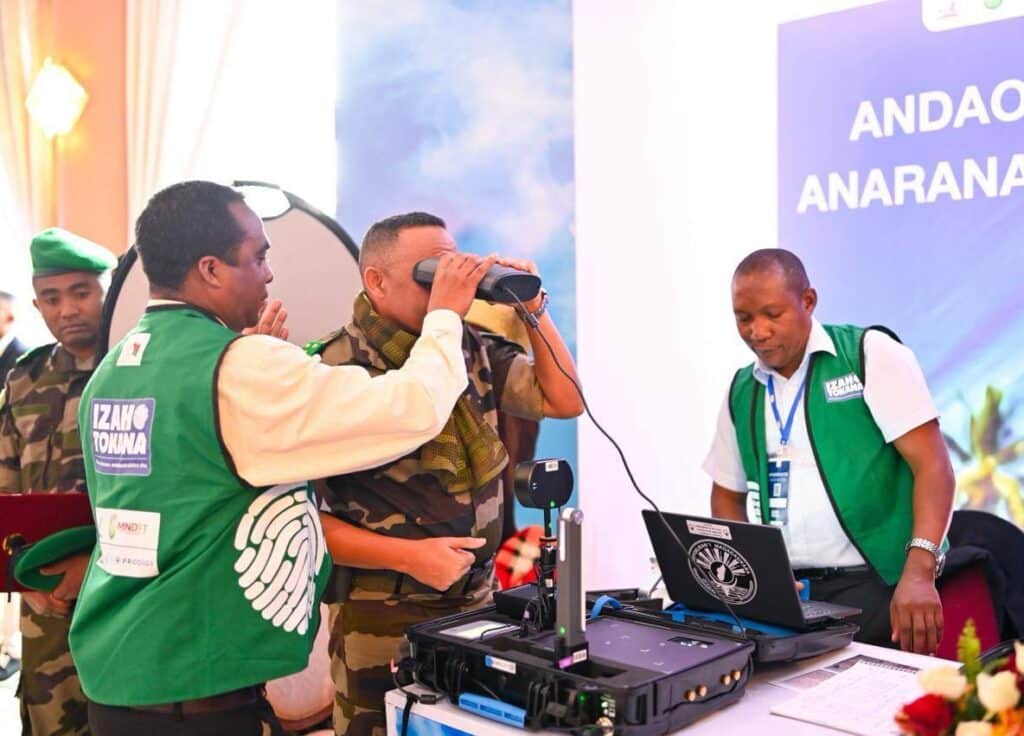
Madagascar has enrolled 2.6 million people into its digital identity system in just two months, surpassing the government’s target as the country accelerates deployment of its national digital public infrastructure.
Madagascar launched a pilot of its digital identity infrastructure in January, with a target of enrolling two million people between April and June. Government figures reported by Copmad show the effort exceeded expectations, reaching 2.6 million registrations.
The digital ID system is one of the key components of its ongoing Digital Governance and Identification Management System Project (PRODIGY), which has $143 million in World Bank funding.
Behind the rollout, Laxton’s biometric registration kits and fingerprint scanners supported mass enrollment operations, while IN Groupe provided the database infrastructure powering the PRODIGY digital identity program.
Digital public infrastructure expert Tariq Malik acknowledged both the speed of the rollout and the operational model behind it. In a LinkedIn post, he congratulated “the stellar Malagasy technical and operational teams driving this effort.”
“Using nearly 2,500 multimodal biometric registration kits across the country, the teams are achieving around 10 minutes average enrollment time per person, including full biometric capture. In a country with difficult terrain, infrastructure constraints, connectivity gaps, and dispersed populations, this is an extraordinary operational accomplishment,” the former NADRA chairman wrote.
He also highlighted the country’s “retroactive” civil registration framework which is making it possible for millions of previously undocumented people to access foundational documents that pave their way to a legal and digital identity.
“This is what inclusive Digital Public Infrastructure should look like: identity linked with civil registration, legal inclusion before digital transactions, and technology serving people rather than screening them out,” Malik wrote.
Malik noted that while the first 70 to 80 percent of a national identity rollout is largely a question of operational scale, the final stages are often the most challenging, requiring governments to reach remote, marginalized and previously undocumented populations.
Related Posts
-
 March 10, 2026
 -
 January 28, 2026
 -
 August 19, 2025
 -
 December 18, 2025
 -
 July 16, 2025
 -
 June 4, 2026
Article Topics
Africa | biometrics | digital ID infrastructure | digital identity | Madagascar | Prodigy (Madagascar)

Comments