
Ghana moves toward mandatory biometric verification as child ID enrollment expands
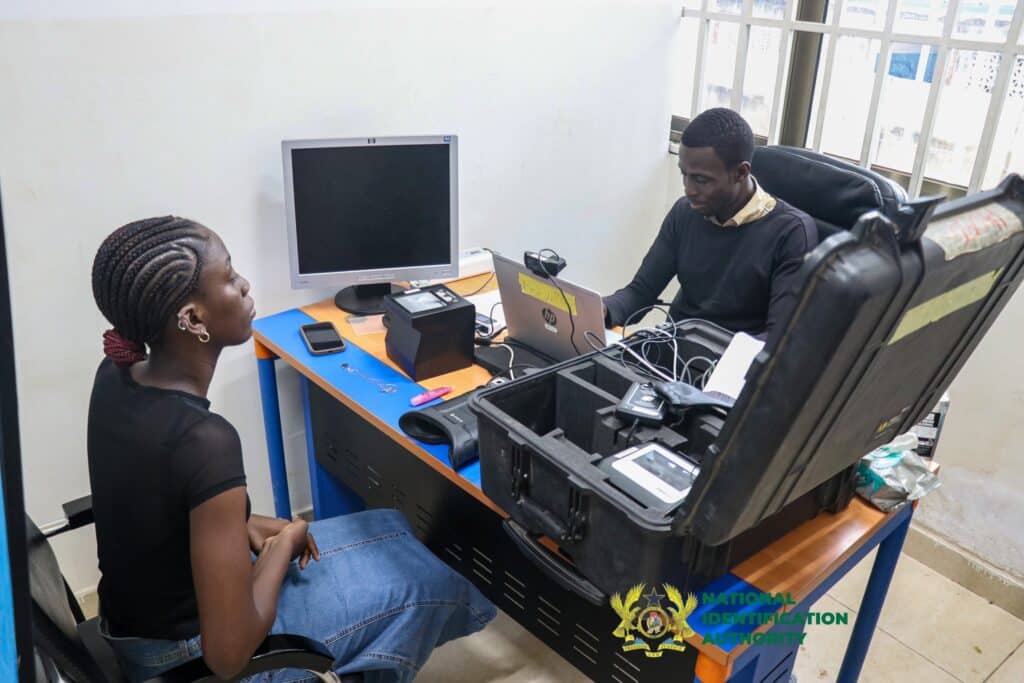
Ghana is moving toward mandatory biometric verification for many public and private sector transactions while expanding child enrollment and strengthening governance around the Ghana Card digital identity system.
The National Identification Authority of Ghana (NIA) Executive Secretary, Wisdom Kwaku Deku, announced recently that legislative amendments are already in parliament in this regard.
The proposed changes would require many transactions to be authenticated through biometric verification rather than visual inspection of ID cards or photocopied documents.
The measures form part of Ghana’s broader effort to expand and deepen use of the Ghana Card as national digital identity infrastructure. Alongside plans to make biometric verification mandatory for many transactions, the government is accelerating child enrollment and introducing stricter rules governing access to and retention of identity data.
Biometric verification soon mandatory
The proposed legislation is intended to expand use of biometric verification across many public and private sector transactions.
Last year, a stakeholder engagement forum organized by a Margins ID Group subsidiary underlined the importance of biometric verification in curbing Ghana’s surging banking industry fraud.
Child enrollment expands
The NIA recently recruited staff to support a nationwide identity registration campaign targeting 3.1 million children aged 6-14 across Ghana.
The registration process started in 2025, but the NIA resumed it this month with an expansion to the Volta and Oti Regions where more than 60,000 children are said to have already been enrolled.
“The exercise aims to capture the data of eligible children onto the National Identity Register as part of efforts to strengthen Ghana’s identification system,” the NIA said in the recruitment announcement.
Positions that needed to be filled were those of technical support officer (technician), commissioner for oath, card verification officer, mobile registration workstation operator and registration officer.
With the enhancement in manpower, the NIA says the exercise will continue in a phased manner, with each phase expected to run for 21 days. The ID authority adds that it has a target to register at least 3.1 million children for the Ghana Card to advance its identity inclusion push.
“To register a child, a parent or guardian must present the child’s original Birth Certificate, a valid Ghanaian passport, or a Certificate of Acquired Citizenship. In the absence of these, a parent, relative, or legal guardian may complete an Oath of Identity form. For children without known relatives, two Social Welfare Officers may vouch for the child under oath,” the NIA said.
Data protection guidelines in place
One aspect the NIA is taking seriously is data protection. The ID authority, this year, published guidelines on the security, storage and retention of personal information.
The NIA said the sweeping new guidelines, which have been effective since March 19, will reshape how government agencies and private institutions handle citizens’ personal information.
Going by the move, any organization accessing data from the NIA such as banks, hospitals, tax authorities, or employers, must now follow strict rules on how long they can keep a person’s data, how securely they store them, and when they must destroy them.
Per the rules, the time to retain data for routine identity checks is a maximum of six months. For services like banking and health insurance, it is for as long as the person is a customer, and up to two years after the end of their membership. For employment background checks, it’s one year.
The NIA said it will review the guidelines every three years, or earlier, if technological or legal changes warrant that.
Together, the enrollment drive, proposed biometric verification requirements and new data retention rules show how Ghana is evolving the Ghana Card from a national ID credential into a foundational digital identity platform.
Related Posts
-
 May 25, 2026
 -
 January 21, 2026
 -
 August 8, 2025
 -
 July 7, 2025
 -
 February 20, 2026
 -
 August 26, 2025
Article Topics
biometric enrollment | biometric verification | biometrics | children | data protection | Ghana | Ghana Card | legislation | National Identification Authority (NIA)

Comments