
Neurotechnology takes top spot in NIST iris recognition evaluation
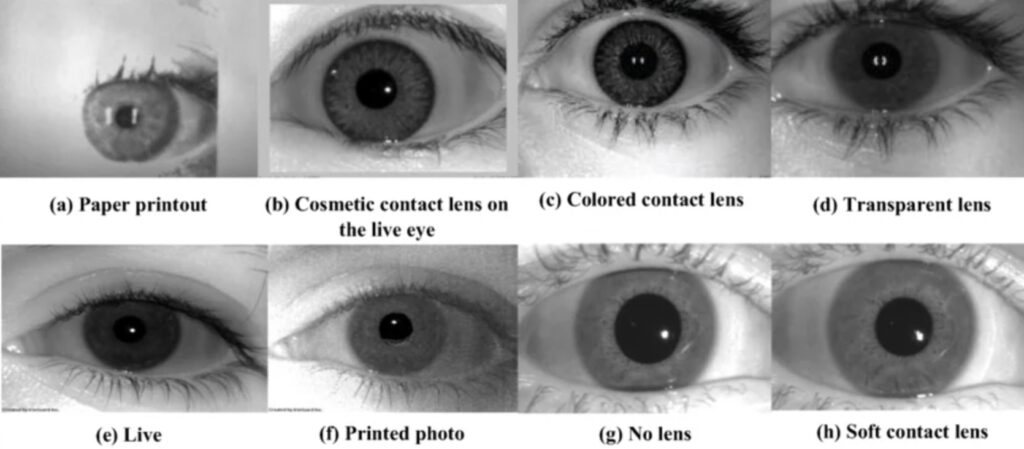
Neurotechnology has taken first place across all reported accuracy metrics in the National Institute of Standards and Technology’s Ongoing Evaluation of Iris Recognition (IREX 10).
The IREX 10 Identification Track measures one-to-many iris recognition performance, a mode commonly used in large-scale deployments such as border management, corrections, traveler processing and humanitarian aid programs.
Neurotechnology’s algorithm was tested against a dataset of one million iris images from 500,000 individuals and ranked first in all four evaluated categories: Detection Error Tradeoff (DET) Accuracy and Ranked Accuracy, each measured in single-eye and two-eye scenarios.
The company says it achieved best results not only at the headline FNIR@FPIR 0.01 operating point but also across the reported DET curves for single-eye and two-eye identification. For Ranked Accuracy, Neurotechnology’s algorithm achieved the lowest miss rates at Rank 1, Rank 10 and Rank 100 in both single-eye and two-eye scenarios.
“Our latest submission achieved the top position while tripling the matching speed from the nearest competitor, establishing a new industry standard,” says Evaldas Borcovas, head of Biometrics Research at Neurotechnology.
The updated algorithm is set to ship with the next upgrades for the company’s biometric identification platform MegaMatcher.
Other companies are also submitting algorithms for IREX 10 testing. Among the submissions joining the IREX 10 leaderboard in 2026 are those from Iris D, Mantra, Griaule and Idibio.
The results add to a growing wave of NIST benchmark announcements from biometric vendors seeking to demonstrate performance in independent government evaluations. Such tests are widely used as a reference point by agencies and organizations procuring large-scale biometric identification systems.
Related Posts
-
 October 23, 2025
 -
 August 1, 2025
 -
 February 25, 2026
 -
 January 2, 2026
 -
 October 23, 2025
 -
 September 9, 2025
Article Topics
biometric testing | biometrics | IREX | iris biometrics | Neurotechnology | NIST

Comments