
ICE moves to keep Parsons embedded in HSI overseas biometric alert program
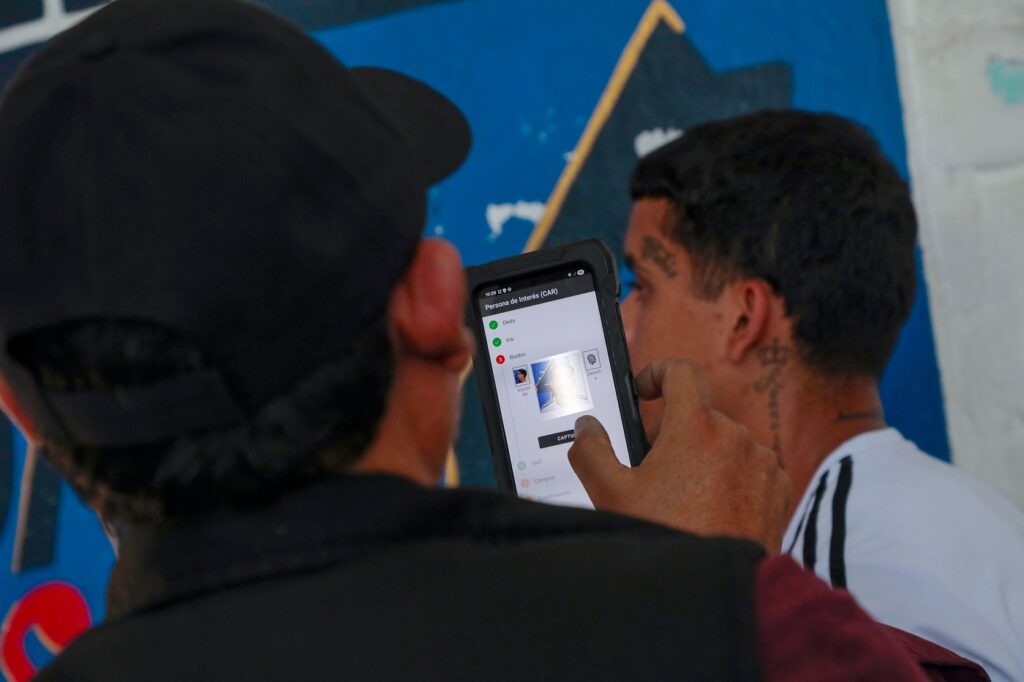
U.S. Immigration and Customs Enforcement (ICE) intends to award Parsons Corp. a sole-source contract to support a Homeland Security Investigations (HSI) biometric program used with foreign law enforcement partners, according to a redacted procurement justification that says the company’s systems are already deployed abroad and would take years and millions of dollars to replace.
The redacted justification provides a rare glimpse into the contractor-dependent infrastructure behind HSI’s Office of International Operations’ Biometric Identification Transnational Migration Alert Program (BITMAP), which operates largely outside public view while extending U.S. biometric screening through foreign law enforcement partnerships.
The justification, prepared by ICE’s Office of Acquisition Management, says the agency plans to procure Amazon web hosting services, mobile device management licenses, and labor from Parsons in support of the “Ares suite of services.”
BITMAP is one of the clearest examples of how U.S. biometric screening infrastructure extends beyond domestic ports of entry and into overseas law enforcement partnerships.
The award comes as DHS and ICE continue to expand biometric, mobile, and data-driven enforcement capabilities across immigration, border security, and foreign-partner programs.
Unlike a border inspection system operating only at U.S. airports or land crossings, BITMAP is designed to work through foreign counterparts, making the program both a counterterrorism and transnational-crime screening tool and an extension of U.S. identity infrastructure into partner countries.
ICE’s public description of BITMAP says the program provides specialized technical equipment and advisory support to foreign law enforcement counterparts for the collection of biometric and biographic information.
HSI says the program is used to identify foreign nationals who may pose a security threat, including individuals associated with transnational criminal organizations, terrorism or other law enforcement concerns.
The estimated value of the contract is redacted, as are several operational details about the foreign deployments and systems supported by Ares.
The unredacted portions of the document make clear that ICE views Parsons as entrenched in the program’s technical architecture and that the agency does not believe another contractor could take over the work without a lengthy and costly transition.
“Parsons has been supplying the HSI BITMAP program with like services for several years,” the justification says. HSI BITMAP staff reviewed similar services and products from other contractors, the document says, but concluded that Parsons had beaten competitors’ pricing and provided steady support.
The justification says it would take “at least two years” to develop, test and fully implement a competitor’s product across the redacted number of locations where the program operates.
Elsewhere, the agency says replacing part of the current software and interfaces would take approximately a redacted amount of time and require significant HSI staff resources.
The contract is structured as a firm fixed price award for three months. ICE says services were previously awarded under a contract which ended March 31.
ICE says the services covered by the Parsons contract include continued operation of redacted systems, maintenance, and development support for the Ares gateway and Ares device user application, and infrastructure needed for redacted operational functions.
The agency says the devices, gateway maintenance, and needed system-development work would cease without the contract.
Development of the gateway and deployment of devices was described as a multiyear process that could not be replicated without several years of development, testing, foreign deployment and foreign training activities.
That language is significant because it suggests Parsons is not merely providing commodity cloud hosting or device management services. The company appears to operate or maintain a proprietary technical ecosystem that supports biometric collection, alerting, or data-sharing functions for HSI’s foreign-partner operations.
The new justification places Ares inside that broader BITMAP framework. While key operational details are blacked out, the document says the requirement is to provide support services and system development for equipment and software that “facilitates and enhances this capability.”
It also says the work ensures that redacted overseas users “utilize devices and services provided by Parsons.”
The redactions prevent a full public accounting of where the systems are deployed, how many devices are supported, which foreign partners use them, and what databases or alerting mechanisms the systems connect to.
The unredacted text shows the program depends on deployed devices, a gateway, a device user application, cloud hosting, mobile device management, and continuing system development.
The justification also indicates that the systems are already operational abroad. The services and ecosystem provided by Parsons are described as “unique to the application and devices currently deployed abroad.”
ICE says the development effort included “foreign deployment” and “foreign training activities,” and that a lapse in the contract would leave foreign partners without redacted capabilities.
The justification says Parsons has invested significant time developing the ecosystem using in-house employees, creating what ICE describes as “a significant intellectual property concern that cannot be sold.”
That proprietary position is central to the sole-source rationale. ICE says transitioning to another contractor would require developing a secure HSI ecosystem, testing it, and replacing a redacted number of deployed assets.
The document also raises familiar oversight questions surrounding sole-source procurement and vendor lock-in in sensitive biometric programs. ICE’s rationale is that Parsons is uniquely positioned because it built and supports the current system.
But that same rationale also illustrates how proprietary development can limit competition once a contractor’s technology becomes embedded in field operations.
ICE says HSI BITMAP is continually looking for more cost-effective ways to overcome barriers to competition by meeting with other contractors and U.S. government agencies. But the immediate result is a noncompetitive award to preserve an existing Parsons-run ecosystem.
Parsons has a broader history of DHS work, including prior task-order activity for the department and contracts involving technology support.
The BITMAP Ares justification, however, points to a particularly sensitive role in supporting the technical backbone of an HSI program that helps foreign partners collect and use biometric and biographic information for U.S.-linked alerting and screening.
The agency’s redactions leave unanswered questions about the scope of the system, the number of countries involved, the volume of biometric records collected, the databases used for matching or alerting, and the rules governing retention, sharing, accuracy, and redress.
Related Posts
-
 May 29, 2026
 -
 May 12, 2026
 -
June 26, 2025
-
May 13, 2026
-
February 9, 2026
-
January 30, 2026
Article Topics
Biometric Identification Transnational Migration Alert Program (BITMAP) | biometrics | DHS | ICE - U.S. Immigration and Customs Enforcement | Parsons Corporation | procurement

Comments