
U.S. Army patents zero-light 3D face biometric technology
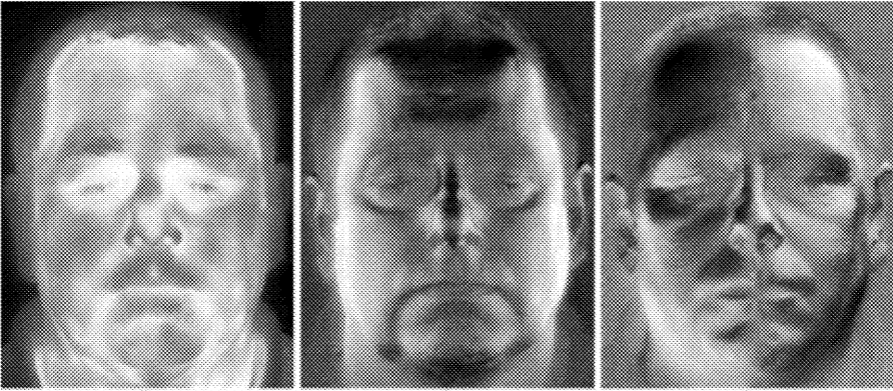
The U.S. Army Research Laboratory has patented a way to create detailed, simulated 3D images even in pitch darkness. The images can be used with a facial recognition algorithm, rotating them to match the angle of faces in reference pictures.
The system uses a camera capable of capturing the long-wave infrared radiation continuously emitted by a human face. Specifically, the Army’s invention can read the polarization of the radiation.
Army officials have since at least 2016 touted the technology as well as a polarimetric face training data set. There were 60 subjects in the database that year.
Each image (front of a face is preferred) first is recorded in multiple polarization states using specialized equipment before being summed to create a 3D image (still or video), to create a monochrome simulated relief — with some surface detail — not unlike a face finely embossed on a coin.
Conventional infrared recording produces smeary, blobby images that often require a high level of expertise to accurately match with biometric reference photographs, and are even less helpful if trying to identify someone without a reference image. The images get harder to read the farther they are from the observer, too.
And rendering images that approximate hidden angles in 3D or even 2D is not even an art much less a science.
Most of the researchers named on the patent wrote a paper published in 2016 by The Optical Society reporting on how the technology can be used to reveal faces beneath cosmetics. The radiation wavelength captured by the patented invention is not blocked by most makeup materials and techniques.
That paper carries links to two brief video clips that are as unsettling as they are illustrative.
In one, a middle-aged man wears garish makeup in a black-and-white photo. The next image is an indistinct thermal rendering of him. The third uses polarimetric-thermal imaging to produce a crisp, embossed-metal effect.
A 2018 research paper on the same general topic and written by a different team notes shortcomings in the technique.
The image processing is heavy duty for video, which can cause temporal and spatial resolution constraints, according to the paper. Calibration and image registration also have to be precise or details will be lost. All this can also drive up system costs, at least in the short run.
Even then, anything overly warm in or near the frame will degrade polarimetric-thermal images.
Article Topics
3D face recognition | biometric identification | biometrics | biometrics research | facial recognition | patents | U.S. Army

Comments