
Biometric surveillance doubts in France, UK. US city puts rules on it
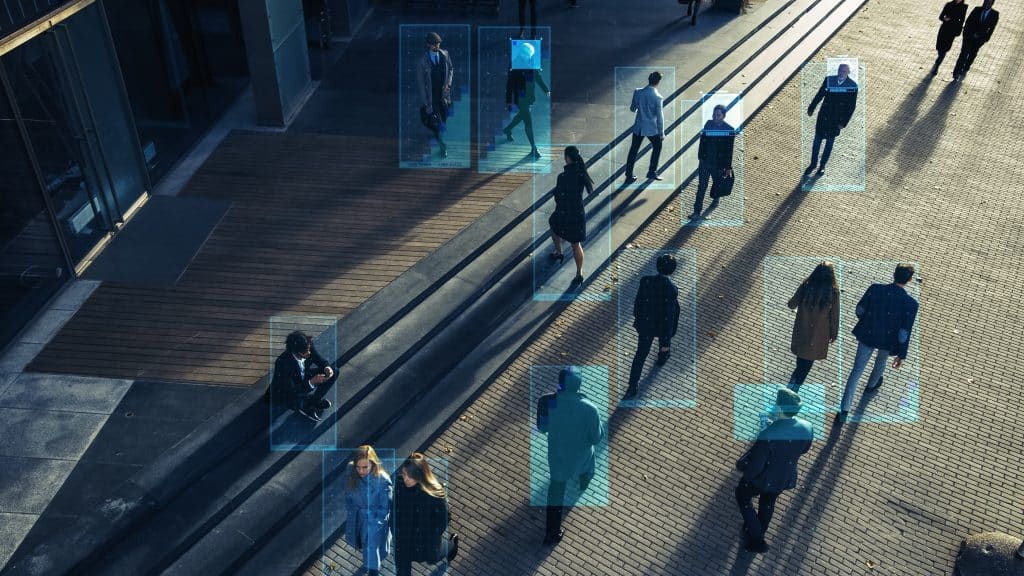
Facial recognition is again under scrutiny in France, as legislators discuss whether to use algorithms for public safety at the 2024 Olympic Games in Paris.
The Senate voted at the end of January to use artificial intelligence (AI) video surveillance but facial recognition was specifically excluded from the bill.
Still, human rights advocates in France are warning that even AI used by police to spot suspicious body language or crowd movements via CCTV cameras and drones could infringe on civil liberties.
According to reporting by Euronews, privacy advocates are also warning that the bill allows for these forms of surveillance not just for the Olympic Games but also for other sporting, festival or cultural events until 2025. Data retention would be capped at five years.
“The Olympics are a pretext. We know that it won’t stop in 2025. As soon as there is an experiment, it is perpetuated,” Noémie Levain, a lawyer with French digital rights group La Quadrature du Net, reportedly told Euronews. “It’s important to see the movement that France is taking with this law, to want to give more importance to the development of the video surveillance market than to public liberties.”
The bill (in French) is scheduled for discussion in the National Assembly in March. If approved I would be reviewed by the CNIL (Commission Nationale de l’informatique et des Libertés) before being enacted.
UK biometrics commissioner calls for clear rules
Meanwhile, in the United Kingdom, the biometrics and surveillance camera commissioner, Fraser Sampson, presented regulatory recommendations as part of his annual report for 2021-2022.
In addition to criticism of the uncertainty around the role and identifying issues with data retention, Fraser says the police need “clear and comprehensive” rules when deploying AI and biometrics algorithms.
“The areas of biometrics and surveillance are becoming both increasingly important and increasingly inter-related,” he writes. “Now more than ever, we need a clear, comprehensive and coherent framework to ensure proper regulation and accountability in these crucial areas.”
Fraser also highlights a discrepancy between the perceived and actual use of biometric surveillance in the UK.
“Police are not making as much use as the public might expect of biometric surveillance technology such as facial recognition. At the same time, there is uncertainty around the regulatory framework for ensuring legitimacy and accountability if and when they do use such technology.”
Because of this, Fraser proposes revisiting the framework, particularly how biometric data is collected and handled by police. He also praises Scotland’s approach, which has “taken a much more holistic – some might say realistic – approach to the subject.”
According to London, this might be the last biometric commissioner report. The Data Protection and Digital Information Bill being discussed in Parliament would abolish the post and transfer its functions to the information commission.
Portland, Ore., makes surveillance policy for city
Roughly two years after issuing a strict, private-sector facial recognition ban, leaders of Portland, Ore., a considering a more moderate path for city departments.
In fact, earlier this month, the City Council approved a policy (spotted by Bloomberg) that puts guardrails and requires a degree of transparency when it comes to biometric municipal surveillance.
The policy shift comes amidst plans by the city’s police to test drones equipped with cameras and other sensors, as well as the purchase of gunshot detectors.
Among other mandates, the city government now must assess its use of surveillance, including police license plate readers and traffic-safety sensors.
The resolution also calls for clarity and transparency over surveillance deployments by all city bureaus in the form of privacy impact assessments. Residents will be free read these reports and contact council members with objections.
A privacy and information protection program will be created along with accountability and oversight procedures for surveillance.
At the federal level, five U.S. senators have called for a federal ban on facial recognition at airports.
Article Topics
AI | biometrics | facial recognition | France | law enforcement | UK | United States | video surveillance

Comments